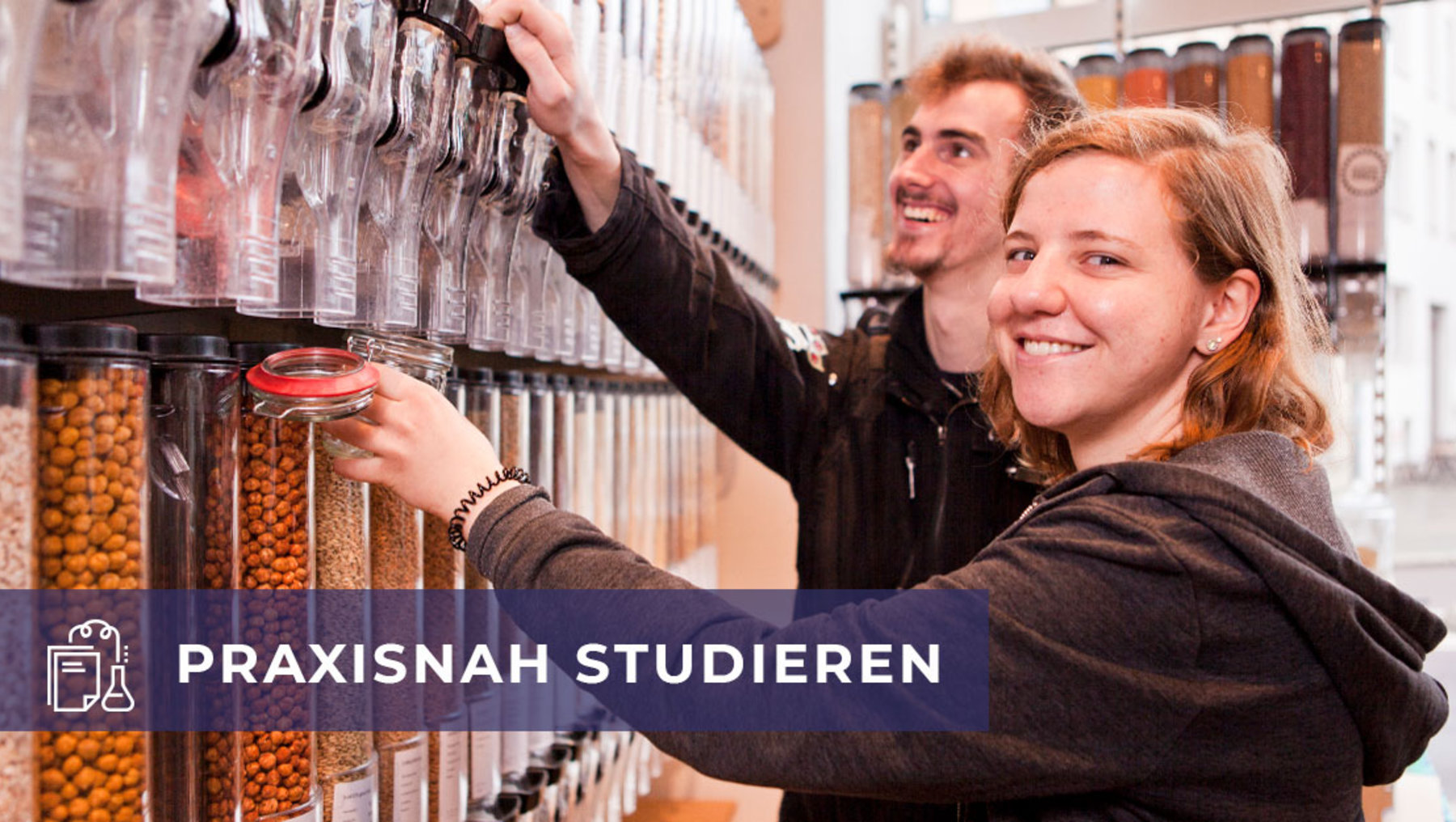
What did the course do to them? Juliane Poturnak and Tim Förster from Anhalt University of Applied Sciences report that it wasn't just their view of their future engineering career that changed, but above all their personal lifestyle. The biotechnology students spent a semester working on "Concepts for reducing packaging in food products" as part of their elective modules in engineering ethics. Their topic was one of 12 that were worked on under the person responsible for the module, Professor Jens Hartmann. Lecture, discussion and term paper were the work assignment that awaited the students.
However, despite their intensive engagement with the topic, the ethical questions could not be answered so easily. The students Poturnak and Förster quickly realized that not just one concept can answer the question of packaging waste. In their opinion, several approaches must be pursued simultaneously. Vegetables in particular are often packaged in plastic, while herbs are even double-wrapped in plastic trays and plastic film. It is not always possible to switch to more sustainable materials or even eliminate packaging altogether.
The students are certain that there is still plenty of room for innovation and see this as their task: "As engineers-to-be, we can play our part in researching new environmentally friendly materials and hopefully making them usable on an industrial scale at some point." However, responsibility must be taken by consumers as well as producers and intermediaries. They also believe that politicians have a duty to reduce the environmental impact through legislation.
In addition to biotechnology students, since 2016 all degree programs in the Department of Applied Biosciences and Process Engineering have had the opportunity to deal with the ethical principles and problems of their future activities in the elective module Engineering Ethics. Guidelines and rules provide them with orientation for answering ethical and moral questions. Instead of learning by heart, this subject involves learning to debate and discuss. Professor Hartmann focuses on the discourse between instructors/experts and students. Concepts such as safety and risk, sustainability, environmental protection and the courage to turn the tide of growth are learned through the discussions and should be used as tools for the future profession in society.
Problems from this module, such as those dealt with by Poturnak and Förster, change the view of future engineering activities. Not every student who starts a degree course in this field is aware of the moral and ethical issues they will have to deal with in their future profession.
For the two packaging specialists, it is above all their personal lifestyle that has changed. Not only due to their own topic, but also due to the lively and active discussions with the other participants: "For example, we have now significantly reduced our consumption of disposable packaging, greatly reduced our meat consumption and are paying better attention to proper waste separation. We also travel less by car since then," say the future biotechnologists. So engineering ethics has side effects. A valuable course for future engineers, with an impact on society.
