The Materiability Research Group of Anhalt University of Applied Sciences is presenting itself for the first time this year at the "formnext" trade fair - with forward-looking ideas very close to practical applications.
Materiability Research Group: Research takes shape
-
 © HS Anhalt | materiability research group
Lignin, starch, fungal mycelium
Lignin as a composite material for sustainable 3D printing, prototypes based on starch as a moldable biopolymer, a box made from fungal mycelium: these are just some of the topics that the Materiability Research Group team will be presenting in Frankfurt (Main) from November 18. The scope of their "Materiability Lab" is even broader. Since 2019, it has been open to students and university members to develop their ideas for sustainable design and construction. Partly in cooperation with Economics: research and application complement each other here in the Biolab, Laser- and Fablab, Mycel-Lab and DX-Lab. Prof. Dr. Manuel Kretzer has been instrumental in paving this way and explains in an interview what drives him.

The Materiability Research Group not only generates knowledge theoretically, but also evaluates it through experiments, examinations and design concepts.
In conversation with Prof. Dr. Manuel Kretzer
He founded the Materiability Research Group in 2019 together with Virginia Binsch and set up the Materiability Lab - supported by funding from the ego. incubator program (ERDF).
Prof. Kretzer, what makes the Materiability Research Group unique - where do you see yourself between science and design?
The Materiability Research Group at Anhalt University of Applied Sciences in the Department of Design sees itself as a transdisciplinary interface between scientific research and design practice. The focus is on the material itself - not as a passive means, but as an active player. The combination of digital production methods, sustainable use of materials and design creates new material systems and combinations. Knowledge is not only generated theoretically, but also evaluated through experiments, examinations and design concepts. The research group promotes an open, collaborative approach and shares its findings via the materiability.com platform, for example. In this way, it positions itself as a hybrid space between design, technology and nature.
What projects are you currently working on? Which ones are a good reflection of the research group's orientation?
The Materiability Research Group is currently working on various research projects that are funded by third parties, including at EU level:
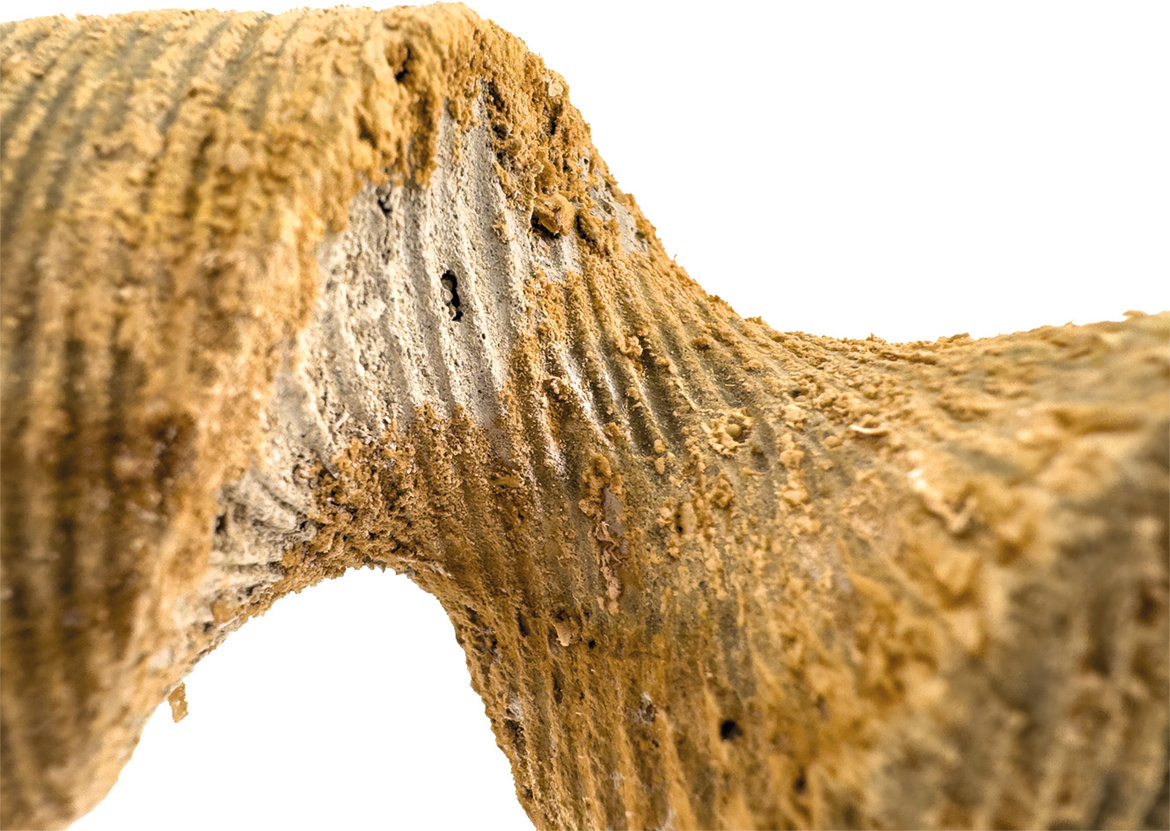
- Bio Formwork - Large-format 3D printing of bio-based formwork
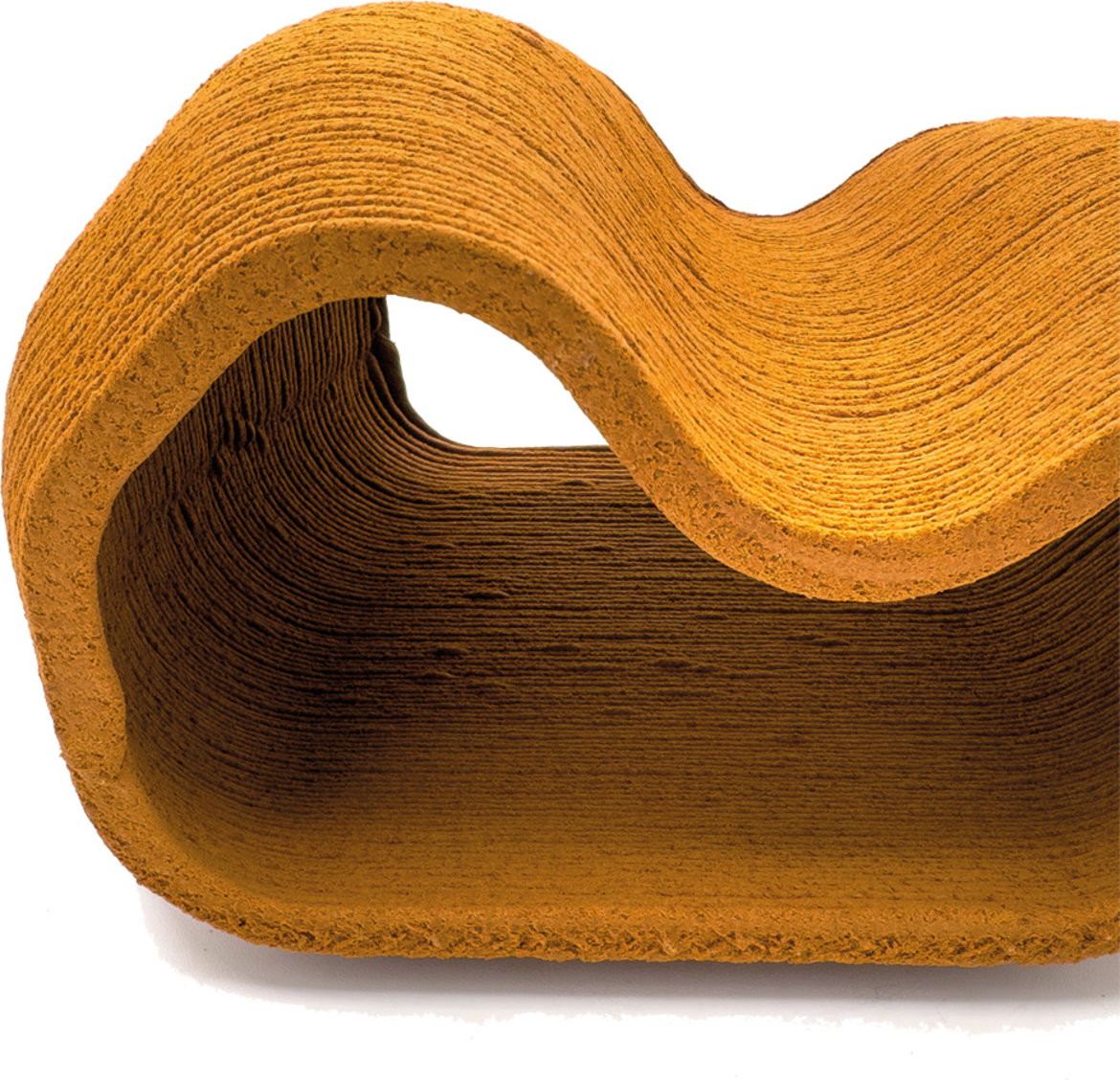
- Lignin - Fiber-reinforced composites for sustainable 3D printing
- The Tactility of Emotions_Autonomous Materials
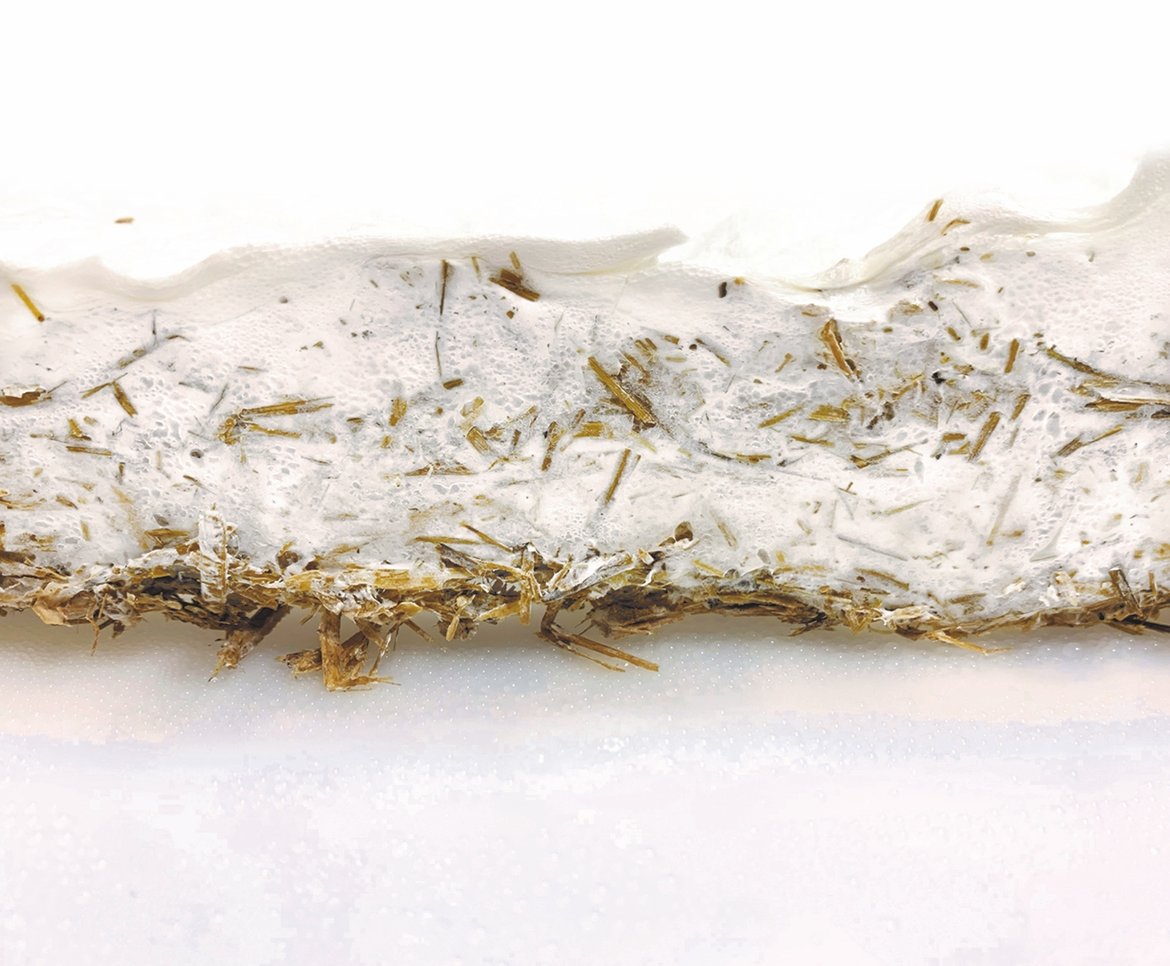
- Mycelium Bike Box
- From Data to Design - Large Format Additive Manufacturing
- Innovative Mycolab - Mycothek (InMyco)
[detailed project descriptions at the end of the blog post]
 © HS Anhalt/ FB Design/Ag Prof. Kretzer
Sustainable materials are the focus of the Materiability Lab - what specific problems do you want to solve?
In terms of materiality, the research group aims to reduce the high consumption of resources and dependence on petroleum-based plastics in design and Architecture and to rethink this through the use of various state-of-the-art technologies. By developing bio-based, recyclable and in some cases locally producible materials, the aim is to create ecological alternatives that are both functional and aesthetically pleasing. This is a response to climate change, material scarcity and the problem of waste. We show ways in which sustainable material systems can contribute to a more responsible use of resources.
 © HS Anhalt/FB Design/AG Prof. Kretzer
Who benefits from your research - which sectors or areas do you address?
The research work addresses different fields of application and illustrates the range of sustainable material innovations. In transportation, the Myzel Bike Box focuses on the potential of biologically grown structures for lightweight, modular constructions. In the construction industry, lignin-based composites and TPS materials contribute to the development of resource-saving, bio-based material systems. The automotive industry is addressed by the "Autonomous Materials" project, which is researching smart, adaptive surfaces for multisensory human-technology interactions. In product and interior design, the NEB project opens up new perspectives for structurally optimized furniture and digitally manufactured components. Other potential fields of application for the InMyco project include the packaging and textile industries as well as the skilled trades.
 © HS Anhalt/FB Design/AG Prof. Kretzer
Why are you exhibiting at formnext for the first time?
formnext is one of the most important international platforms for experts in industrial 3D printing and for specialists from a constantly growing number of application sectors. It also represents an important step towards presenting the current state of research to an international specialist audience from industry, science and design.
The continuous dialog between applied research and Economics is central to this - not only to initiate new collaborations, but also to maintain and further expand existing partnerships. In addition to the trade fair presence, the research results are communicated via conference contributions, symposia, exhibitions in museums and scientific publications, which sustainably strengthens the transfer of knowledge and the visibility of innovations.
 © garrykillian/stock.adobe.com
Current projects of the Materiability Research Group | described in detail
Bio Formwork - Large-format 3D printing of bio-based formwork
The PhD research project investigates thermoplastic starch (TPS) as a sustainable material for digitally manufactured concrete formwork. Robotically 3D-printed TPS molds are used as a sustainable formwork material for ultra-high-strength concrete in order to test resource-saving construction processes. The work of Benjamin Kemper acts as collaborative research with ETH Zurich, D-Arch, ITA Institute of Technology in Architecture (DIA) (all courses taught in English), digital building technologies.
Lignin - fiber-reinforced composites for sustainable 3D printing
PhD research is developing fully bio-based, potentially biodegradable lignin composites for robotically controlled FGF 3D printing. The aim is to replace petroleum-based plastics in suitable fields of application. Danny Ott's research is partly funded by the "Competence Network for Applied and Transfer-Oriented Research" (KAT) at Anhalt University of Applied Sciences (ZS/2023/12/182020).
The Tactility of Emotions_Autonomous Materials
Virginia Binsch's doctoral research "The Tactility of Emotions" develops shape-changing, smart material systems as multisensory interfaces between humans and technology. With the help of FGF 3D printing and textile-based structures, large-scale, responsive surfaces are created. The work is embedded in the EU-funded project "Autonomous materials - interface to technical systems, multisensory interaction and the generation of emotion, safety and trust", which is also being worked on by research assistants Kristian Gohlke, Ali Etemadi and Jan Stakfleth (ZS/2023/12/182019).
Myzel Bike Box
The research aims to develop a modular transport box for cargo bikes. The growing mycelium composite forms the biodegradable, repairable and recyclable core of the construction. In combination with a 3D-printed PLA frame, a functional unit is created that combines sustainable materials research with urban design. The ZIM project "Development of a sustainable transport box for cargo bicycles made of a new mycelium composite material (Myzel-BikeBox) / KK5458201FF2 is being worked on as a sub-project called "Development of the mycelium composite material including the growth environment and the culture media" by Louis Möckel.
From data to design - large-scale additive manufacturing
As part of the New European Bauhaus (NEB), the project is investigating large-format FGF 3D printing with PLA cellulose composites. Parametrically modeled furniture demonstrates how digital simulation, material efficiency and aesthetics can work together. The EU-funded joint project is being carried out as a sub-project by Anhalt Anhalt University of Applied Sciences: "Reallabor ZEKIWA Zeitz" ZS/2024/07/188381. Research associate Ali Etemadi is working on the sub-project "ZEKIWA-3DP".
Innovative Mycolab - Mycothek (InMyco)
The InMyco project is a cooperation between the Materiability Research Group and the Department of Applied Biosciences and Process Engineering at Anhalt University of Applied Sciences. The aim is to develop innovative mycelial materials through interdisciplinary collaboration between Biotechnology, materials development and design. Sustainable materials are created from residual and side streams from agriculture, forestry and the process industry. A central result is the Mycothek - a database-based collection of mycelium-based materials and research approaches. Within the research group, the EU-funded joint project Innovative Mycolab - Mycothek (InMyco), (ZS/2024/02/183980) is being worked on by Anna Gronemeier and Sofia Stateczny.
Redaktion
Claudia Aldinger
Prof. Dr. Manuel Kretzer... is available for inquiries and requests by phone: +49 (0) 340 5197 91719 or by e-mail: manuel.kretzer(at)hs-anhalt.de
... Current publications and projects on the Materiability Research Group website: https: //materiability.com/.
formnext: The Materiability Research Group team will be presenting its research at formnext in Frankfurt am Main from November 18 to 21, 2025. Anhalt University of Applied Sciences can be found at the joint stand Research for the Future in Hall 12.1/Stand C81.
Cover picture: Screenshot homepage Materiability Research Group
