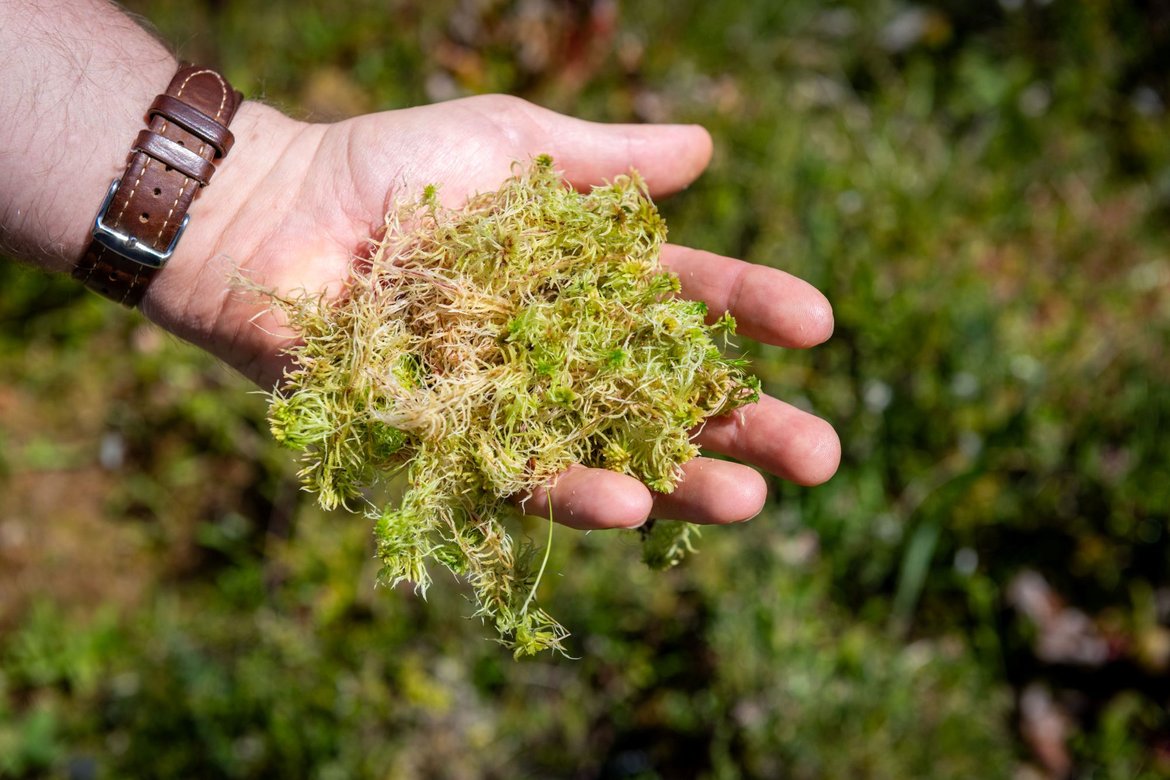
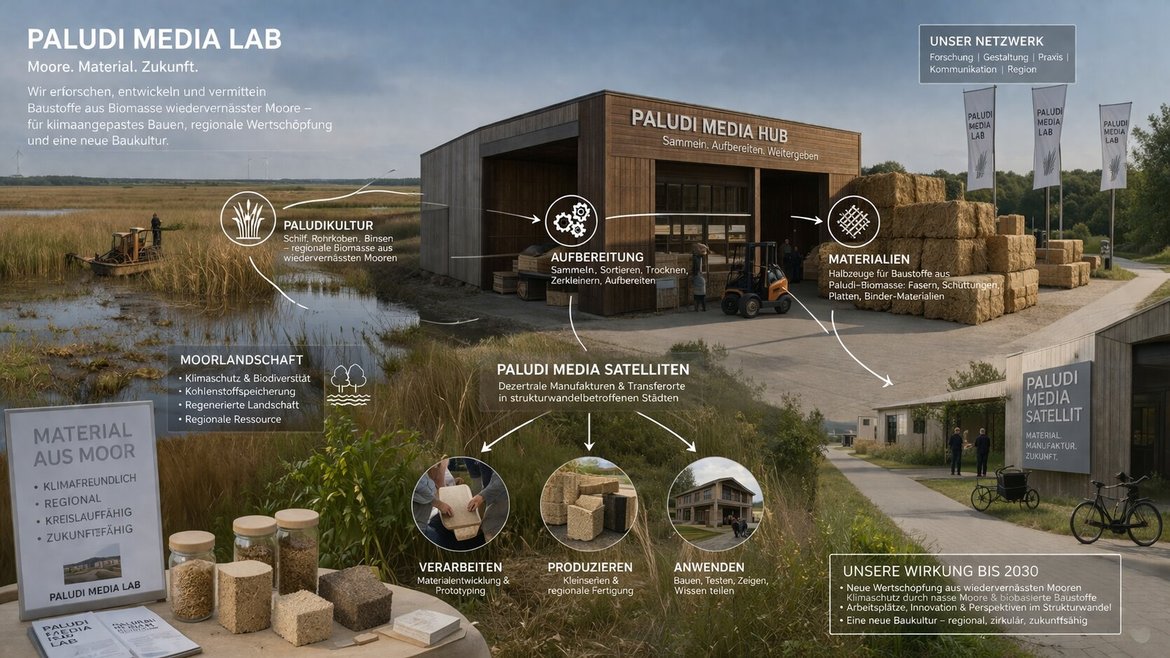
“What else can be done with raised bog moss?” Alexander Bieß has been exploring this question since working on a vertical greening project in Magdeburg Neustadt. There, he used the moss as a substrate. That experience gave rise to an idea that now extends much further. It combines bog conservation, biodiversity, Agriculture, and the development of bio-based building materials. To systematically utilize biomass grown on rewetted bog areas, he developed the concept for the Paludi Media Lab. At Anhalt University of Applied Sciences, he quickly found support for the project across disciplinary boundaries.
Paludiculture Building Materials: How the Idea for a New Source of Value Creation Came About
-
 © hochschule anhalt | uwe jacobshagen
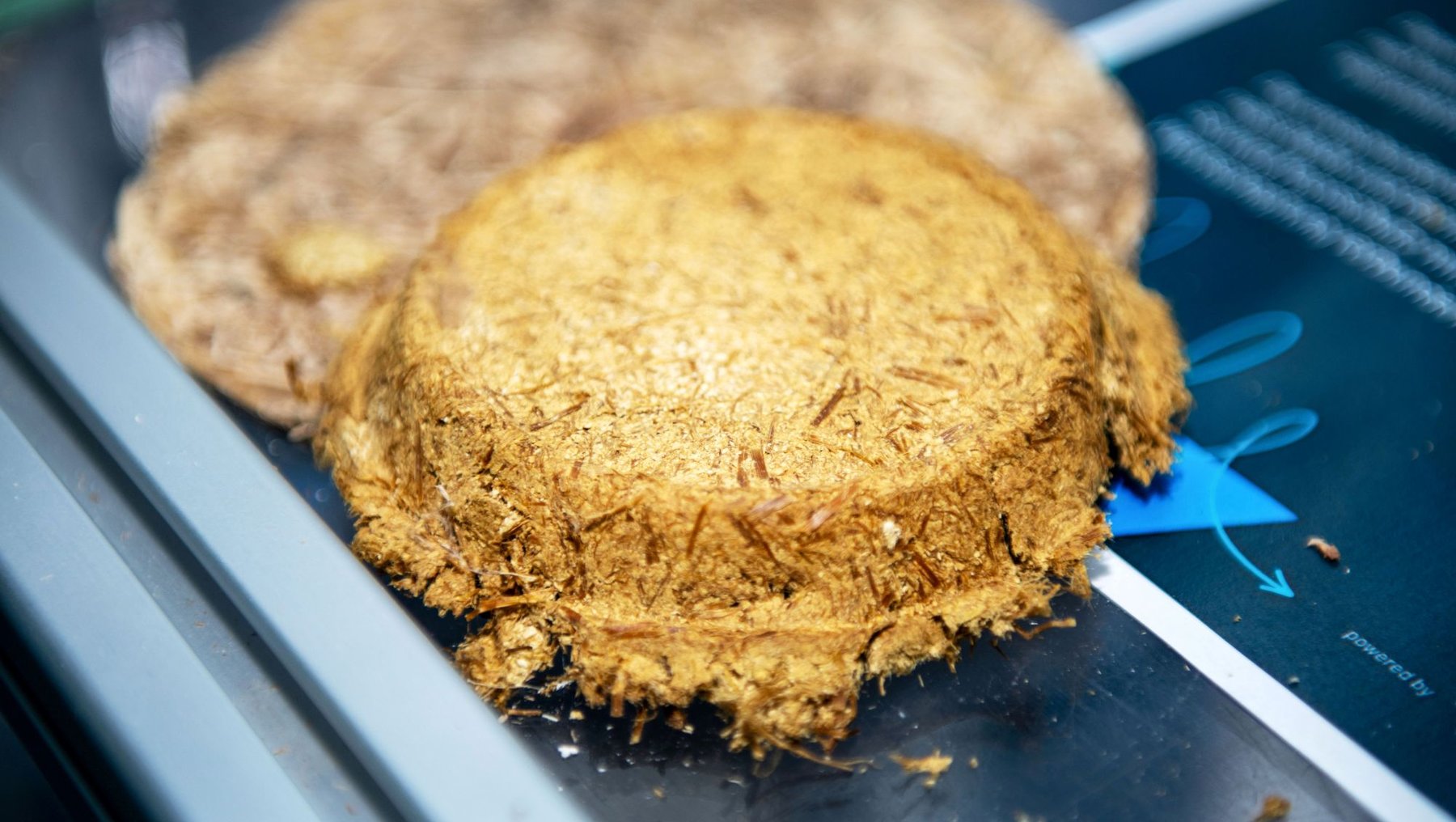
Gepresste Paludikultur als Ausgangspunkt für eine neue Wertschöpfungskette im mitteldeutschen Revier.
 © hochschule anhalt | uwe jacobshagen
Paludiculture Building Materials in the Central German Mining Region?
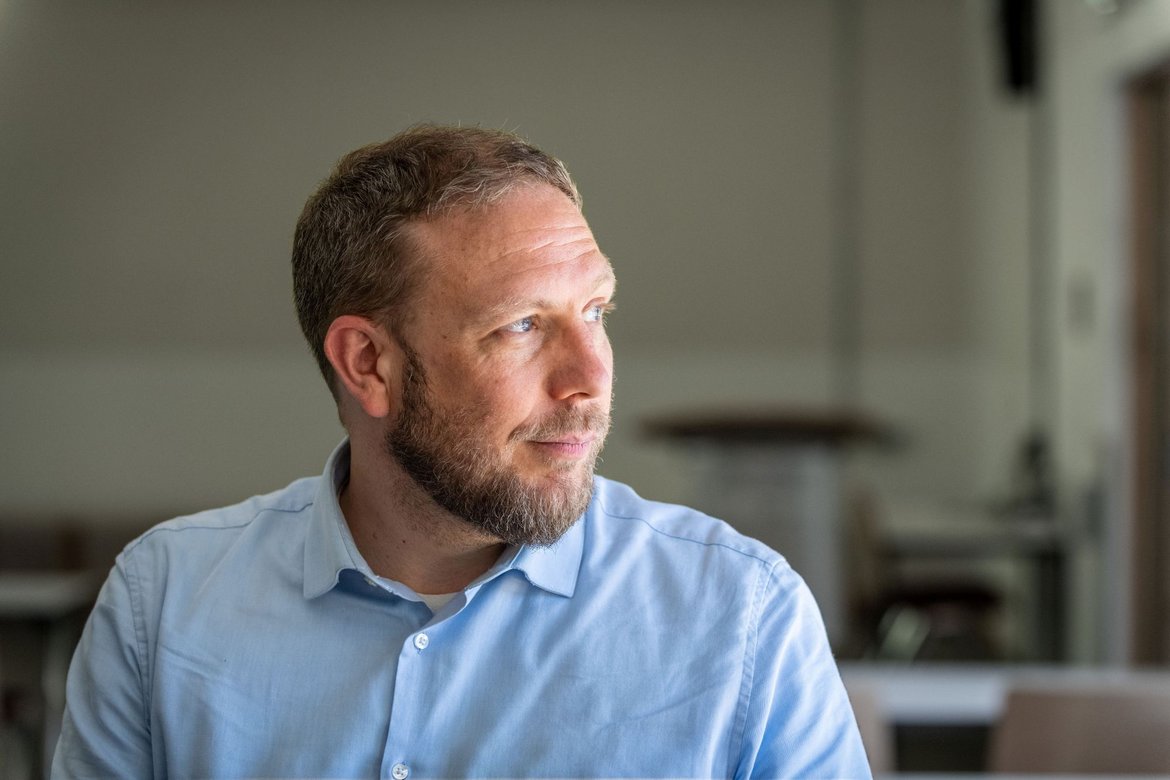
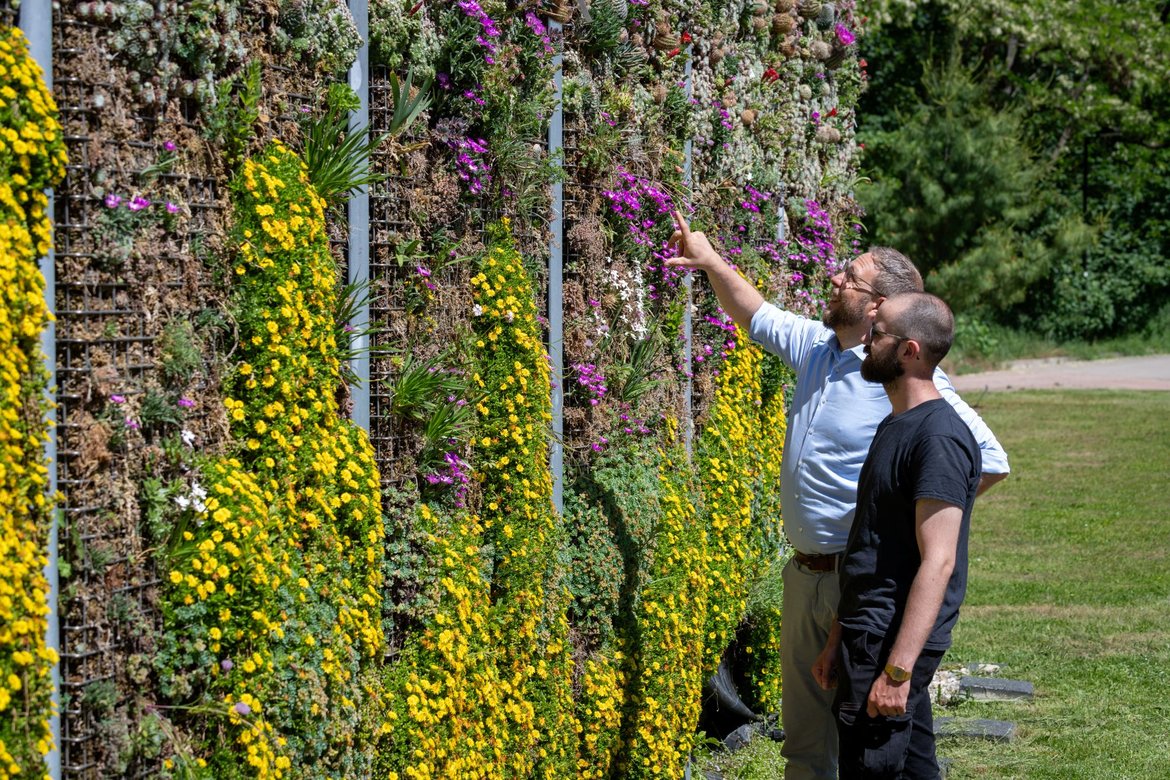
Alexander Bieß studied systems engineering and technical cybernetics. Put simply, he views individual aspects as part of a cohesive system and brings them together. Using this approach, he has already implemented various projects both regionally and nationally, including the “Living Wall” at the boiler house of a Magdeburg housing cooperative.
For several months now, Alexander Bieß has been involved in various projects at Anhalt University of Applied Sciences, such as the “ ZEKIWA Real-World Laboratory.” Together with researchers from various disciplines, he is developing bio-based building materials from paludiculture biomass and building a network that is intended to become a permanent consortium in the long term: the Paludi Media Lab. The impetus came from an observation that affects many regions: Since peatlands have increasingly been rewet, new questions have arisen regarding their management. When moss grows here instead of grain or grass, how should these paludiculture areas be utilized? “Wetland areas must be profitable,” says the 43-year-old. “The key lies in suitable value chains, which have hardly existed for such raw materials until now. Besides, decarbonized Architecture has always fascinated me,” explains Alexander Bieß, describing his personal motivation for founding the Paludi Media Lab.
 © hochschule anhalt | uwe jacobshagen
Re-wet bogs need to generate economic value
The conditions for his project are currently good: A large portion of Germany’s existing peatlands have been drained and account for about 7.5 percent of the country’s annual greenhouse gas emissions. That is why the Federal Ministry for the Environment’s so-called Palu funding program is providing approximately 1.75 billion euros through the end of 2029 to rewet 90,000 hectares and manage them using paludiculture. “This leads to entirely different yields and business models, with too few viable value-creation strategies so far,” says Bieß. This is exactly where the Paludi Media Lab comes in: “My goal is to establish a value chain in the Central German Mining Region and thereby create new prospects for this region undergoing structural change.”
The idea behind it is simple: If the plants are used commercially, this also creates good prospects for the rewetted areas. “The Paludi Media Lab aims to create a systematic approach—a process—that transforms these raw materials into industrially usable, code-compliant building materials and can be scaled up to larger quantities,” explains Bieß.
And to that end, he has since been able to bring on board stakeholders involved in building material development, material testing, application examples, and logistics. He has also secured partners from the industrial fiber and control technology sectors, as well as the “Forum Rathenau” network.
 © hochschule anhalt | uwe jacobshagen
Paludiculture Building Materials: Initial Trials
In the university’s laboratories, Alexander Bieß has already conducted initial experiments aimed at producing building materials from Paludi biomass. His work in Prof. Dr. Stefan Reich’s Building Envelope Research Group was instrumental in this effort. The so-called “binderless board” process was used for this purpose. In this process, the biomass is processed under high pressure and at temperatures of around 180 degrees Celsius. The pressure and heat activate lignin, a natural binding agent found in plants that helps hold fibers together. This eliminates the need for additional synthetic adhesives.
This approach has already yielded initial prototypes for interior finishing panels. Currently, panels measuring approximately 25 by 35 centimeters can be produced. This is still insufficient for applications in the construction industry. Furthermore, the panels have so far been sensitive to moisture. However, the results are sufficient to continue the research. Alexander Bieß: “The long-term goal is to develop certified products that can be integrated into existing value chains.”
At the same time, a morphological matrix is being developed. It serves as a systematic overview of which raw materials can be processed into specific building materials using which methods. Bieß describes this methodology as a core aspect of his work. It is intended to help systematically harness different forms of peat biomass for the development of bio-based building materials.
Feedback from the Public and Experts
Over the past few months, Alexander Bieß has presented his idea in various formats. These included participating in Science2Public’s Open Academy, events on the research vessel “Make Science” with representatives from politics and civil society, and discussions with associations such as the Chamber of Architects and Engineers. In addition, his plans for a biomass distribution hub have become more concrete.
The Paludi Media Lab is still in an early stage of development. Nevertheless, the response has been positive. Many stakeholders are currently exploring how climate protection, regional economic growth, and sustainable building materials can be combined. The Paludi Media Lab offers a concrete approach to this and poses the central questions: How are bio-based building materials produced from biomass in rewetted peatlands? And what processes are necessary for this?
 © alexander bieß
Redaktion
Claudia Aldinger
Alexander Bieß... can be reached for questions and inquiries by phone at +49 (0) 3471 355 1639 or by email at alexander.biess(at)hs-anhalt.de.
