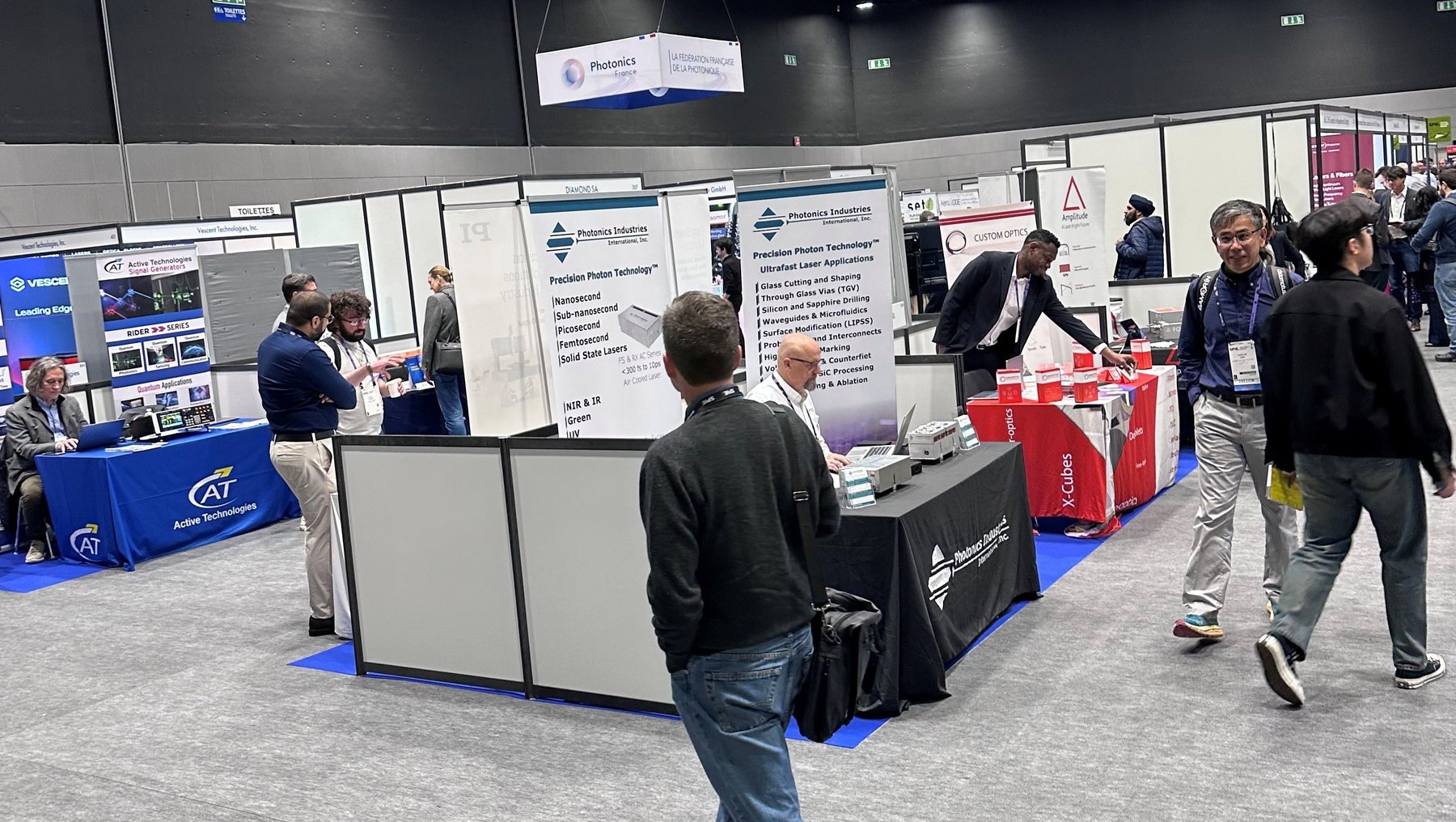
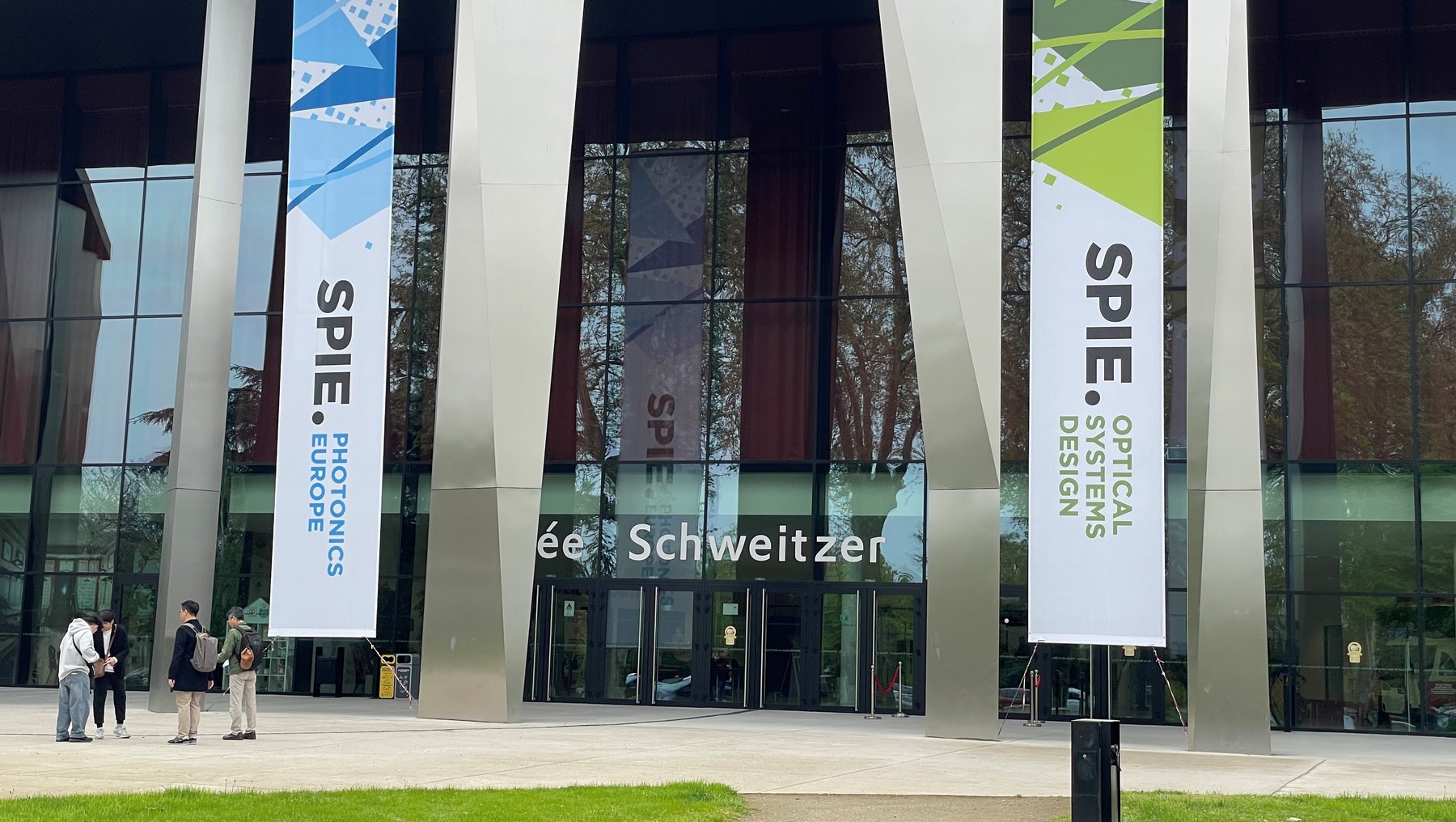
Prof. Maktabi attended the SPIE Photonics Europe & Optical Systems Design conference and trade show from April 12–16, 2026. SPIE Photonics Europe & Optical Systems Design is one of the leading trade shows in the field of photonics and laser technology and is held every two years in various European cities. The abbreviation “SPIE” stands for “Society of Photo-Optical Instrumentation Engineers,” an international organization specializing in optics and photonics. Its key topics include advanced optical components, laser technology, applications in biophotonics, advanced manufacturing methods, and optoelectronic materials. Biomedical technologies are also showcased here.
For Professor Maktabi, the conference is particularly interesting from a research perspective. However, Prof. Maktabi did not attend merely as a visitor. Rather, as a representative of the Department of Biomedical Engineering at Anhalt University of Applied Sciences, she was also able to present a scientific poster at the exhibition. The poster is based on Paul Pöhlitz’s master’s thesis, which was developed in collaboration with the University of Leipzig.
Both the poster presentation and Mr. Pöhlitz’s master’s thesis—which received outstanding credits—focus on the use of artificial neural networks and hyperspectral imaging technology to analyze colorectal carcinoma tissue in histopathological specimens.
What exactly is this, and why is it relevant to biomedical research and teaching in our Department?
The histopathological analysis of tissue samples plays a central role in the diagnosis and treatment of most cancers. Colorectal cancers are among the most common causes of cancer-related deaths, so early and reliable detection is essential. However, the evaluation of histological sections is time-consuming and requires a high degree of pathological expertise. In this context, Mr. Pöhlitz’s work demonstrated that hyperspectral imaging (HSI) combined with artificial neural networks (ANN) can effectively support the detection and classification of colorectal carcinomas. The accuracy, sensitivity, specificity, and F1-score values reached up to 90%. Mr. Pöhlitz was able to demonstrate that computer-aided systems have the potential to improve the diagnosis of colorectal cancer. Convolutional neural networks, in combination with hyperspectral imaging, represent a promising technology for optimizing diagnostic workflows, thereby making them faster and more precise.
Prof. Maktabi, who supervised Mr. Pöhlitz’s work, continues to conduct research in this field.
