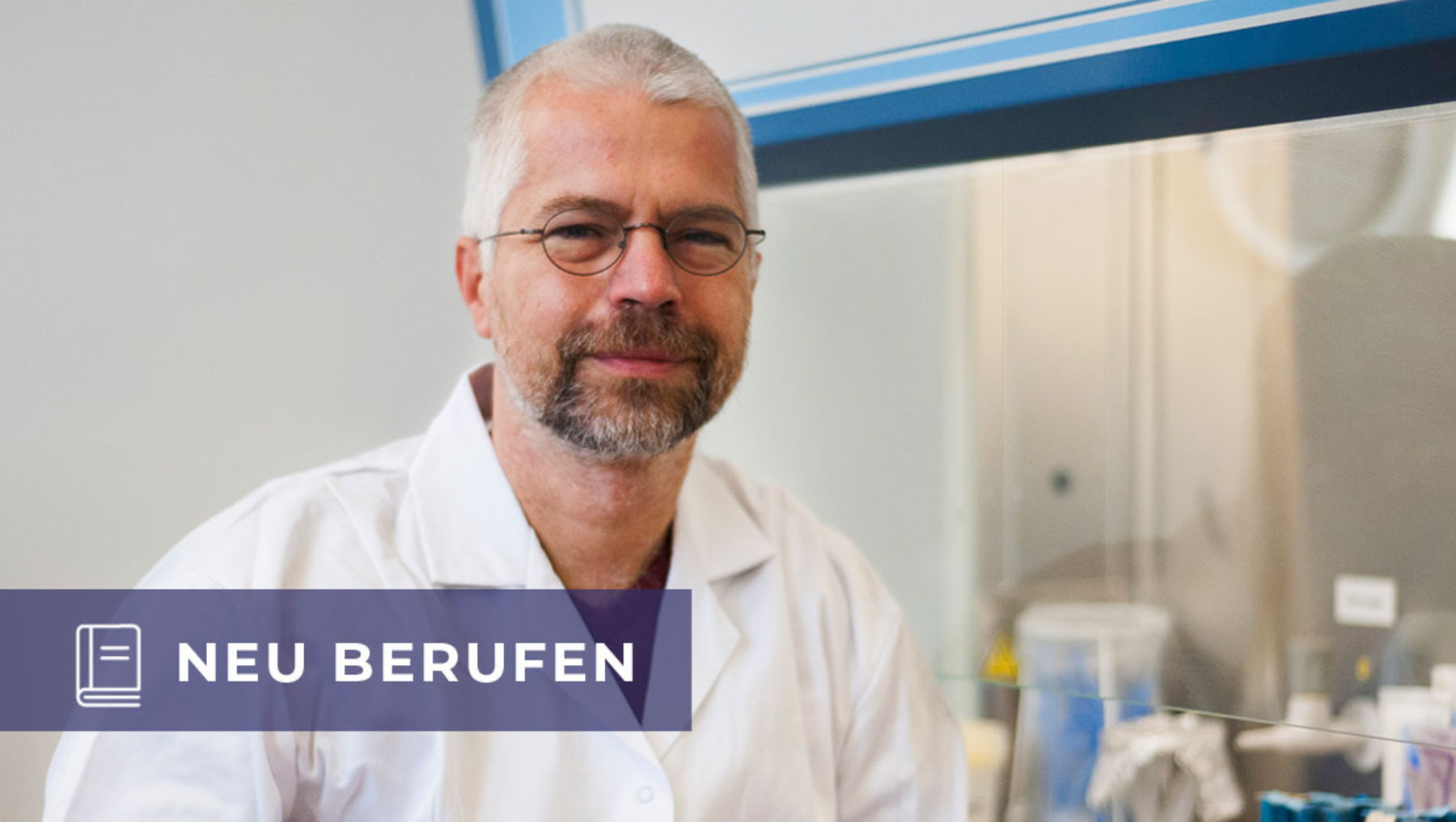
Very few microorganisms in a biocoenosis can be cultivated in the laboratory - for more than 90 percent of species, modern techniques must be used in order to know what they do in theory and practice. This is one reason why the newly appointed Professor of Microbiology at the Department of Applied Biosciences and Process Engineering at Anhalt University of Applied Sciences has made microbial communities his field of research.
In this interview, Professor Dir Benndorf talks about his teaching focus, why there are efficient and less efficient biogas plants and which procedure could make colonoscopies unnecessary in the future.
Prof. Benndorf, you have been appointed Professor of Microbiology at Anhalt University of Applied Sciences in Köthen. What were your professional stations before Anhalt University of Applied Sciences?
I studied biochemistry at Leipzig University and spent my time as a doctoral student at the Umweltforschungszentrum Leipzig-Halle GmbH. I did my doctorate there, focusing on the microbial degradation of pollutants using proteome analysis, and stayed on after my doctorate, for a total of ten years. At the time, I was already involved in teaching at Leipzig University, giving lectures and helping out in labs. At the time, I already had the desire to expand on this. That's why I then moved from the research center to the University of Magdeburg, where I worked for 15 years as a research assistant on the Biosystems Engineering degree program and was team leader for the Microbial Communities department.
You have been a deputy professor in the field of microbiology at Campus Köthen since 2019. What fascinates you about your field?
I am fascinated by the complex interactions between microorganisms in microbial communities. For a very long time, microbiology focused on the isolation and characterization of individual bacteria, for example pathogens or bacteria with biotechnological applications. Today, however, modern techniques, the so-called OMICS techniques, enable access to entire communities. These techniques make it possible to access communities of life, so-called microbiomes. This is so exciting because it enables us to discover organisms that we cannot cultivate in the laboratory. The crazy thing is: this is the majority of species! In many habitats, it's more than 90 percent of bacteria that we can't cultivate in the lab - research using OMICS techniques makes this possible.
What are these OMICS techniques and how can a layperson understand them?
One new technique is the sequencing of DNA from these communities. I learn something about which organisms are there and which genes they have and what they can theoretically do. If we then look at the proteome, i.e. the proteins, then I can see what the microorganisms actually do. This allows us to explain and understand the communities.
Which microbial communities are you investigating?
My topics include microbial communities in biogas plants. The conversion of biomass to biogas cannot be carried out by one bacterium alone. This is a very good example of the need to look at microbiomes. There are mutual dependencies as well as competition, i.e. relationships as we know them in the human community. This can go well, but it can also go wrong; in the case of the biogas plant, this leads to reduced efficiency and economic damage.
I also work on the human microbiome. In the simplest case, imbalances in the gut microbiome lead to temporary digestive disorders, but an altered microbiome is also associated with inflammatory bowel disease, bowel cancer, diabetes, obesity and even neurological disorders. An improved understanding of the processes in the microbiome can help to optimize the biogas process or even prevent or diagnose health problems.
How could this improved understanding be achieved? Are there methods for this?
At the moment, we can only record the proteins of the most common bacteria and therefore only see part of the community, the tip of the iceberg. That's why I've been thinking for years about a technology to sequence individual protein molecules in complex mixtures, just as we can already do for DNA sequences. There are initial approaches, but the matter is very complex because, unlike PCR analysis for DNA, we still have no direct way of multiplying proteins.
Have you set yourself a specific goal for your work at Anhalt University of Applied Sciences?
I would like to develop a reliable method for the mass spectrometric diagnosis of the microbiome of stool samples that can be used for the diagnosis of inflammatory bowel diseases and the early detection of bowel cancer. This would save many people a colonoscopy and ultimately even save health insurance companies money. One example of the successful introduction of mass spectrometry in microbiological laboratory diagnostics is MALDI biotyping, a three-stage method of mass analysis of chemical compounds
Can you briefly tell us about some of the areas you want to focus on in teaching?
These are related to my research topics. To do this, however, students first need practical skills in the laboratory, which we have to teach them. At the same time, they also benefit from modern OMICS technologies and bioinformatics. I would like to offer extensive and modern labs and practical courses for both topics.
In addition, I have had good experiences when students work out course content independently and at an early stage, which they then present to each other in lectures. This has many advantages: students realize that the basic knowledge from the lecture enables them to acquire additional knowledge themselves and they listen to each other differently than if I alone speak as a professor. I think that the skills of independent research and presentation are important soft skills for later professional activity.
Do you have a motto that you would like to give students to take with them on their journey through life?
Yes, I have two mottos: "Leave the beaten track and look for new ones". We often gain groundbreaking inventions and insights when we abandon familiar patterns of thought and explanations for unusual observations or experimental results.
And what is also important for me to say:
As individuals, we are often seemingly helpless in the face of the global problems of our time. Find the small contribution you can make to solving the climate crisis, for example, in your own environment. For me as a microbiologist and devout Christian, this means developing biotechnological processes for the sustainable production of products and for the biological storage of renewable energy, because "I am a sojourner on earth" (Psalm 119:19) and I want to leave God's creation in good condition for my own children and future generations.
Prof. Benndorf, thank you very much for the interview.
