Process Engineering (part-time Bachelor's program, distance learning)
From raw material to high-quality end product
Process Engineering deals with all processes in which basic materials - raw materials such as crude oil, natural gas or iron ore, cultivated plants such as wheat or hops, animal products such as milk or meat - are changed in their composition or properties or converted into fuels, plastics, food or medicines. This includes all processes in technology and Economics in which new, high-quality products are produced from the basic materials. The list of products manufactured using process engineering is long, and the list of processes and plants required for this is even longer. In bio plants, for example, algae are converted into fuels, food or medicines through biological, chemical or physical processes. Depending on the process, a distinction is made between mechanical, thermal, chemical or bioprocess engineering.
Process Engineering is typically characterized by its continuous nature. The materials "flow" through the systems in large quantities. A walk through a process engineering plant, e.g. for the production of plastics or sugar, reveals a large number of piping and cleaning systems, stainless steel tanks, dosing and conveying systems, pumps and other equipment. Of course, modern process control and automation technology should not be overlooked either.
Anyone who sees their professional future in the chemical and pharmaceutical industry, in environmental technology, the food industry or in brewing beer should have a good knowledge of processes and systems for pumping liquids or for crushing, mixing and separating solids.
The 8-semester (180 credits) part-time engineering degree program in Process Engineering comprises scientific and technical modules. The Bachelor's degree program is practice-oriented and prepares students for work in the technical field. Students also receive a scientific education. The course is divided into basic and advanced modules.
The learning outcomes are achieved through a combination of attendance periods (four Fridays and Saturdays and one attendance week per semester) and guided time spent independently studying using e-learning platforms (including Moodle). The attendance times include seminar classes, labs (recognition possible based on proven prior knowledge), consultations and examinations. This also means that module examinations are spread over the semester, which meets the needs of students on career-integrated programs.
At the beginning of the course, students are taught a comprehensive basic knowledge of the natural sciences. For example, mathematics and statistics, chemistry, but also physics and computer science are on the hours per week per semester and examination schedule for engineers. The basic engineering training includes technical modules such as: Engineering Fluid Mechanics, Engineering Thermodynamics, Engineering Mechanics and Computer Aided Design (CAD), Measurement and Control Engineering and Materials Engineering. In the later program sequence, the following modules are then added: Chemical, Mechanical and Thermal Process Engineering, Supply and Disposal Technology, Process, Apparatus and Plant Engineering and Safety Engineering. Elective modules (including power plant engineering, air pollution control, flow conveying technology, project and quality management) allow students to discover and/or deepen their own interests.
The practice-oriented Bachelor's degree program in Process Engineering includes a project work and a 20-week Bachelor's thesis (see examples below). Students can/should work on tasks from the company environment. However, students also have the opportunity to actively participate in the Department's research projects.
- Numerical simulation of the concentration distribution of disperse two-phase flows in suspension processes using the Euler-Lagrange method
- Cross-flow microfiltration for the concentration of microorganisms from water bodies
- Design, construction and testing of a high-temperature ion mobility spectrometer
- Investigation into the conversion of the conditioning agent in the cooling systems of SKW Stickstoffwerke Piesteritz GmbH
- Evaluation of different methods for cell disruption of Scenedesmus vacuolatus with the fluorescent dye Sytox Green
- Design of a system for the decompression of uncleaned tank trucks
- Numerical investigations for modeling a tube bundle heat exchanger used as a baffle
- Influence of the gas composition on the CO shift reaction using the example of TOTAL Raffinerie Mitteldeutschland GmbH
- Investigation of heat transport during vinyl acetate-ethylene copolymerization
- Investigation of mass transfer in an electrochemical parallel plate reactor
- Optimization of glycerine distillation by integrating a decanter with the aim of saving costs
After completing a Bachelor's degree in Process Engineering, students can enter many different professional fields, further deepen their technical focus in a Master's program and/or prepare for a possible doctorate.
Process Engineering engineers are also known as the "Swiss Army Knife" of engineers. As the knowledge and know-how of the Process Engineering engineer is industry-neutral, there are a wide range of entry opportunities. The chemical, pharmaceutical and food industries, apparatus and plant engineering offer career starters a wide range of opportunities to find a job after graduation and later - if necessary - to change jobs. On closer inspection, the range of industries in which process engineering is produced is enormous: Biotechnology, environmental and waste disposal technology, recycling, the paper, cellulose and cement industries, etc.
The right preparation
Achievements from a first degree program and/or after a change of degree program or university and/or stays abroad that were completed at another university can be credited upon application after enrolment.
The examinations committee of the respective Department is responsible for this in consultation with the relevant Degree Program Advisor/lecturers.
A future student of Process Engineering should have an interest in the natural sciences and, above all, technology.
Mathematics, chemistry and physics, as well as biology, are therefore important foundations.
Ideally, you should have chosen a chemistry, physics or mathematics course and/or have learned a technical or chemical profession.
Whether mathematics, chemistry or physics - our courses prepare you for a successful start to your studies. Further information
If you do not have a higher education entrance qualification, we also offer a preparatory course that will give you the opportunity to study at Anhalt University of Applied Sciences after successfully passing the test. You can find all relevant information via the following link.
Further information
You can also use the following VDI courses to prepare for your studies:
Online physics bridge course
Online bridge course in mathematics
If you have any further questions, please contact the course coordinator or the Degree Program Advisor.
If you do not have a higher education entrance qualification and would still like to study with us, you will find all the relevant information via the following link.
In May or June each year, the Campus Köthen of Anhalt University of Applied Sciences organizes a university information day.
All interested parties are cordially invited to this day to get to know the university, instructors and students as well as our degree programs. Get a personal impression of our facilities and the campus on site and receive individual advice.
The dates of the next University Information Day in Köthen and at our other locations in Dessau and Bernburg can be found here.
Important information on part-time studies
The attendance times in a semester follow the following pattern:
-
Four times Friday and Saturday lectures, practical courses, labs, consultations, projects, examinations
-
One week of lectures, practical courses, labs, consultations, projects, examinations
The attendance times will be announced in advance. Participation in the classes offered is voluntary.
All examinations/exams are held at Anhalt University of Applied Sciences in Köthen. The examination dates are already integrated into the attendance phases and take place exclusively within these times.
Individual dates for retake examinations are possible by arrangement with the program coordinator.
This degree program is recognized for educational leave. You can apply to your employer for 5 days of educational leave per year.
Following your bachelor's degree, you have the opportunity to continue your academic education at Anhalt University of Applied Sciences in the master's degree program in Process Technology while working.
Quality assurance is of enormous importance in industry and therefore also plays a special role in the training and further education of specialists. Anhalt University of Applied Sciences enables students to acquire practical quality management knowledge in combination with a highly regarded additional certificate from TÜV SÜD Akademie (QMF certificate).
The Quality Management module is led by Prof. Dr. Jean Titze, who himself worked in industry for over ten years and is able to offer this additional training as an accredited TÜV speaker. Working students in particular can update their know-how in quality management and have additional proof of their competence. Their companies can also benefit equally from the knowledge imparted at the university.
Study program & course content
Applied Chemistry
Mathematics I
Physics for Engineers
Engineering Mechanics
Mathematics II
General Business Administration and Marketing
Engineering Informatics
Organic Chemistry
Automation and Electrical Engineering
Physical Chemistry
Technical Fluid Mechanics
Technical thermodynamics
Reaction Engineering
Mechanical Process Engineering
Measurement and Control Engineering
Thermal Process Engineering
Apparatus Engineering
Process Technology
Process Engineering lab
Elective modules 1
Practical certificate
Energy technology
Instrumental analysis
Elective module 2
Elective module 3
Practical certificate
Law
Elective modules 4
Elective module 5
Elective module 6
Practical experience
Project work and scientific writing
The project work can be a literature paper (theoretical) or a laboratory project (practical).
Bachelor's thesis with colloquium (=defense)
20 weeks
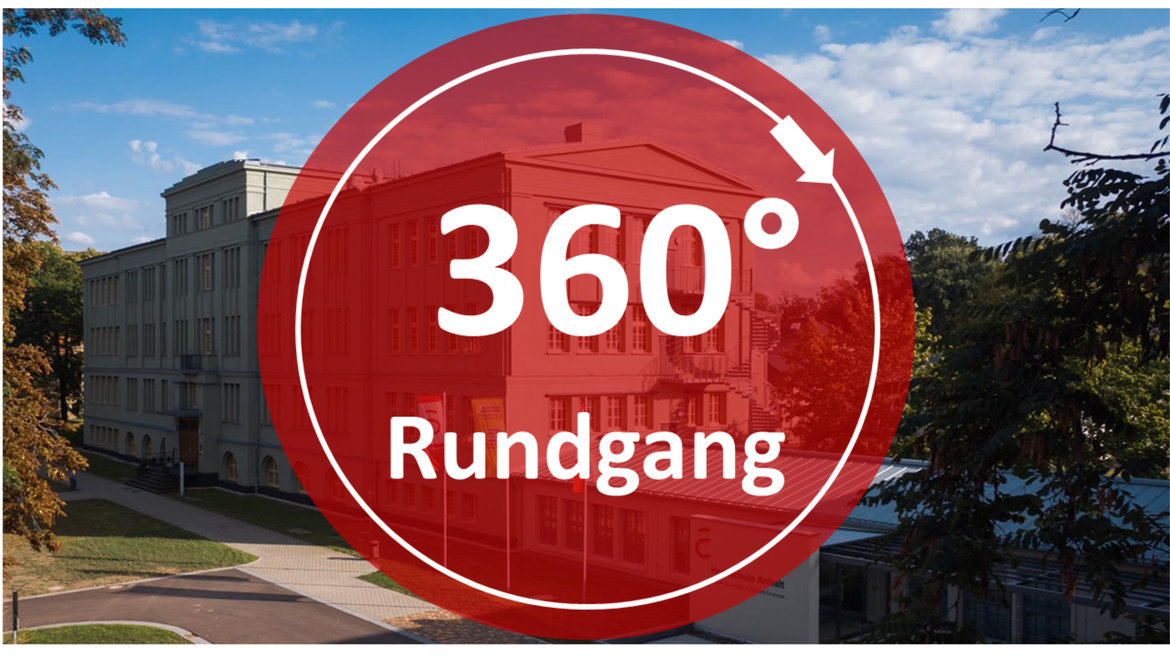 © Sebastian Köhler



Having the degree in the bag is a fantastic feeling. I'm still at the same company, but I'm still perceived very differently by my colleagues.
Anja Diete Graduate Process Engineering (Distance Learning)
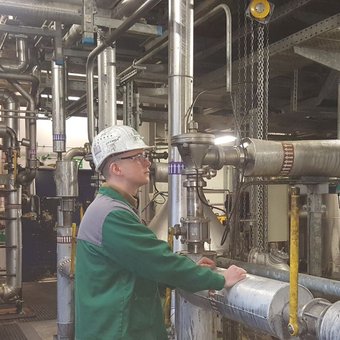
A distance learning course in Process Engineering requires an independent and disciplined way of working. With the support of the university, especially the professors, this can be successfully mastered
Christian Raatz Graduate Process Engineering (Distance Learning)
