During their studies:
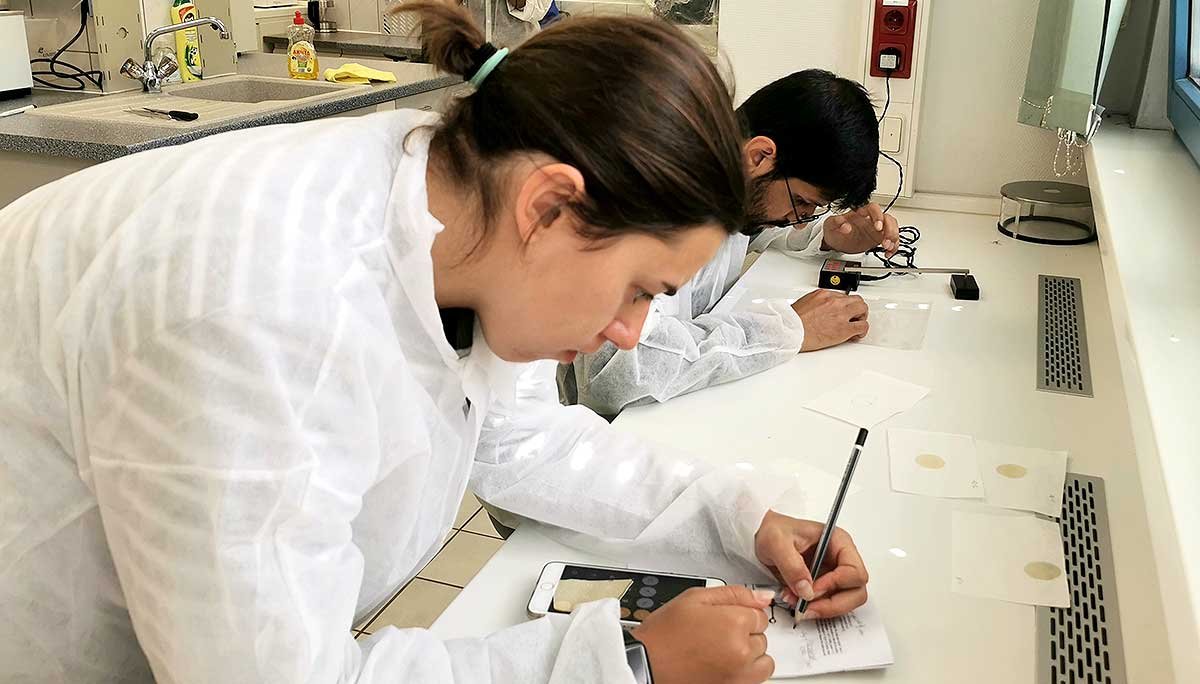
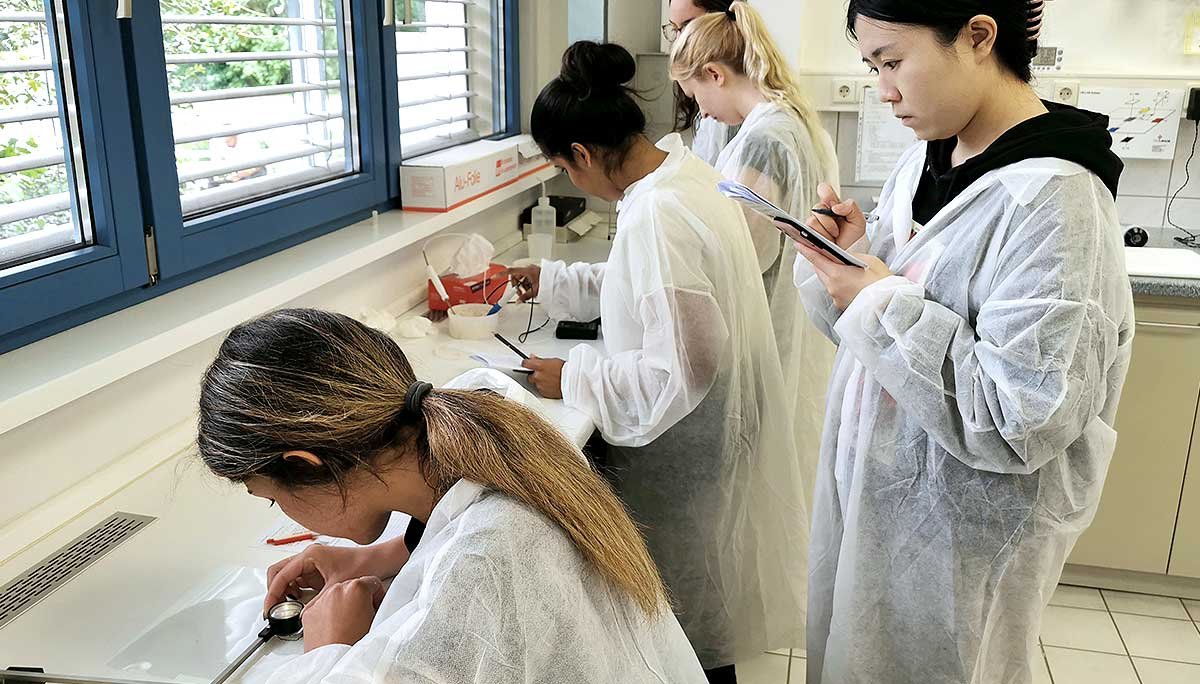
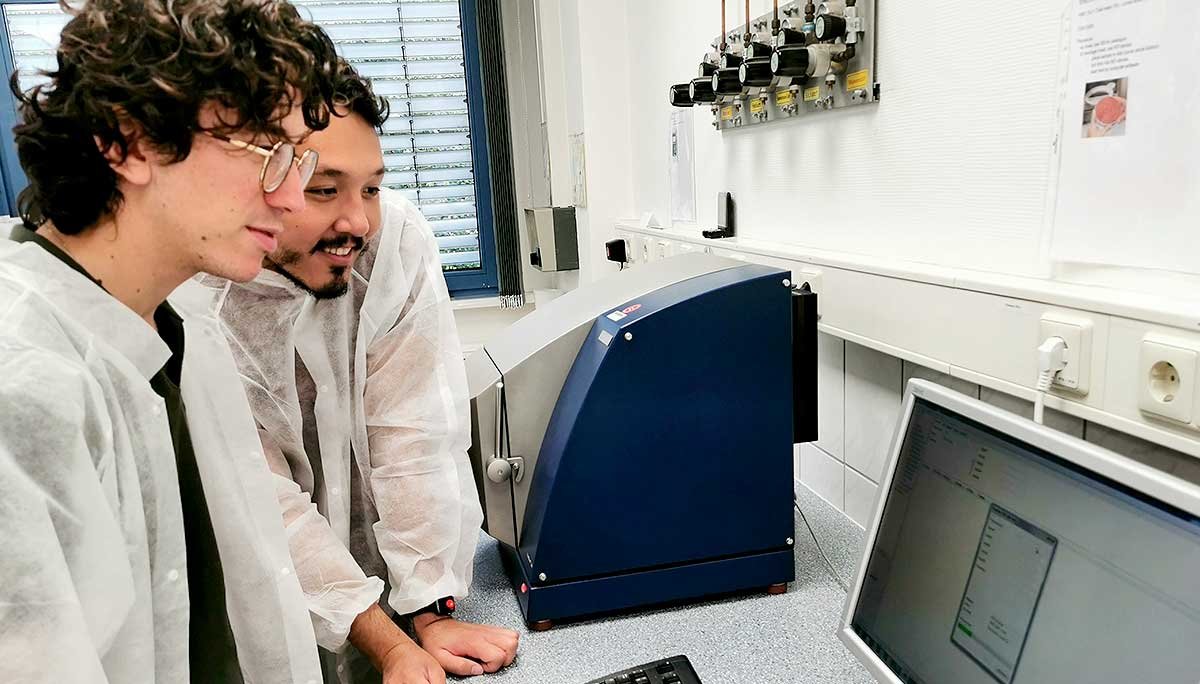
Students in the degree programs in Ecotrophology; Food Science, Technology, and Business (BIFTEC); and Food and Agribusiness (courses taught in English and German) gain—through labs, interdisciplinary projects, and theses, including in collaboration with research groups— —insights into a wide variety of analytical methods for assessing the quality of animal and plant-based raw materials, as well as intermediate and final food products. A small sensory evaluation laboratory also enables the gustatory assessment of foods produced by students during labs or developed in collaboration with research groups.
Tasks and Areas of Activity:
- Product- and process-oriented student labs:
- Bachelor’s degree program in Ecotrophology in the modules “Food Engineering,” “General Food Technology,” and “Food Production and Evaluation”
- Master’s degree program in Ecotrophology in the modules “Specialized Food Technology – Plant-Based Products” and “Specialized Food Technology – Animal-Based Products”
- BIFTEC degree program in the “Meat Science Technology” module
- MFA degree program in the “Food Technology and Quality” module
- Students in the Ecotrophology, BIFTEC, and MFA degree programs address issues related to the quality assessment of animal and plant-based raw materials as well as intermediate and final food products in interdisciplinary projects and theses, in particular:
- Determination of physical and rheological properties and evaluation of factors influencing them, e.g.:
- Density
- Refractive index
- Flow behavior/viscosity
- Determination of factors influencing structural-mechanical properties (texture) and color using instrumental sensory analysis
- Determination of physicochemical properties, e.g.:
- pH value
- Conductivity
- Water activity
- Investigation of factors influencing processing operations such as:
- Crystallization/evaporation
- Extraction
- Filtration
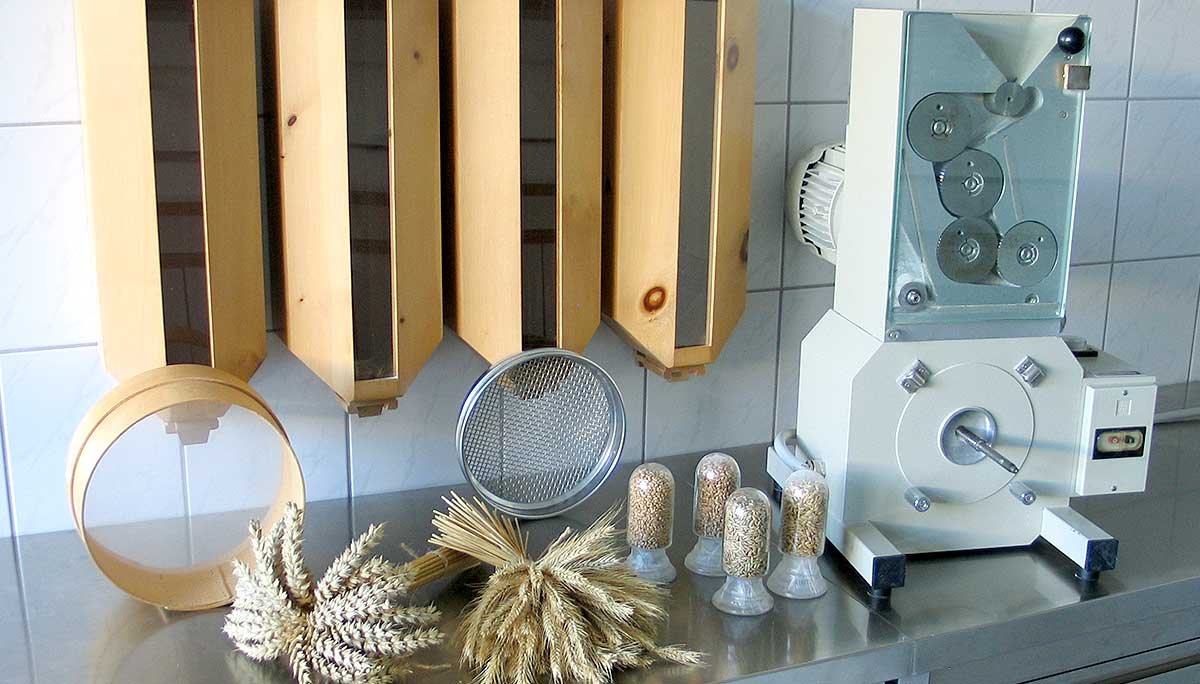
- Sieving
- Grinding
- Centrifugation/Sedimentation
- Metrological evaluation of the quality of raw materials used, as well as manufactured intermediate products and foodstuffs, e.g.:
- Emulsion stability
- Water-binding capacity
- Yield
- Texture
- Color
- Evaluation of the quality of manufactured foods using gustatory sensory analysis
- Use of reference and rapid methods for determining ingredients:
- Soxhlet fat extraction (reference method)
- Moisture content using the drying oven method (reference method)
- Microwave drying and NIR analysis (rapid analysis)
- Measurement of process parameters (energy consumption, torque, pressure development)
- Determination of physical and rheological properties and evaluation of factors influencing them, e.g.:
- Support for the “Food and Nutrition Research” research group in conducting research projects and contracts for the private sector, with a focus on meat and sausage products as well as delicatessen products
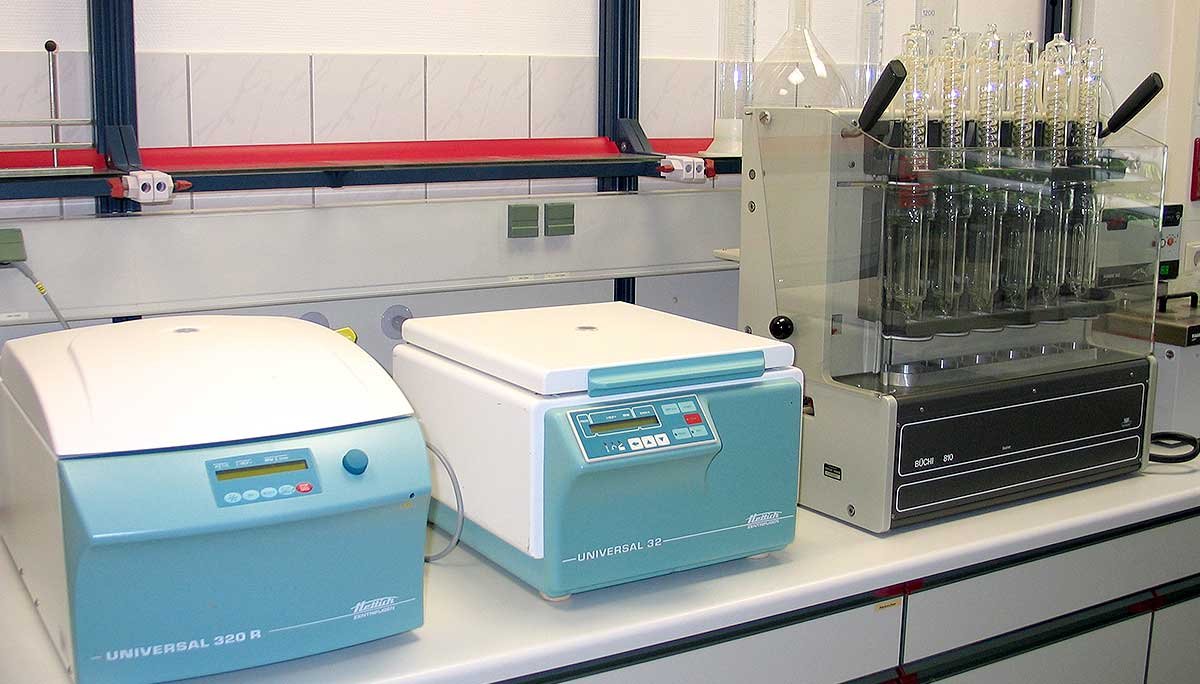
Technical Equipment:
- Texture measurement devices (biaxial testing machine, texture analyzer, penetrometer)
- Colorimeters (portable, stationary)
- Spectrophotometers
- Microwave moisture analyzer
- NIR analyzer
- Water activity meter
- Vacuum rotary evaporator
- Laboratory roller mill
- Sieve Analyzer
- Tamping volumeter
- Microscope
- Various measurement techniques for determining: density, pH, conductivity, viscosity, water-holding capacity, and more
For the degree program:
Bachelor’s in Ecotrophology
Contact