Anhalt University of Applied Sciences with innovative topics in the agra-Campus area at the start
agra Messe Leipzig - the agricultural exhibition in Central Germany will take place from April 9 to 12, 2026. The complete range of agricultural and forestry products and services will be on display.
The agra-Campus is the central presentation area of the agra agricultural exhibition for technical colleges and universities. As a central element for the promotion of agricultural education and training and as a career guidance platform, it creates points of contact with the Agriculture sector. Knowledge transfer offers and research projects provide insights into practice, career prospects are presented and training, career and cooperation partners are introduced.
The Department of Agriculture, Ecotrophology and Landscape Development will once again be presenting the following innovative topics in Hall 2/D 23:
 © HS Anhalt/LOEL/AG Prof. Scholz
Precision livestock farming and automation
Background
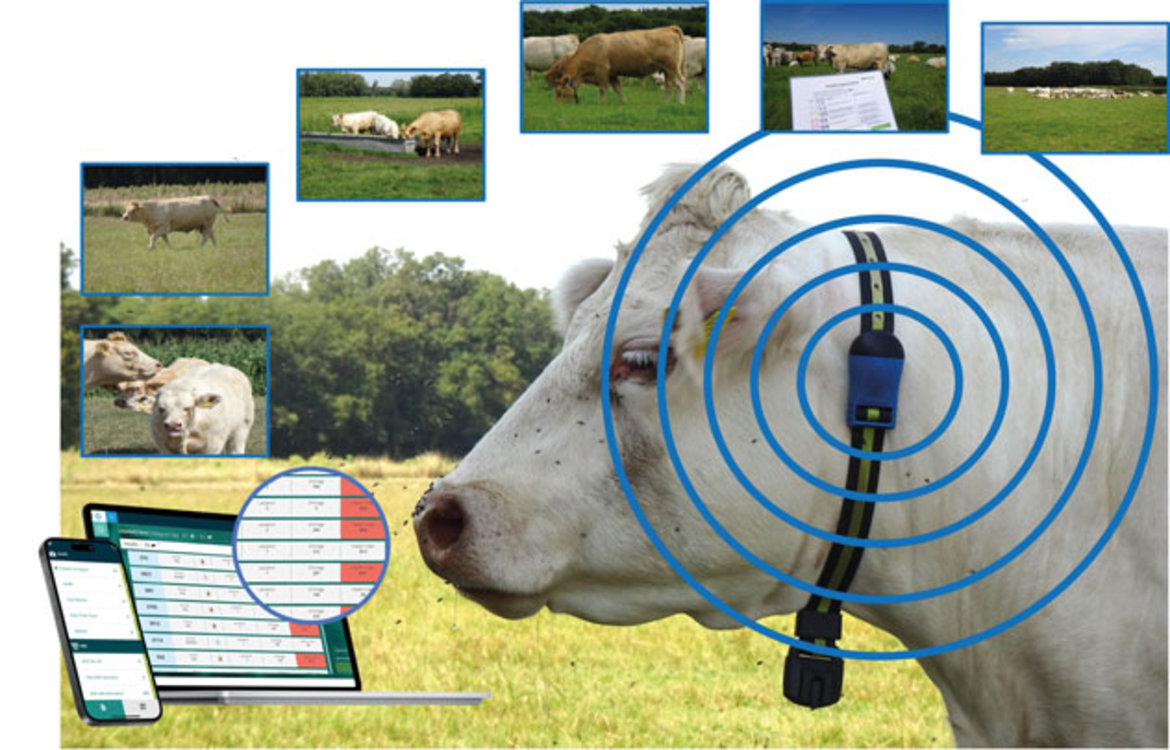
Precision livestock farming (PLF) and also the solutions and ideas for the automation of livestock farming demonstrate the innovative power of animal production. These systems are to be used to further optimize processes, save resources and support the management of livestock. However, the animal-specific sensors that can implement health monitoring in addition to animal observation (24/7) appear to be particularly valuable here. Current investigations and studies at Anhalt University of Applied Sciences (LOEL department) are focusing on dairy cows and sows, but also increasingly on more extensive husbandry systems such as sheep, suckler cows and beef cattle. However, current issues are also being addressed in the area of poultry farming.
Results
In feeding trials with dairy cows, sows and fattening pigs, numerous systems have been used to date to describe the effects on animal indicators and animal health. For suckler cow husbandry, systems such as SenseHub (MSD Germany),
SMATEX (smaXtec animal care GmbH) and various GPS systems are currently being tested. In combination with numerous animal indicators, the effects of heat stress on the behavior of suckler cows could be demonstrated very well using SenseHub, for example. Changes in feeding and herd management can also be accompanied and monitored.
Further information can be found here.
Contact
 © HS Anhalt/LOEL/AG Prof. Schlegel
Description of egg quality
Background
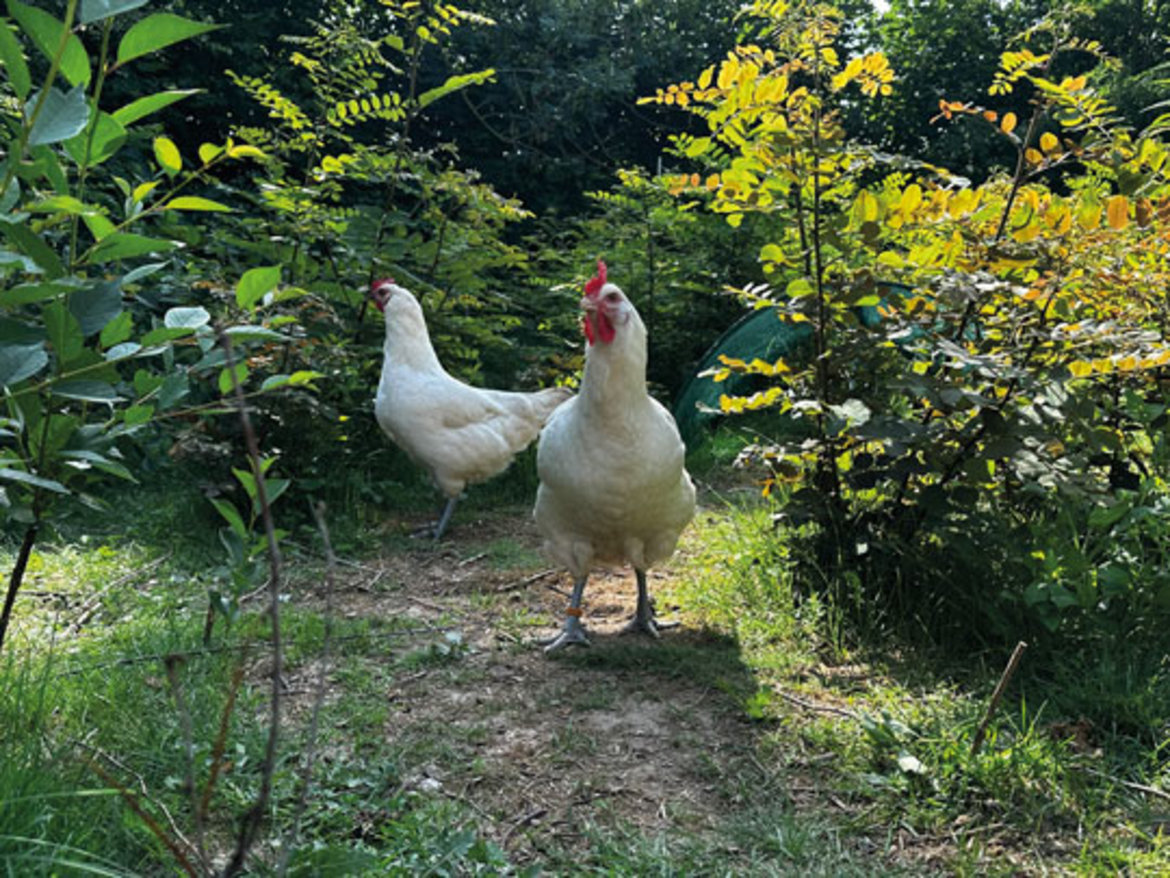
The performance of laying hens changes over the course of a laying period. The number of eggs decreases and they become heavier, while the egg shell becomes thinner. This can also change the breaking strength and thus the marketability. Two genetics of laying hens were kept in the Hühnermobil at Anhalt University of Applied Sciences in 2025 (organic vs. conventional). For the credits of the changing quality of the eggs, 5 eggs of each genetics were examined each week for weight, shape index, egg white and yolk in height and width, blood spots, egg color, ingredients, shell thickness and Ca content in the shell.
Results
The weights of the eggs as well as the eggshell increase in the course of the laying period from week of life (LW) 24 to week of life 55. The weight of the eggs increases by about 17g and rises from a mean weight of 52.6g (LW 24) to a mean weight of 69.3g in LW 55. At the same time, the weight of the eggshell also increases from 6.8g (LW 24) to 8.9g (LW 55). These increases are completely normal. However, this development increases the risk of a thinner shell. The average shell thickness is 0.3 mm. The shells of hens of conventional genetics are significantly thicker at the beginning than the shells of hens of organic genetics. In the course of the laying period, both values approach each other. The lowest values of 0.15 mm were recorded in an organic hen. The thinner the shell, the higher the calcium content in the shell. These investigations are still pending, but provide the basis for deductions for the management of a flock.
The color of the egg yolk varies between 7 (pale) and 15 (orange). There are only slight differences between the genetics. Blood spots occur significantly more often in hens with conventional genetics (1.2 vs. 0.4). The maximum was 13 (conventional) and 4 (organic).
Outlook
The accompanying analyses of the eggs provide valuable information on their quality. In particular, deviations beyond the expected changes in the laying period can provide early indications of health problems in the animals.
Detailed information on the project.
Contact
 © HS Anhalt/LOEL/AG Prof. Knauer
Supporting digital transformation processes
Water is becoming scarcer, the weather more volatile, fertilizer more expensive, bureaucracy more time-consuming and international competition tougher: Agriculture in Germany is facing immense challenges that new digital tools can help to overcome. The agricultural business of the future must therefore use digital technologies throughout and be comprehensively networked with upstream and downstream production areas.
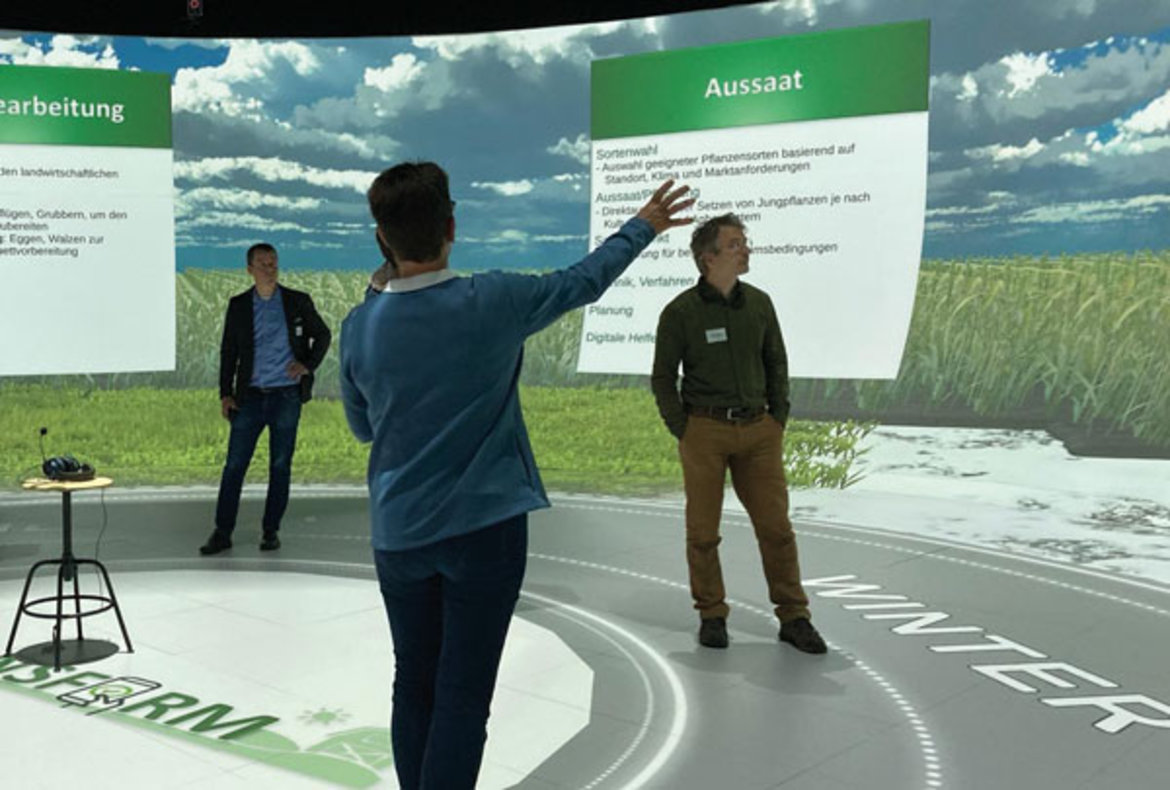
The TRANSFORM research project aims to smoothly transform existing operating systems into a business of the future. The focus is on the close interlinking of economic and ecological perspectives, the regionally particularly relevant question of innovative irrigation strategies, the further development of crop protection using digital technologies, the logistical optimization of processes and the promotion of biodiversity and the associated increase in the effectiveness of ecosystem services. Smart Transformation Labs at the Magdeburg and Bernburg sites serve to transfer knowledge and bring digital technologies to life in Agriculture.
Detailed information on the project
Contact
Prof. Dr. Uwe Knauer
