Anhalt University of Applied Sciences with several innovative topics on the Science & Pioneering campus
Anuga Food Tec is the international trade fair for the food and beverage processing industry. Cross-industry and process-oriented, it covers all important aspects - from production to packaging, storage and distribution. It will take place from February 23-26, 2026 and is one of the most important summits in the industry. Anhalt University of Applied Sciences will be represented on the Science & Pioneering Campus in Hall 5.2 Aisle B No. 093.
 © Uwe Jacobshagen /Janet Krickmeier - gemini generated
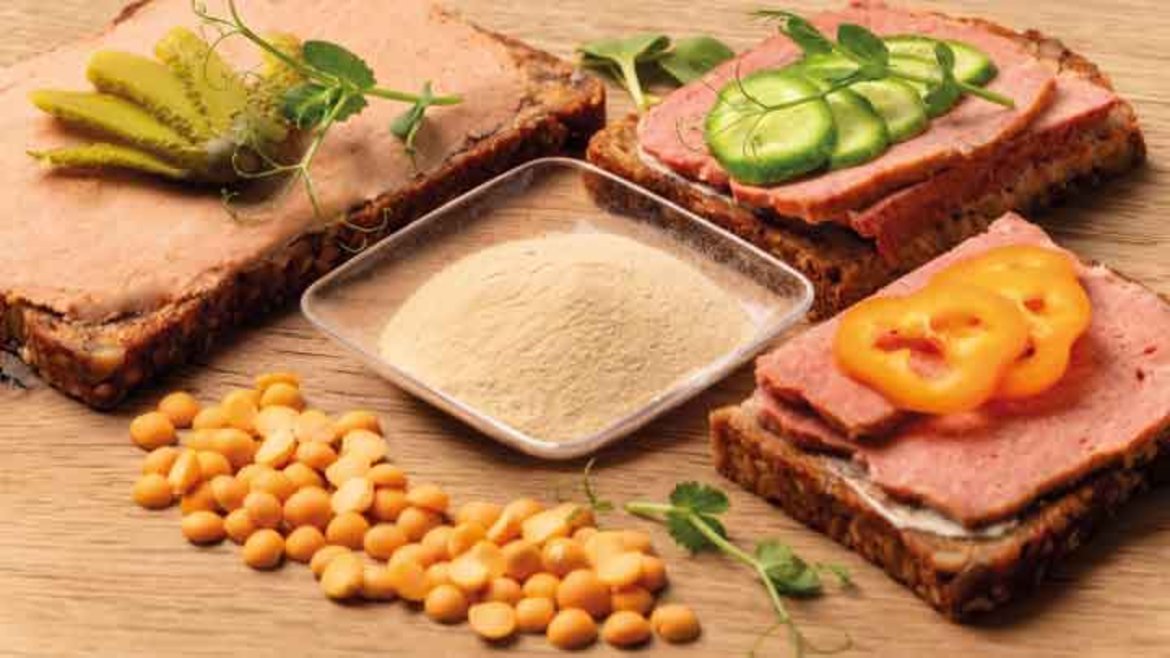
Yellow peas as a high-quality protein source
Thanks to their high content of valuable proteins, regionally produced and processed yellow split peas have the potential of making an important contribution to a future sustainable and healthy diet.
Their use in vegetarian and vegan meat and sausage roducts tends to be rather limited, because the processes for obtaining concentrates and isolates from pea flour are often not suitable for reducing the typical “beany” flavor while maintaining the techno-functional properties (water and oil binding capacity). At the same time, hybrid products containing pea protein to increase the protein content, such as enriched conventional meat and sausage products, are not yet commonly available.
At the DiPiSum project, we aim at making regional peas fit for the future by:
- defining specific requirements for concentrates and isolates − on the basis of newly bred pea varieties (improved sensory properties, higher nutritional value) and by applying new processes for extracting and concentrating proteins (optimum techno-functionality), as well as
developing protein-rich hybrid products based on conventional resources as well as protein-based alternative meat and sausage products, fish products, ready-made meals and delicatessen products.
Funding Program: Model Region for the Digitalization of the Plant-Based Value Chain in Saxony-Anhalt (DiP)
Fundig number: 031B1444D
Funding period: 4/2024 — 12/2028
Contact
-
 © Uwe Jacobshagen
-
 © Uwe Jacobshagen
-
 © Uwe Jacobshagen
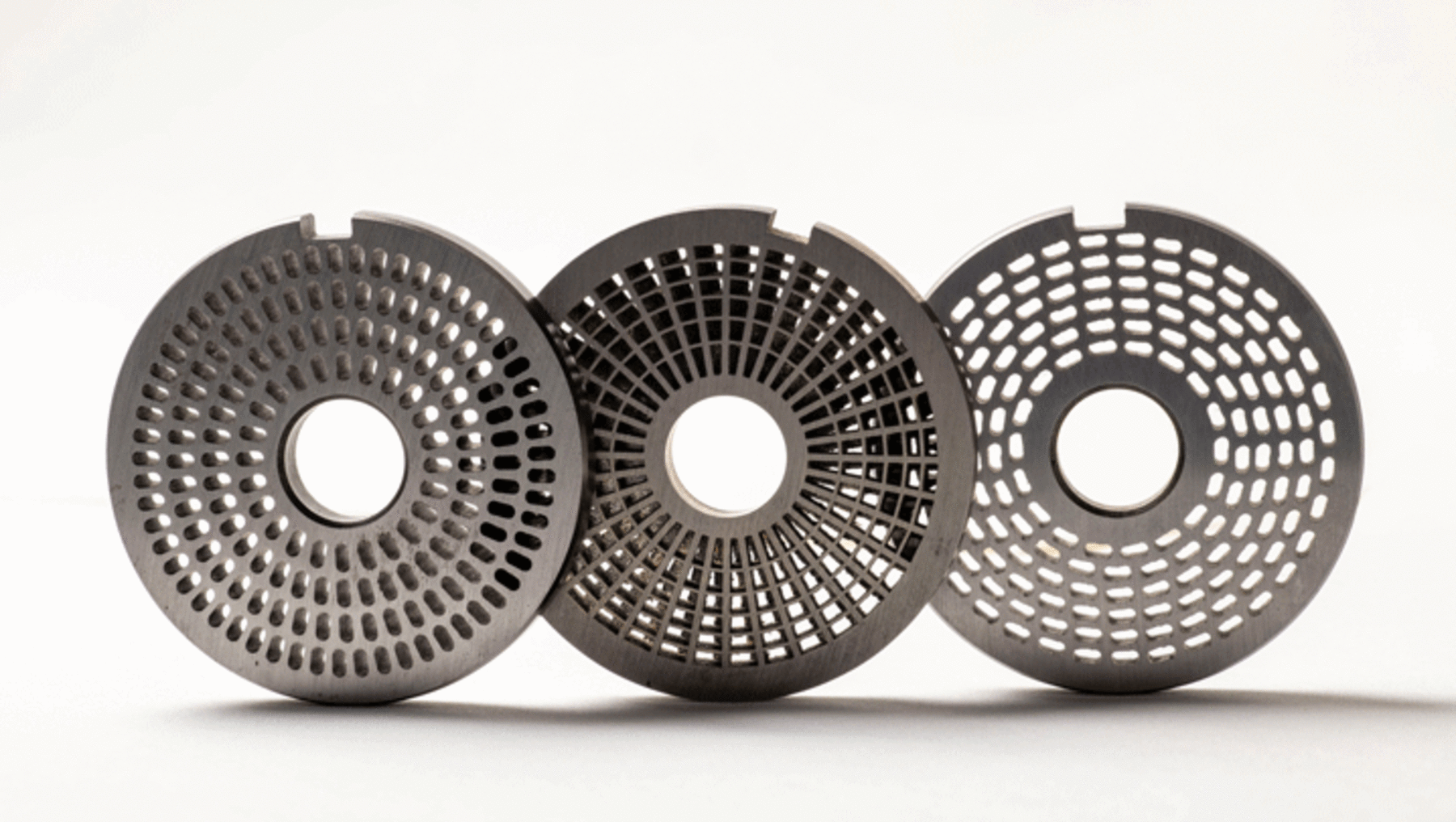
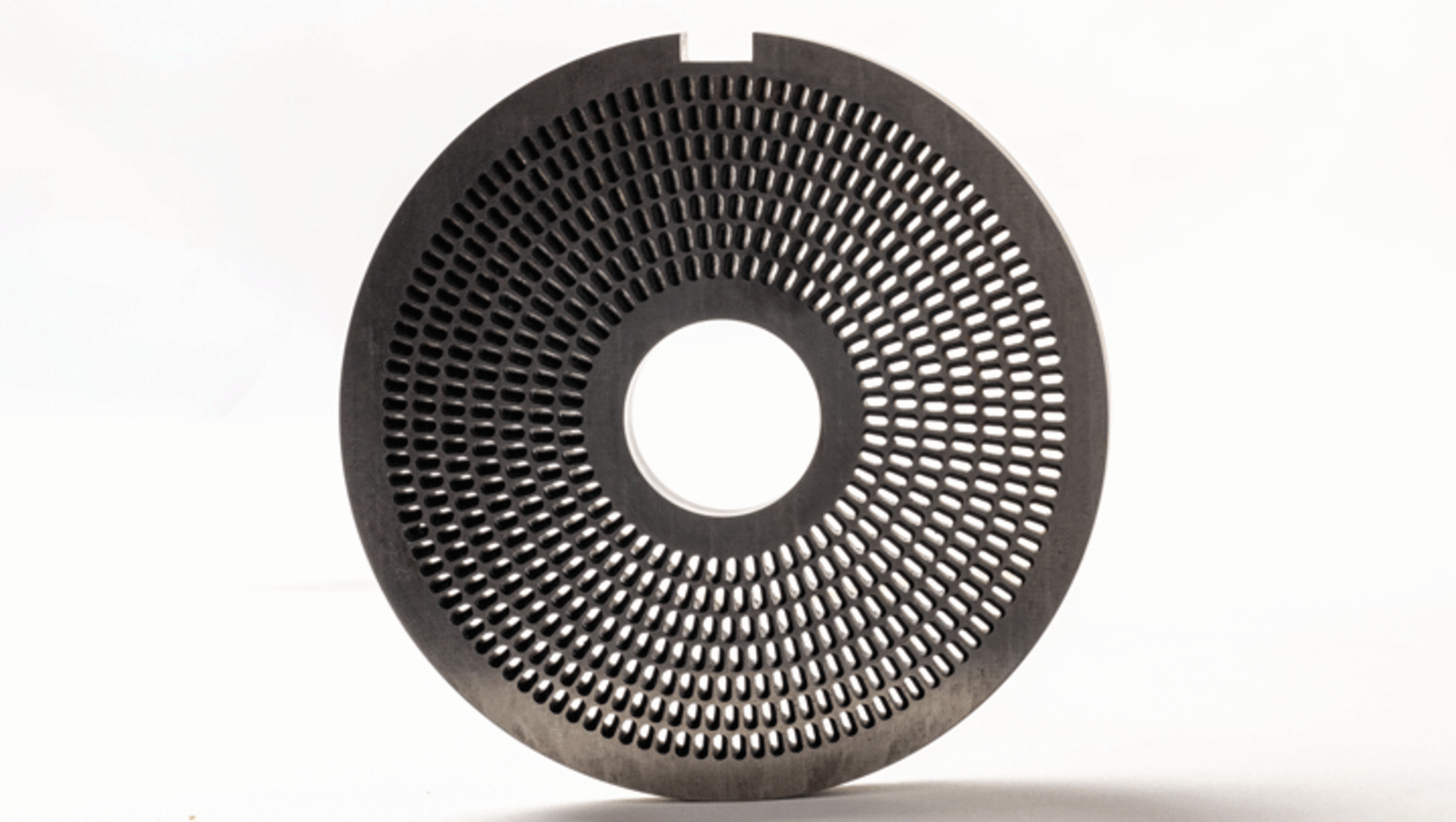
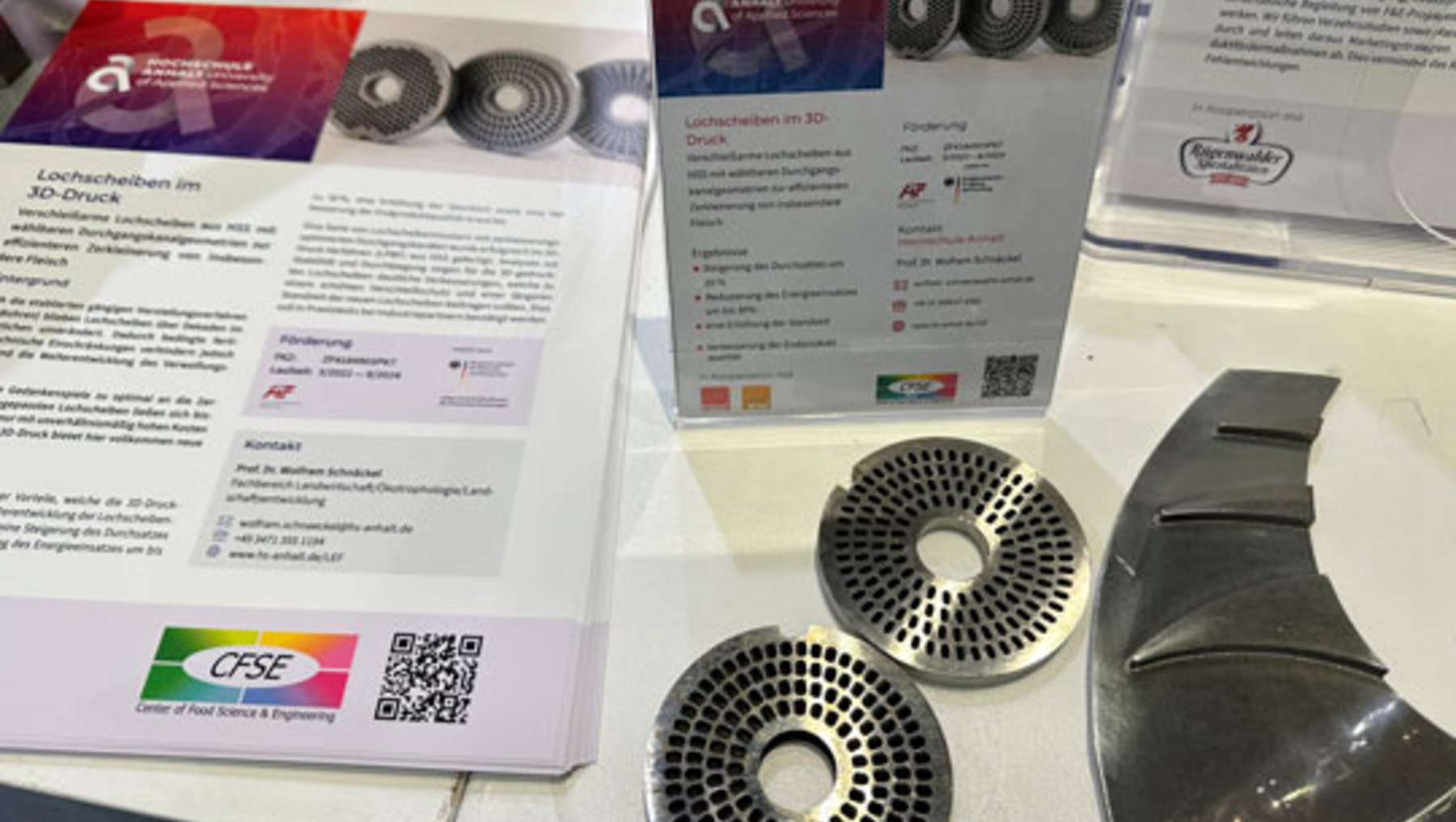
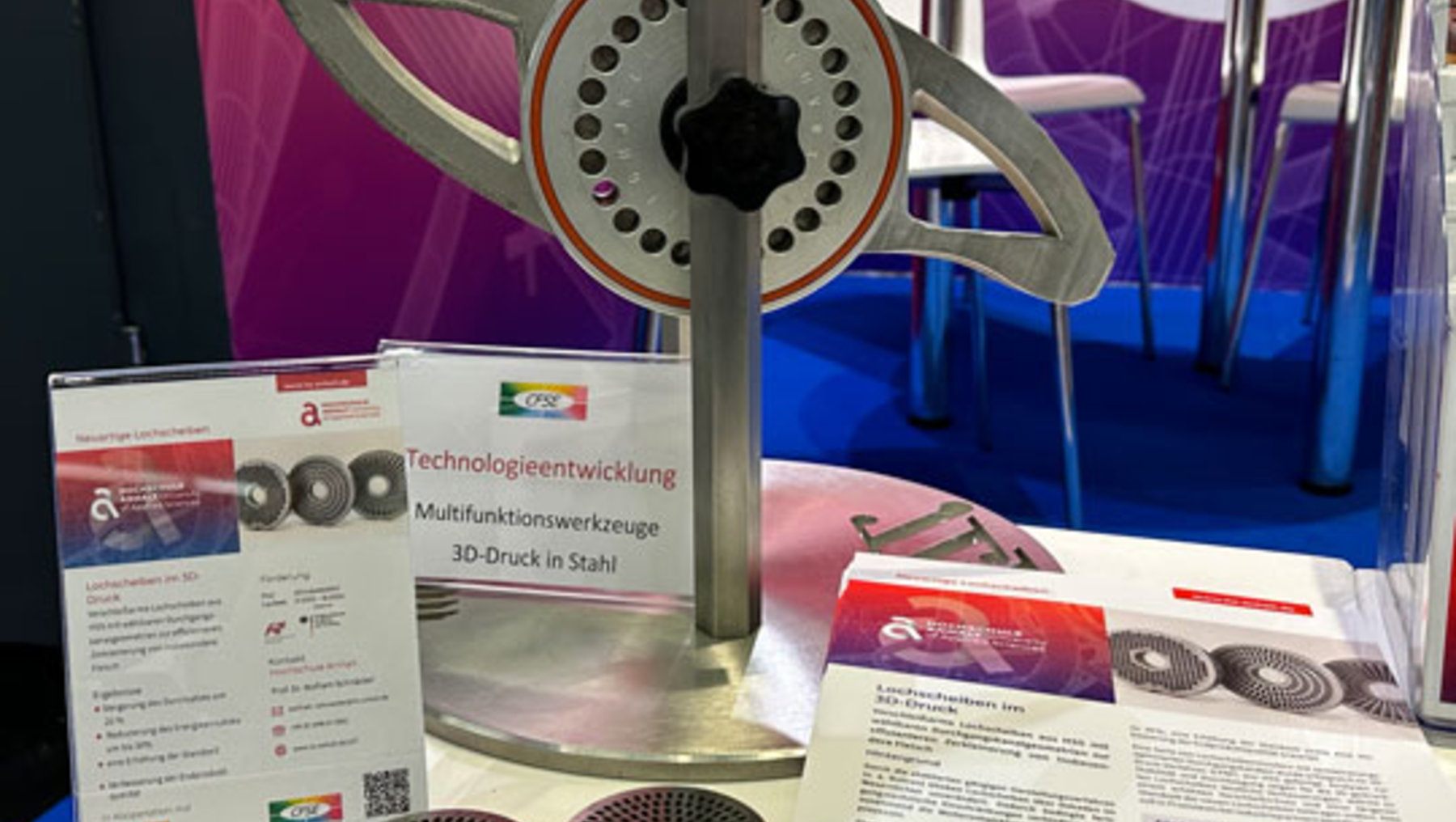
3D-printed meat-grinder plates
Increased meat-cutting efficiency through wear-resistant meat-grinder plates designed with novel passage geometries and made of HSS
Background
As a result of established manufacturing processes (especially when it comes to drilling), meat-grinder plates have remained almost unchanged. However, resulting manufacturing restrictions are increasingly preventing advancements in the mincing process.
Changes to grinder plates that would adapt them to the cutting process have so far not been realized or have only been implemented at disproportionately high costs. This is where 3D printing offers completely new perspectives.
Results
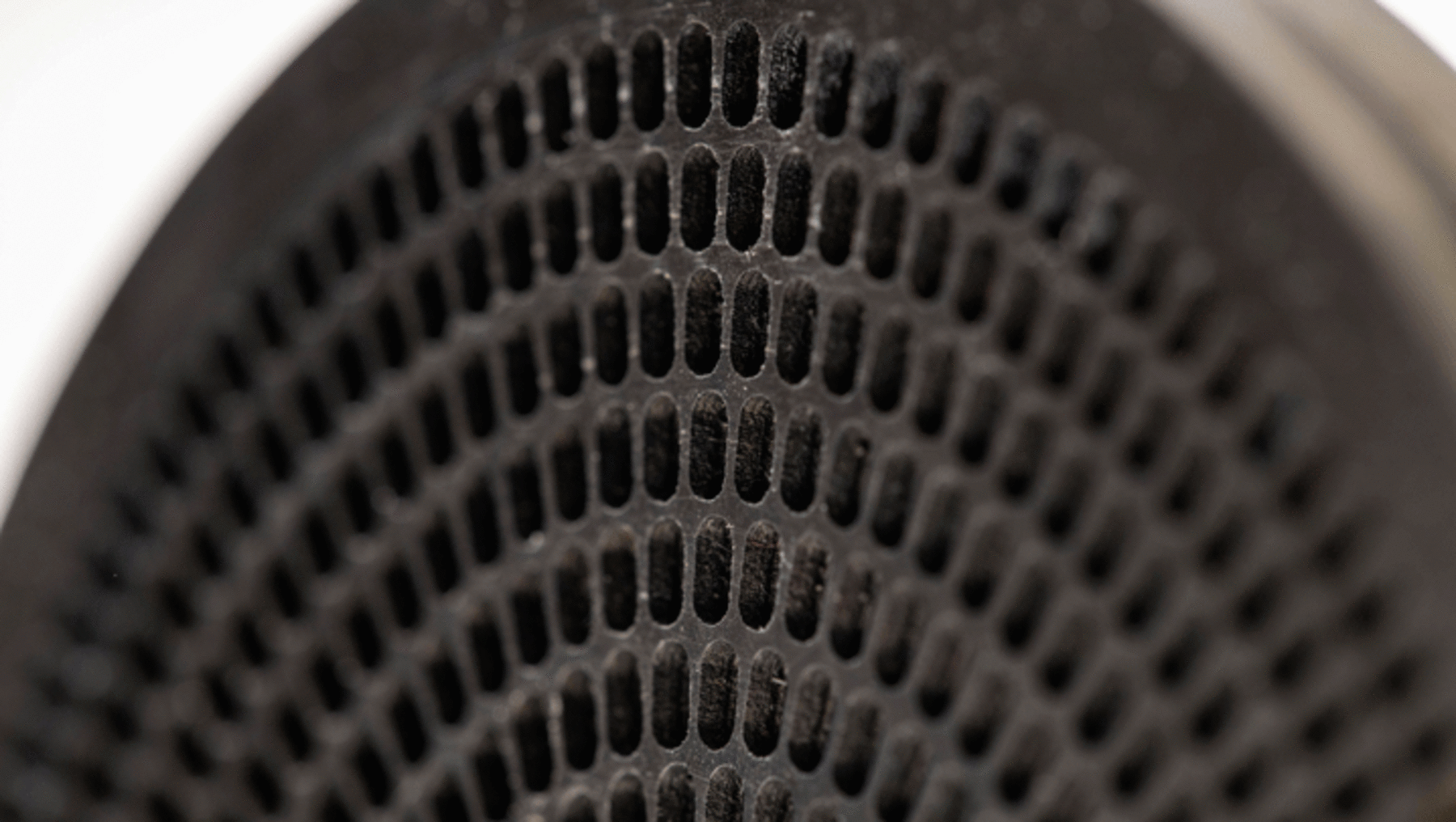
In the project, grinder plates with novel “passage channels” were developed. These have a curved shape and taper from the entry side to the exit side. The curved shape promotes the entry of the raw material into the openings of the grinder plates and the tapering promotes its fixation. The raw material is thus prevented from slipping back, and is then cut more efficiently by the rotating knife. A series of grinder-plate patterns with passage channels adapted to the specific cutting process was successfully manufactured using high-speed steel (HSS) and 3D printing (LPBF).
The novel grinder plates increased throughput by around 10%. Production indicators such as stability and deflection also show a marked improvement, leading to expectations of increased wear protection and longer service life of the grinder plates. Practice tests with prominent industry partners from the meat sector have confirmed these results.
Funding
Funding number: ZF4184903PK7
Funding period: 3/2022 — 8/2024
Contac
Prof. Dr. Wolfram Schnäckel
Dr. Janet Krickmeier
 © Christian Kegler und KI generiert
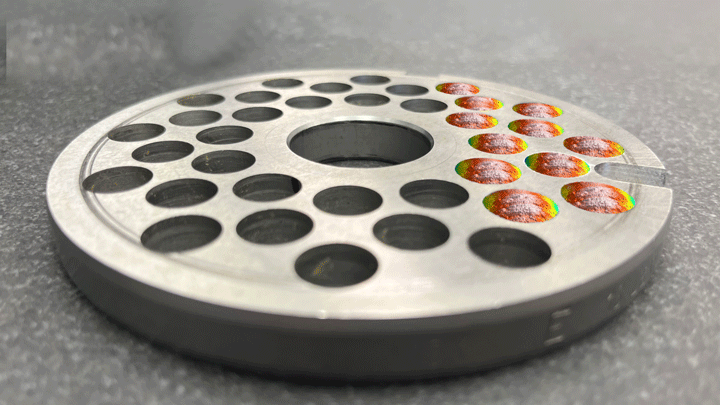
Optimising the efficiency of meat-grinder plates with tissue-specific surface textures within the passage channels
Background
The inner wall roughness of the passage channels of meat-grinder plates has a significant influence on a grinder’s performance and the quality of its cuts. This is currently an overlooked aspect in both research and industrial practice. Our own work shows that up to 50% of the energy input is lost due to uncontrolled raw material movements inside the cutting system. A defined inner wall roughness can solve this problem.
Objective
Manufacturing meat-grinder plates with a consistently uniform or segmented inner wall roughness (vertical/horizontal sub-areas) to determine the optimal tissue-specific inner wall roughness and to explore ways of maintaining the roughness when using the plates over extended periods of time.
Ideally, improved cutting quality could increase a grinder’s performance by 20%, service life by 50%, while reducing energy consumption by 20%.
Initial results
Currently being investigated are meat-grinder plates with circular holes of 3 and 5 mm and a consistent inner wall roughness of 1, 5, 10 and 15 µm. Initial results confirm the expectation that increasing the roughness leads to reduced performance while increasing cell damage, temperature input, and energy consumption. In a subsequent step, we intend to produce and analyze meat-grinder plates with sub-areas displaying different degrees of roughness.
Funding
Funding number: ZZS/2024/04/186253
Funding period: 2/2025 — 1/2027
Contact
 © sascha perten
An increasing number of consumers are demanding healthy foods that provide the body with energy through natural ingredients and offer added value to consumers with a growing health consciousness. In addition, consumers are increasingly interested in authentic foods that are artisanally and thus traditionally produced.
To cater to both health-conscious consumers and traditionalists, various products have already been developed in collaboration with partners at the Professorship of Food Technology of Plant-Based Products at Anhalt University of Applied Sciences, including:
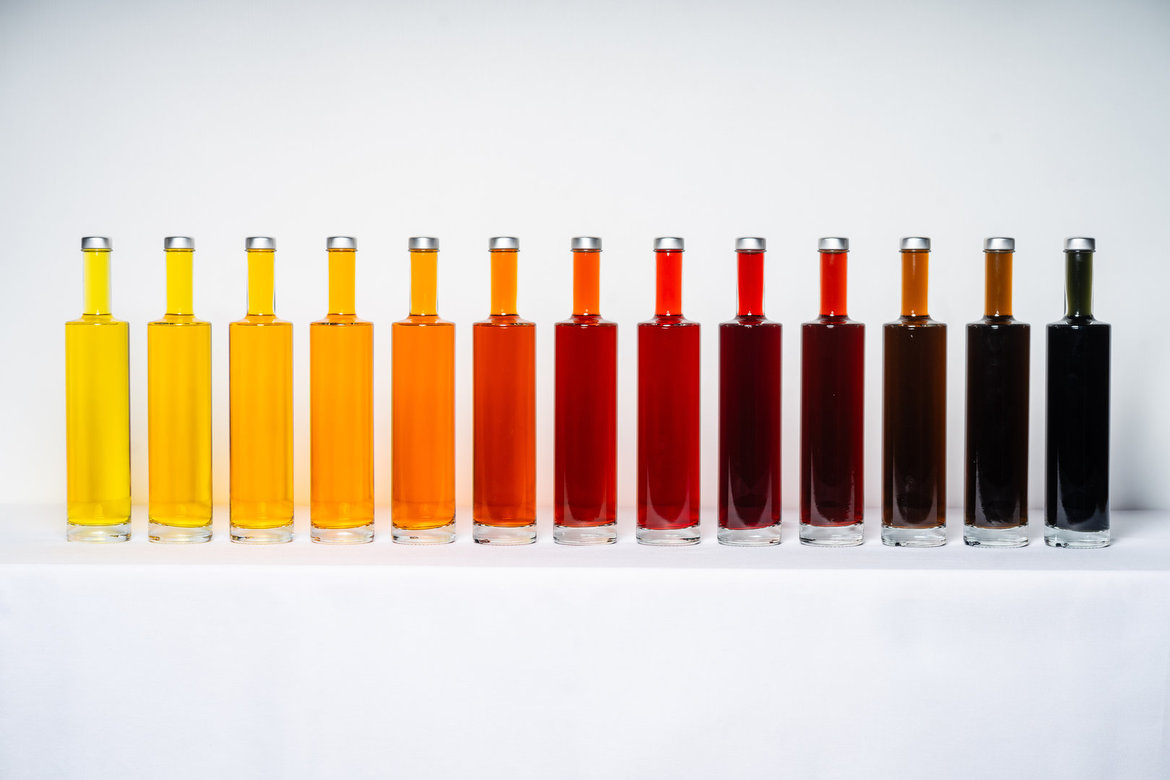
BBQ sauces with a naturally smoky flavor and caramel syrup
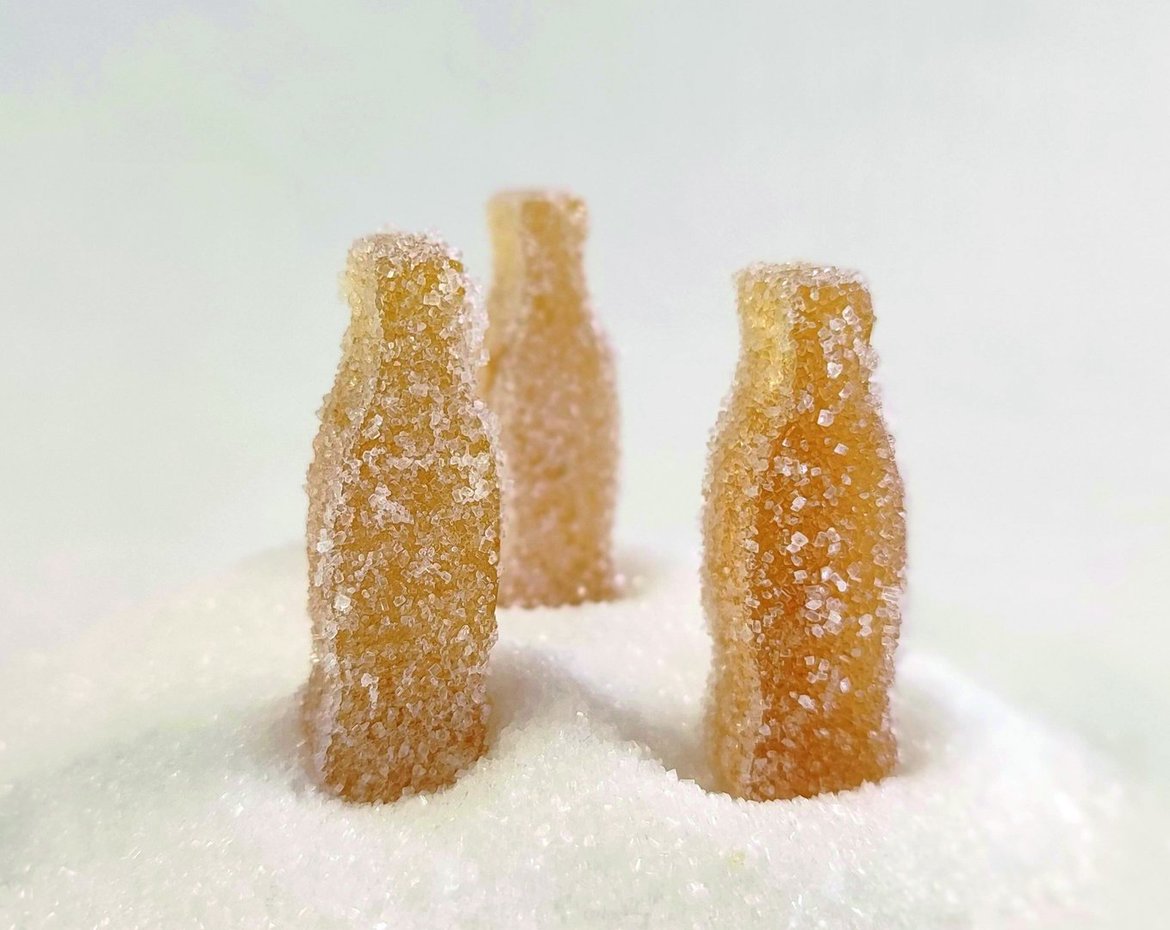
- Sour malt candies with a liquid sour malt center
- Natural, vegan fruit gummies made with vegan gelling agents
- Seaweed crispies: a healthy snack for in between meals with nutritious seeds and wakame seaweed
- Energy cookies with a diverse blend of whole grains and pseudocereals, enhanced with milk caramel
The Professorship of Food Technology of Plant-Based Products at Anhalt University of Applied Sciences, featuring its teaching and experimental brewery as well as its confectionery laboratory, is your competent partner for specialized product developments.
Contact
 © sascha perten
Drink ideas with a unique flavor
The teaching and research brewery at Anhalt University of Applied Sciences considers it an essential part of its mission to support regional companies, especially small and medium-sized enterprises as well as start-ups, in the development and production of high-quality foods. For example, special beer recipes with modern twists have already been developed for several brewpubs:
- Giovanni – a festival beer for the Köthen Bach Festivale
- Ginger beer – with a natural ginger note
- Jacobus – an entire beer assortment for the Köthen Brewpub
- Monastery beers and malt beverages – brewed with caramel sugar syrup
- Harzer Urquell – created for a restaurateur in the Harz region
Another mission of the research and teaching brewery is to give students the opportunity to work independently on complex and practical topics. The teaching and research brewery is also technically well-equipped for these tasks. The latest development is „Germanenbier“ (Germanic beer), which was conceived with students in the teaching and research brewery. In addition to the hops common today, herbal blends are used that allow the taste of beer from over 1,500 years ago to be experienced.
Various formats of brewing courses are offered upon request to show interested parties how to develop products even more innovatively and market them sustainably and profitably.
Contact
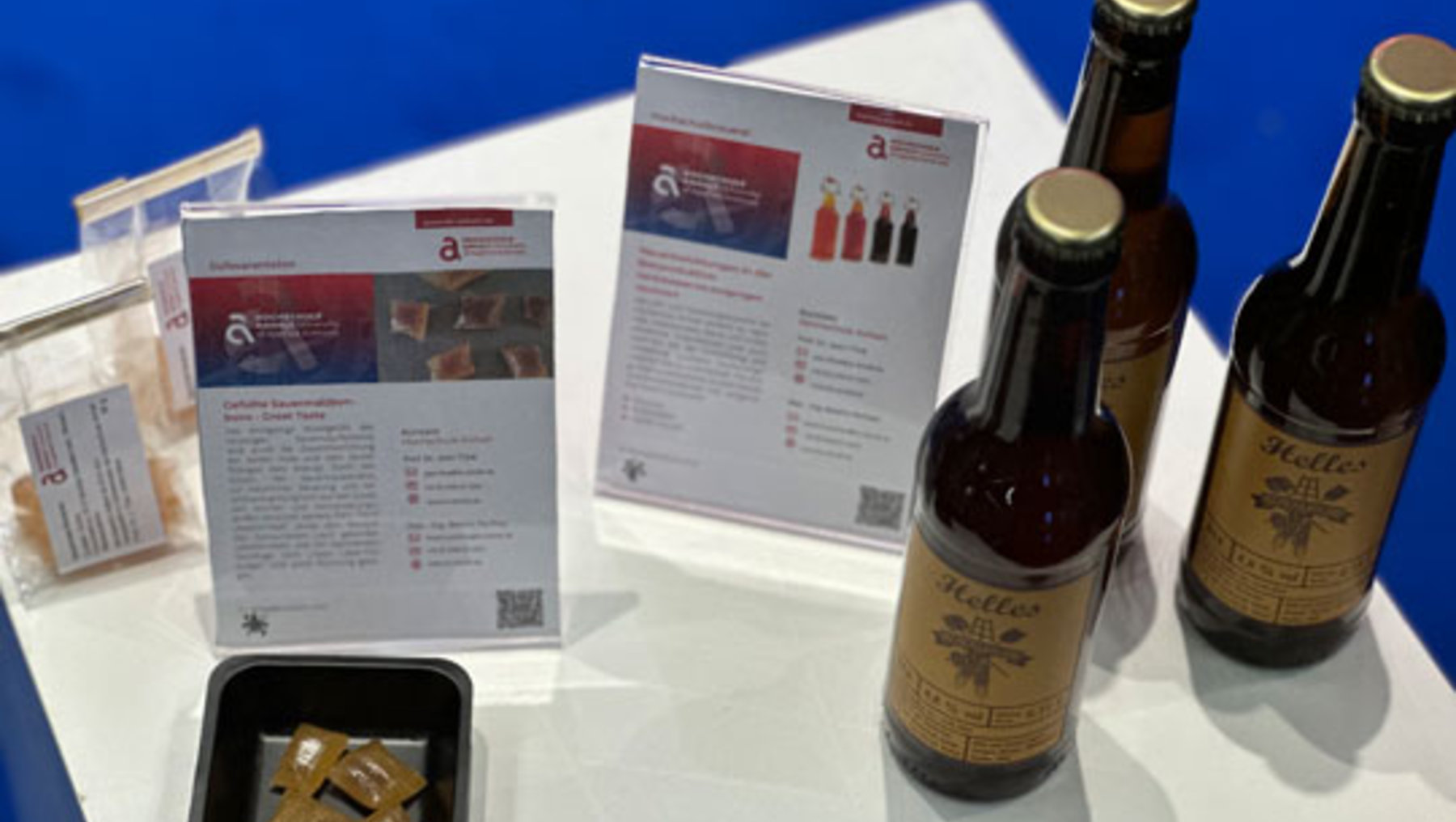
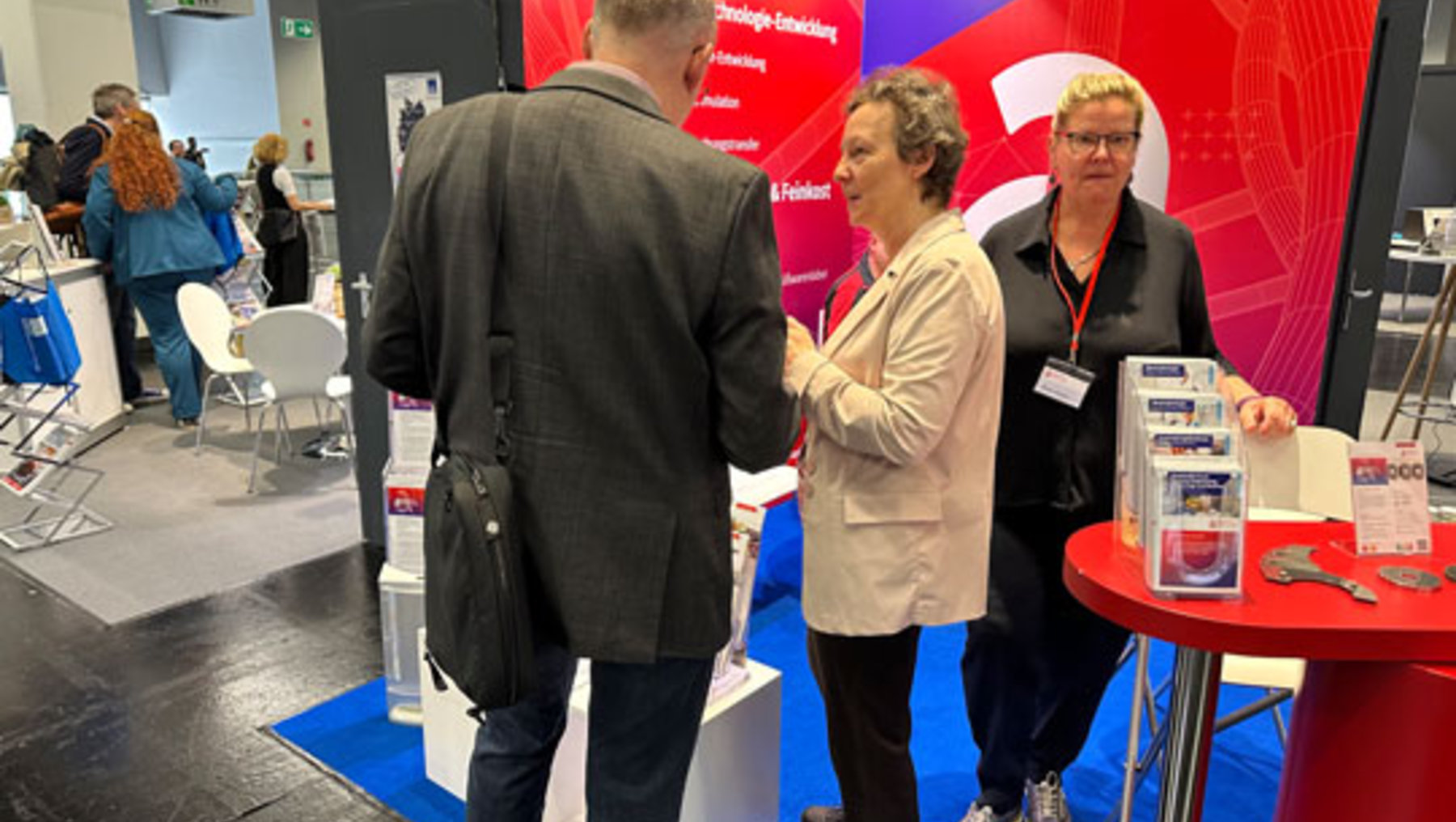
Trade fair impressions 2024
-
 © Hochschule Anhalt/MuK
-
 © Hochschule Anhalt/MuK
-
 © Hochschule Anhalt/MuK
-
 © Hochschule Anhalt/MuK
-
 © Hochschule Anhalt/MuK
