The world's most important technology event.
The Hannover Messe 2026 will take place from April 20 to April 24.
As usual, Anhalt University of Applied Sciences will be exhibiting together with Otto von Guericke University Magdeburg, Magdeburg-Stendal University of Applied Sciences and Harz University of Applied Sciences as well as the Thuringian colleges and universities at the joint stand RESEARCH FOR THE FUTURE in Hall 11/ Stand B42 with the following topics:

Topics
 © HS Anhalt/FB AFG/AG Prof. Pause
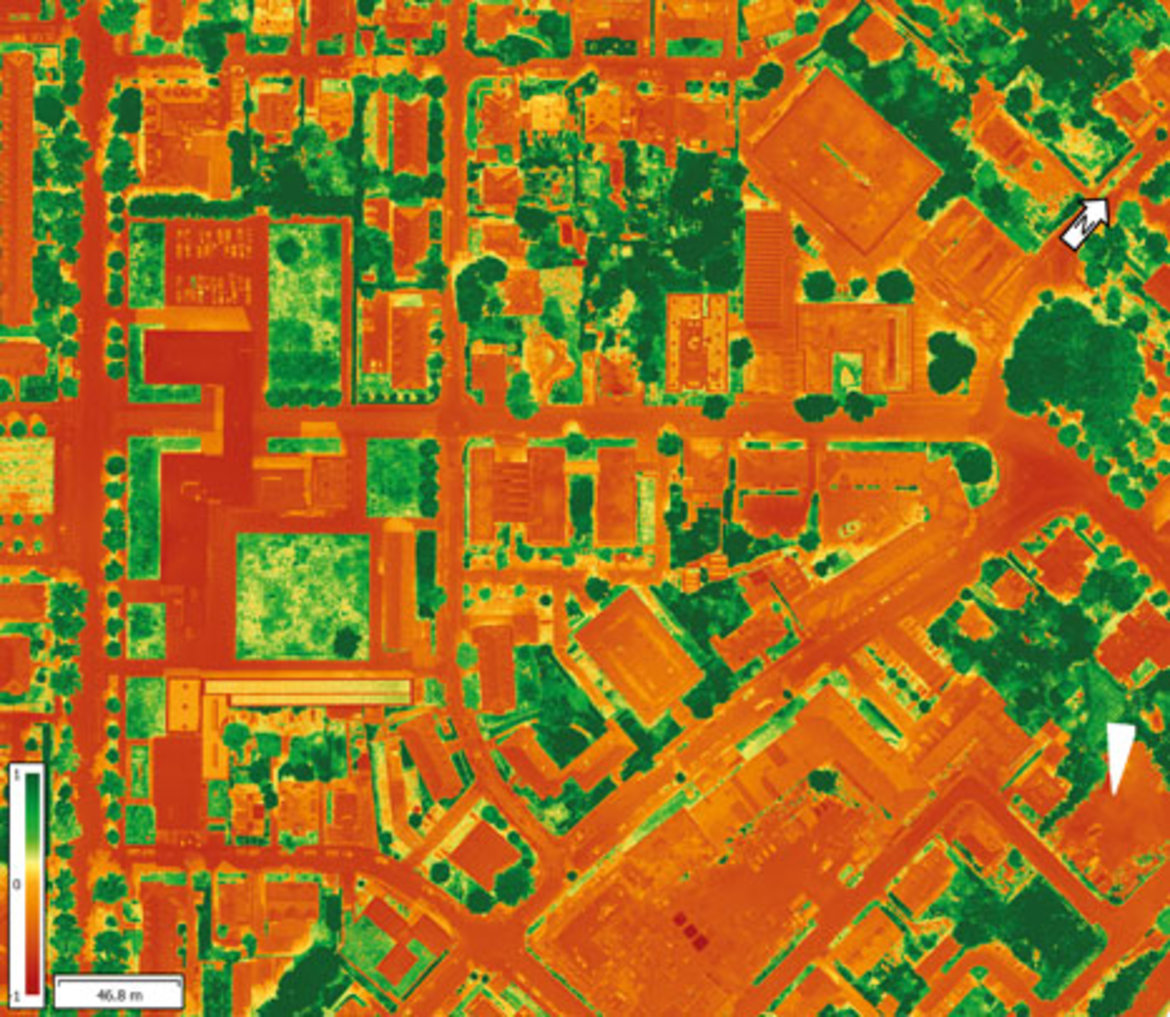
Making the invisible visible: Multispectral 3D acquisition
The need
The consequences of climate change and the increasing demand for reliable geo-information products make spatially high-resolution, flexibly plannable measurement flights necessary for the areas of Agriculture, forestry, water and urban areas. Although satellite data provides regular time series, it often has too coarse a resolution for local issues and is difficult to control in terms of time (e.g. in the event of a disaster). Drones are generally not suitable for large-scale campaigns due to their range and the applicable regulations. Hyperspectral systems, on the other hand, are often associated with high costs and require a high workload for evaluation and analysis. In practice, there is therefore a need for robust, application-specific, configurable multispectral data that bridges the gap between satellite monitoring and in-situ observations - including a user-friendly workflow for aerial photography companies, surveying and environmental authorities and service providers.
Precise 3D environmental monitoring
The Airborne Multispectral Camera AMC-6 is an airborne stand-alone measurement system and can supplement airborne laser scanning in a targeted manner. Six cameras (1× RGB, 5× monochrome, 31.4 MP, global shutter) can be adapted to the application via exchangeable filter plates and narrow/broadband interference filters (350-950 nm). At an altitude of 1000 m, a GSD of approx. 10 cm/pix is achieved. Flexible filter sets support forest conditions, precision farming, water quality and 3D city models in highly detailed applications. It provides georeferenced multispectral orthophotos, stacks and indices (NDVI/SAVI/CIR) for 3D products, mapping, classification and ML/DL analysis in urban, forest, Agriculture and water applications.
Further information about the project
Contact:
 © HS Anhalt/FB Design/AG Prof. Kretzer
Problem definition
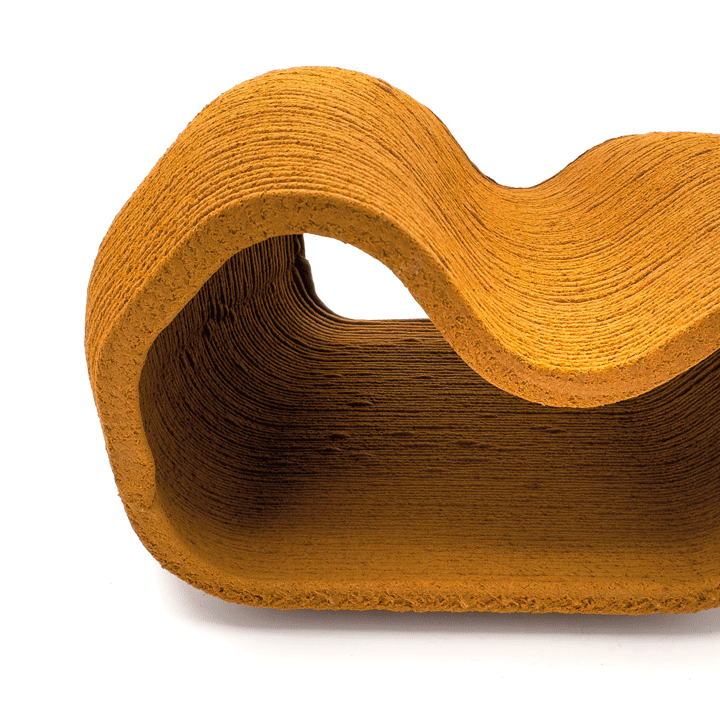
The focus of the study is on researching and establishing 100% biologically based and potentially biodegradable natural fiber composites based on the biopolymer lignin. The aim is to provide materials for the use of new technologies such as additive manufacturing (3D printing) in order to replace petroleum-based plastics in suitable areas. A robotically controlled FGF 3D printer is used for the research.
Results, checkpoints, next steps
100% bio-based, potentially biodegradable natural fiber composites for FGF 3D printing are being developed on the basis of lignin. The composite is already printable; current formulations contain approx. 50-60% lignin. Plasticizers, fiber type/length, crosslinker content and flow agents are varied in test series. The thermal transitions and process windows are recorded using DSC; SEM analyses test the embedding of the fibers in the polymer matrix. Initial mechanical results (partly tensile tests) are available; the compression/compression properties are currently being determined. Next checkpoints: (1) design and application scenarios with FGF printing, (2) disintegration tests and biodegradability studies, (3) three-point bending tests, (4) extended fiber variations. The aim is to develop a scalable, petroleum-free material system as an alternative to conventional plastics.
Contact Prof. Dr. Manuel Kretzer
 © HS Anhalt/FB Design/AG Prof. Kretzer
Problem definition
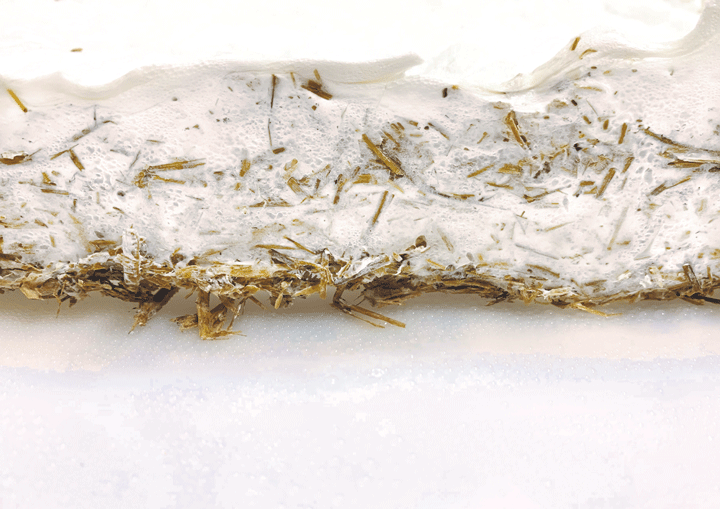
The Myzel Bike Box is a modular transport box made of mycelium - the root network of mushrooms - combined with a lightweight PLA frame. It exemplifies the symbiosis of sustainable material research and functional design in an urban context. Grown instead of produced, the box is biodegradable, has a water-repellent coating and is stabilized by the frame. Its modular design enables repair, replacement and complete recycling. Developed for cargo bikes, the MycoBox combines ecological responsibility with aesthetic innovation.
Results, checkpoints, next steps
The results of the Myzel Bike Box so far show significant progress in material and process development. The stability of the mycelium panels has been significantly improved through the ingrowth of fibers and structural reinforcements. A water-repellent coating also ensures increased weather resistance and extends the range of applications in urban areas. At the same time, work was carried out on optimizing the growth conditions in order to make the manufacturing process more efficient and scalable.
The current prototype of a functional bike box demonstrates both the technical feasibility and the design potential of the concept.
The next steps will focus on further optimizing the material, particularly with regard to
resilience, moisture resistance and weight, in order to further advance its use in the bicycle logistics sector. The focus will remain on the set goal of biodegradability of the modules.
Contact:
 © Ali Etemadiesfarjani /Prof. Manuel Kretzer
Smart materials: 4D printing and intelligent interfaces
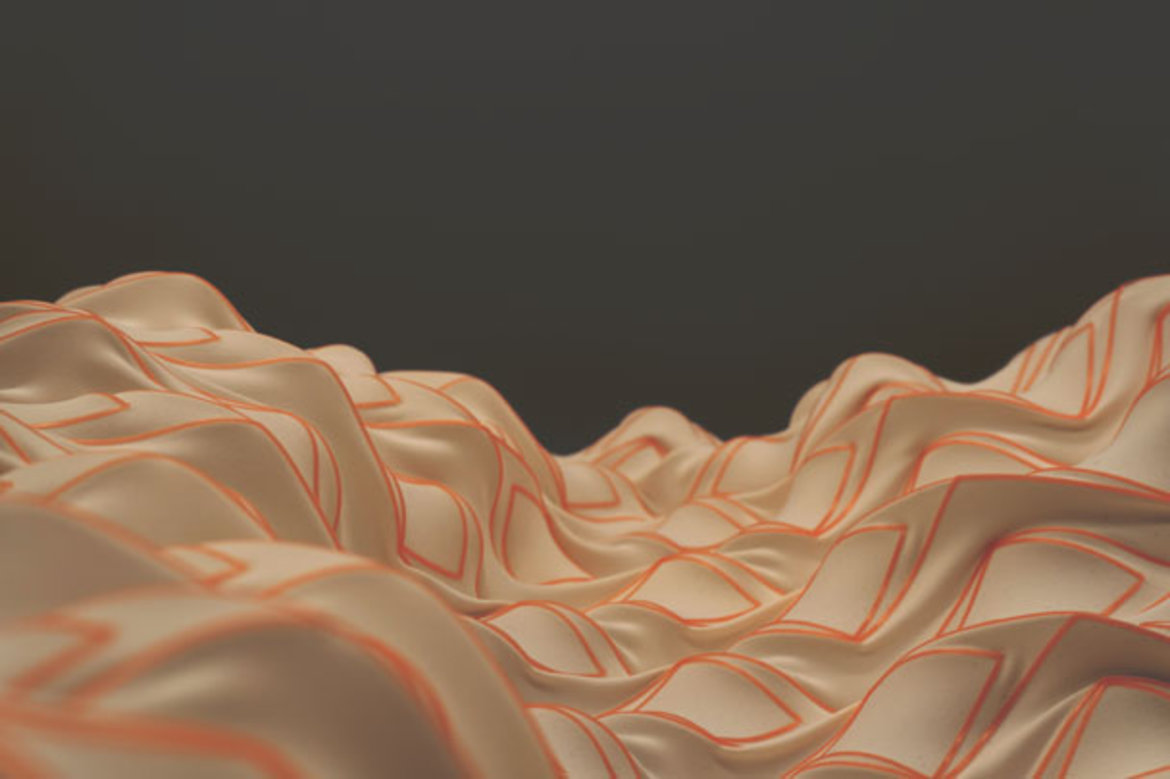
The Autonomous Materials research project investigates how dynamic and smart materials with shape-changing properties can be used to develop intuitive, multi-sensory interactions. The focus is on functional surfaces, realized by large-format 3D printing on textiles, which act as tactile interfaces between humans and technical systems through integrated sensors and actuators. What is new here is the approach of thinking, designing and producing material and Physical Human-Machine Interfaces (PHMI) as a holistic composite material. The interdisciplinary combination of material design, digital manufacturing and interactive material properties results in large-volume material systems that react to environmental stimuli and human input and combine light, shape, temperature and movement and support perceived safety, trust or emotional attachment in the application context, for example.
Results, checkpoints, next steps
The project involves systematic studies on shape-changing, 3D-printed textiles with a focus on soft robotic structures and 4D printing. Geometry, material combinations and printing strategies are being developed specifically for stimuli and time-dependent shape changes. The results flow into a structured material library, documented test series and 1:1 demonstrators that show different activation principles - pneumatic, thermal or mechanical - as examples and serve as a basis for further research and industrial cooperation.
Detailed information on the project
Contact:
 © Paulina Schröder
From data to design in large-scale additive manufacturing
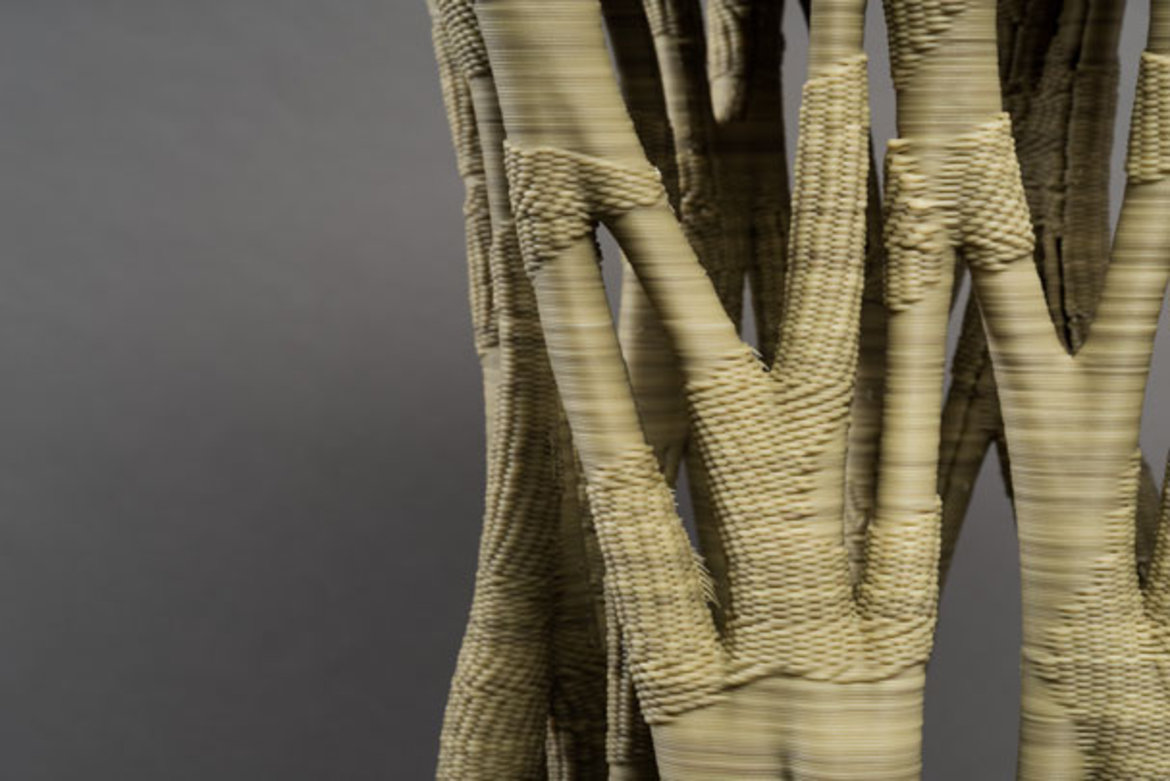
As part of the New European Bauhaus (NEB), this research project investigates large-scale additive manufacturing using Fused Granular Fabrication (FGF) to produce parametrically designed, structurally optimized furniture. The TectoMorph chair, made from a bio-based PLA cellulose composite, illustrates how agent-based modeling and FEM analysis guide virtual agents to follow force paths and form "tectonic protrusions" that reinforce load-bearing areas. The "Weavium" table investigates a branched, self-supporting lattice column, focusing on how controlled tool-path manipulation within the FGF can generate structurally active surface articulation at the scale of furniture. In addition, the project also explores advanced printing techniques and sustainable composite systems, expanding the possibilities of digital craftsmanship that balance resource efficiency, structural performance and aesthetic innovation.
Results, checkpoints, next steps
This study demonstrates the potential of large-scale additive manufacturing with bio-based and recycled materials for parametrically optimized furniture. Next steps focus on hybrid and non-planar printing processes to further increase resource efficiency, structural performance and design diversity and promote sustainable design processes.
Detailed information about the project
Contact:
Problem definition
The "Bio Formwork" research project is investigating the use of thermoplastic starch (TPS) for non-standardized, single-use concrete formwork in Architecture. Two prototypes are shown: (a) a robotically printed formwork made of pure TPS, and (b) a component cast from ultra-high performance fiber reinforced concrete (UHPFRC). The study investigates the potential of TPS as a sustainable formwork material in the digital construction industry.
Results
The results show that starch as a biopolymer can be converted into compostable TPS by the action of heat and mechanical stirring as well as by the addition of bioplasticizers and solvents. The material can be converted into pellets by subsequent mechanical post-treatment. These pellets can be processed into complex three-dimensional objects using the Fused Granular Fabrication (FGF) printing process by applying heat and pressure.
Contact:
Prof. Dr. Manuel Kretzer
Benjamin Kemper
 © Hochschule Anhalt / Sebastian Gersch
CAx + metal 3D printing: spare parts on demand.
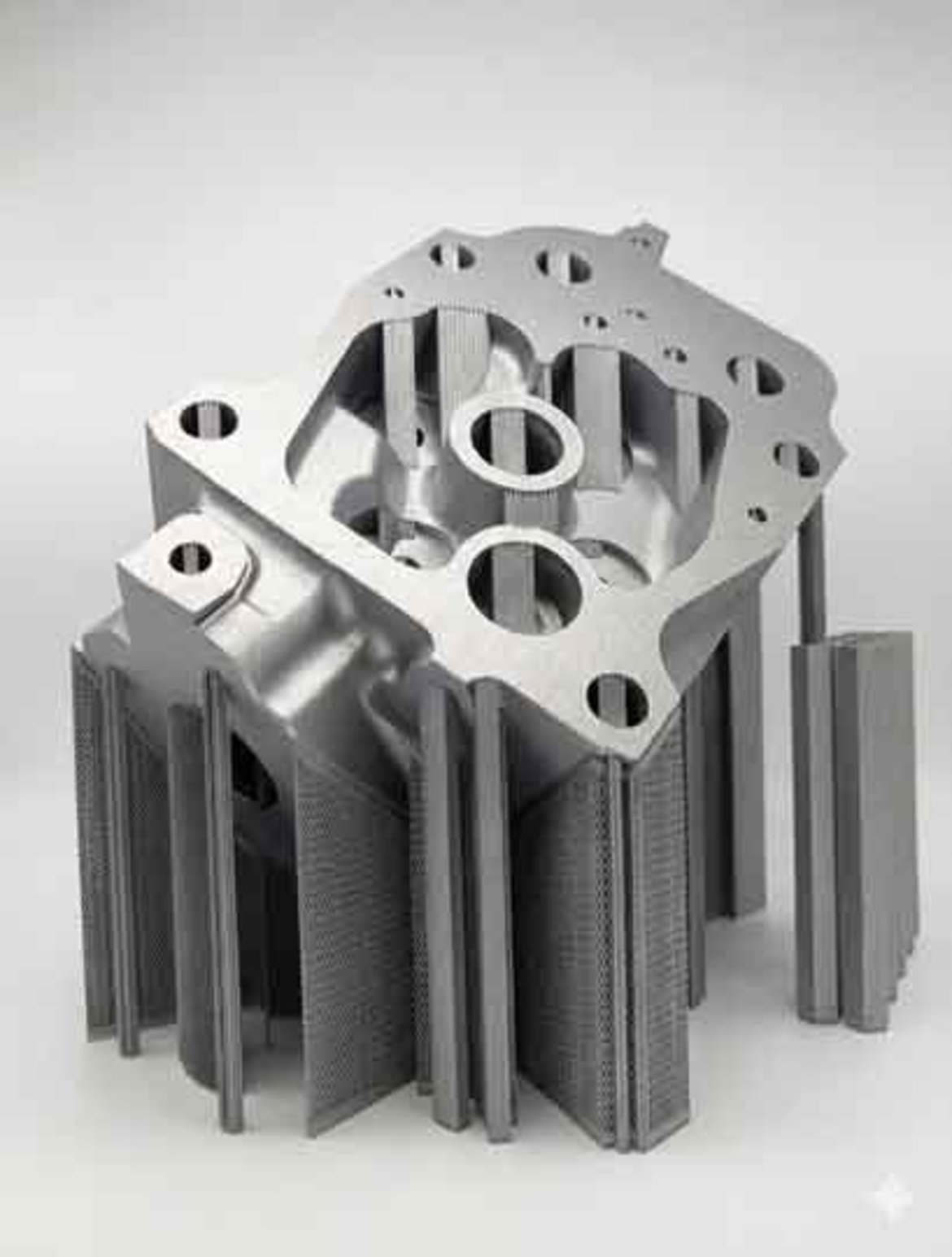
When supply chains break or components are discontinued, a missing part quickly becomes a risk of downtime. In the "Mechanical Obsolescence Management" project, Anhalt University of Applied Sciences is developing CAx-based processes to manufacture mechanical spare parts economically, reproducibly and precisely as required. We combine digital design, simulation and data preparation with modern manufacturing - in particular metallic 3D printing for tool-free, flexible production. We also use electrochemical processes for targeted surface treatment to improve dimensional accuracy, surface quality and wear resistance.demonstrator is a cylinder head of a 6-cylinder diesel engine: replication, optimization and additive manufacturing are designed in such a way that geometry, cooling channels, material distribution and strength can be specifically adapted. The component is being tested at the Scientific and Technical Center for Engine and Machine Research (WTZ) as part of the prototype production of a hydrogen engine - with the aim of opening up new application possibilities and increasing service life and performance.
Contact:
Prof. Dr. Jörg Bagdahn
Sebastian Gersch
