Research projects are carried out within the framework of third-party funding in the field of Chemical Process Engineering and Food Process Engineering.
Research focuses on
- Determination of physico-chemical parameters required for the design of Process Engineering processes. This includes thermodynamic data, reaction rates and transport coefficients in single-phase and multi-phase systems.
- The targeted coupling of several basic operations is also being investigated with the aim of improving the efficiency of established processes. In addition to the integration of chemical reactions with material separation processes, the possibility of coupling several separation processes to obtain high-purity products such as prebiotics is also being considered. The focus is on increasing the turnover of reversible reactions as well as improving selectivity in networks of parallel and subsequent reactions.
- Another focus is the investigation of membrane separation processes and continuous chromatographic separation processes (SMB) for the purification and isolation of valuable products in the food, Biotechnology and pharmaceutical industries. The aim is to contribute to the quantitative design and optimization of separation processes using suitable stationary and mobile phases.
The Saxony-Anhalt research portal provides a further overview
Projects of the research group/working group Food Process Technology and Process Engineering
Selected ongoing research projects
multiPS: Sustainable value creation from dairy by-products - Innovative multienzymatic prebiotic syntheses
Project managers: Dr. Christin Fischer, Prof. Dr. habil. Christof Hamel
Funding: Investitionsbank Sachsen-Anhalt, 01.01.2024 - 31.12.2027
Further information on the project at: www.hs-anhalt.de/multiPS
 © DFG
© DFG
Continuation project: Control and intensification of reactions through the use of cyclically operated distributors
Project leader: Prof. Dr. habil. Christof Hamel
Funding: German Research Foundation (DFG), 01.08.202021 until 31.07.2022
Project manager: Andreas Brune
Heterogeneous catalysis has considerable potential in the chemical industry, in environmental technology and in the development of new, selective synthesis routes. Development activities are aimed at catalysts with optimized selectivity and yield, but in particular at intensifying processes and thus saving energy and raw materials.
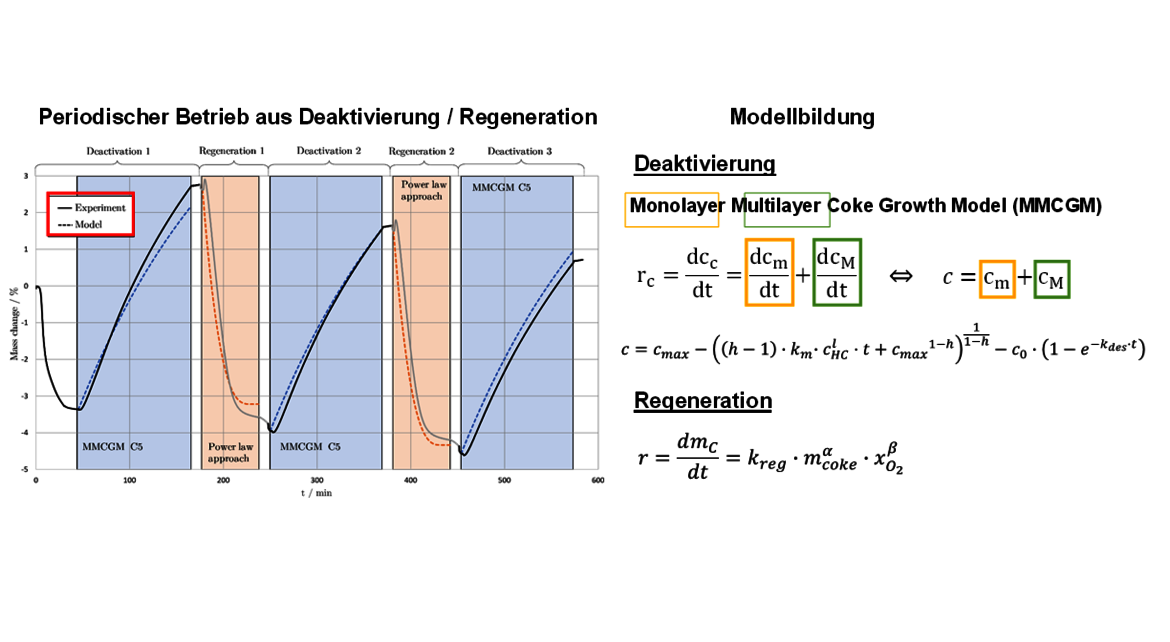
Against this background, the aim of the project is to achieve an increase in yield in the synthesis of desired olefins, which are used for plastics production, among other things, by distributed reactant dosing using membranes (distributors). In a cyclically operated distributor, oxidative dehydrogenation (ODH) and thermal dehydrogenation (TDH) are to be investigated and credited in an integrated reactor for maximum synergy effects (autothermal operation) in the industrially relevant model system propane, in the presence of a material and energetic coupling. Compared to existing concepts, this concept should be able to use the entire reactor/catalyst permanently, i.e. without slippage or separate regeneration phases, even during thermal dehydrogenation. For this purpose, an optimally controlled transmembrane oxygen flow, which temporarily adapts to the state of the catalyst condition/activity, must be determined, whereby the control of the temperature and the speed in the apparatus can be efficiently designed by distributed dosing. Model-based investigations (1D and 2D) should help to identify optimal dosing profiles and requirements for the membrane (compatibility of reaction and membrane).
 © Prof. Hamel
 © BUND
Strategic innovation project - Modular research and demonstration plant for innovative membrane (separation) technology to establish macroeconomic recycling processes
Project leader: Prof. Dr. habil. Christof Hamel
Project partners: Prof. Dr. Damian Pieloth, Prof. Dr. Steffen Sommer, Prof. Dr. Stefan Wollny
Funding: Federal government 01.02.2021 to 31.10.2021
Project managers: Katrin Hofmann, Eike Runne
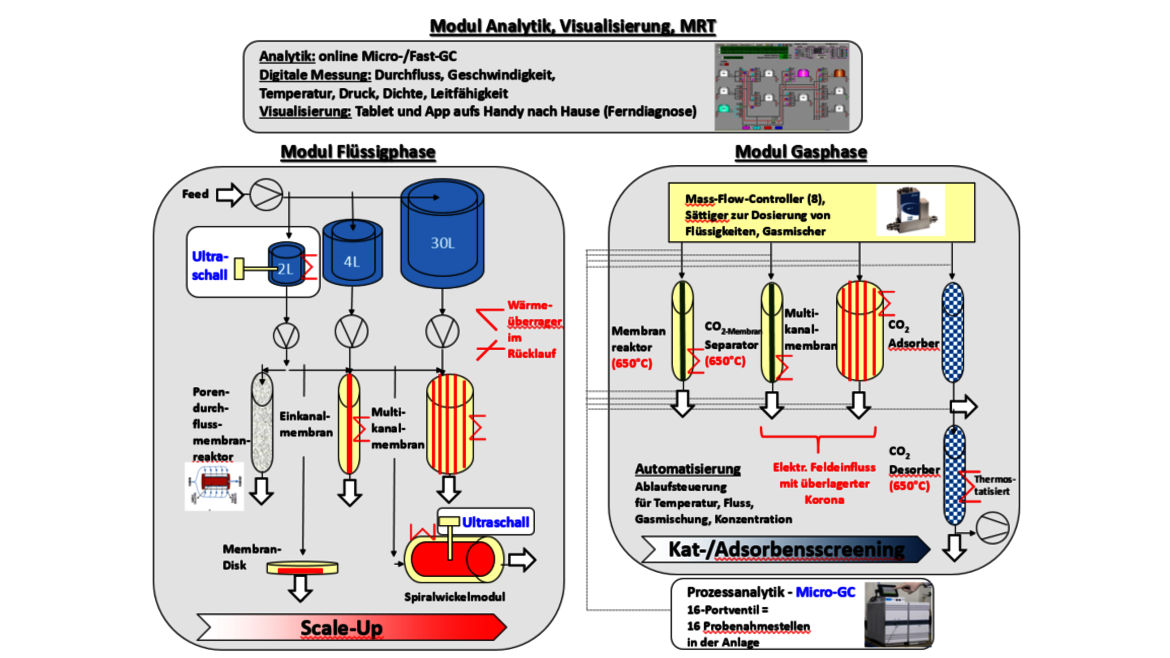
As part of the funding of strategic investments to strengthen and further develop the research base at universities of applied sciences (FH-Invest 2020), a modular research and demonstration plant for innovative membrane (separation) technology for the establishment of macroeconomic recycling processes is to be developed and put into operation. The plant is characterized by modules for separation and dosing strategies in the liquid phase and gas phase, in particular membrane-based, selective CO2 separation, including media support and conditioning, online analytics, automation and digitalization.
Liquid phase module for micro/ultra/organophilic nanofiltration membranes with ceramic/polymer modules as plates, tubes, multi-channels, spiral wound modules, flow reactor
Gas phase module for ceramic membranes as tubes, multi-tubes for reaction, CO2 separation, adsorber technology
Scale-up from laboratory to pilot scale is realized
Full automation, digitalization according to Industry 4.0
Combination with heterogeneous/ biocatalysts Future modular expansions are planned to establish macroeconomic recycling processes (circular economy)
 © Prof. Hamel
© BUND
© Prof. Hamel
© BUND
 © Prof. Hamel
Research project: Coupling of enzymatic synthesis, product separation and recycling for process intensification in the production of prebiotics (KeSPaR) Funding line "Junior engineers - Cooperative doctorate" - FKZ: 13FH574IX6
Project leader: Prof. Dr. habil. Christof Hamel
Internal university partner: Prof. Dr. Thomas Kleinschmidt
Collaborative partners: "Cooperative doctorate" Otto von Guericke University Magdeburg
Industrial partners: Milchwerke "Mittelelbe" GmbH Stendal, BIA Separations Slovenia, Fraunhofer Institute for Ceramic Technologies and Systems (IKTS) Hermsdorf
Funding: Federal government 01.09.2018 to 31.08.2021
Project managers: Ines Müller, Ines Pottratz, Katrin Hofmann
Following the successful implementation of the project "Scientific profiling and establishment of industrial Process Technology: Discontinuous, continuous chromatographic separation and reaction kinetics using the example of galactooligosaccharides (GOS)" over the last three and a half years as part of the BMBF funding program "FHProfUnt", a follow-up project has now been acquired with the funding line "IngenieurNachwuchs - Kooperative Promotion" and the research work has thus been continued on a sustainable basis
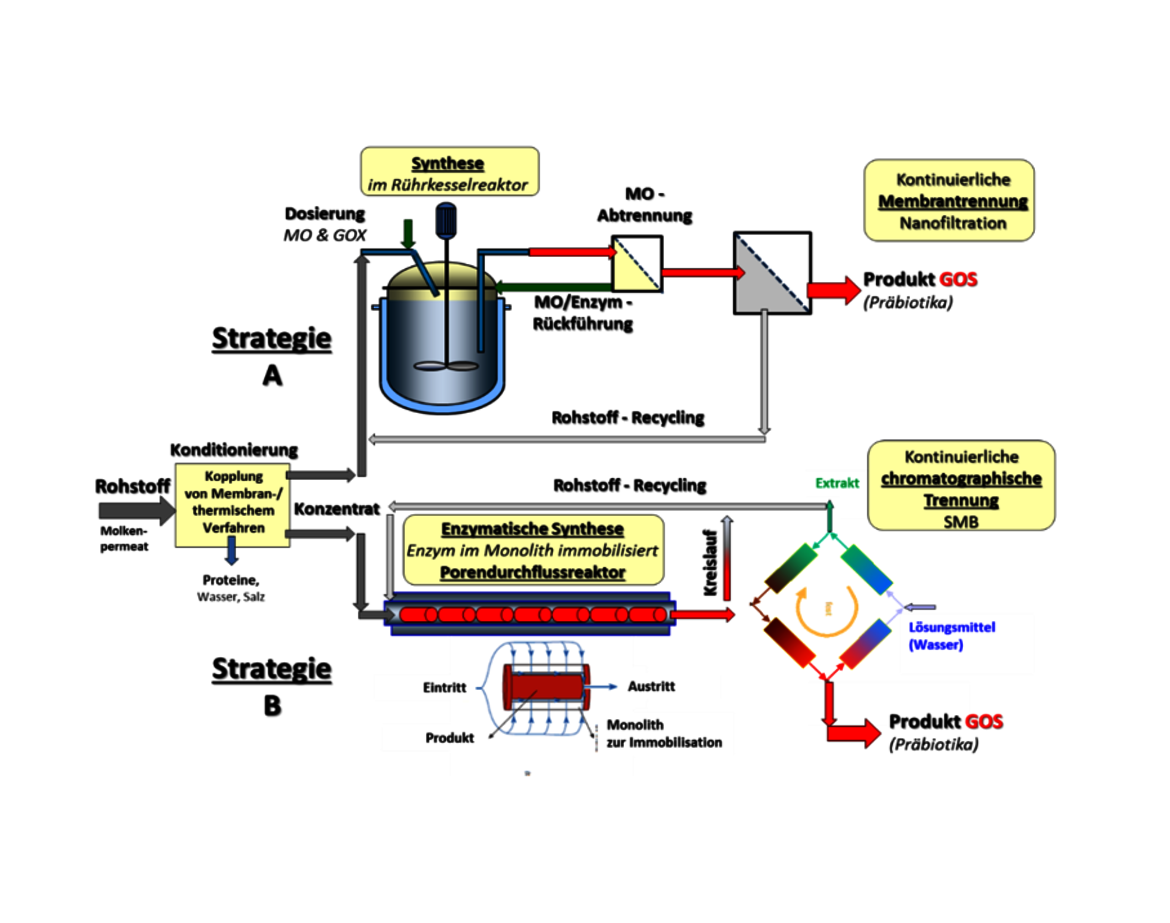
The project aims to further expand the focus and profile of Food Technology at Anhalt University of Applied Sciences by establishing a junior research group and promoting young scientists through mentoring and doctoral studies. In cooperation with the industrial partners Milchwerke "Mittelelbe" GmbH, BIA Separations GmbH, Fraunhofer IKTS and the University of Magdeburg, where a cooperative doctoral procedure is being carried out, a process for the synthesis of prebiotics using the example of galactooligosaccharides (GOS) is to be developed, implemented and optimized for the low-cost raw material whey permeate by means of experimental and model-based research work through knowledge and technology transfer between the partners.
There is currently no sustainable added value for whey permeate. In contrast, there is a market demand for lactose- and glucose-free prebiotics for a healthy diet. Due to a lack of cooperation or knowledge/technology transfer between applied research and industry and a lack of focus on this topic in a research group, it has not yet been possible to realize and establish an Economics process for the production of lactose- and glucose-free prebiotics. This is where the research project funded by the Federal Ministry of Education and Research comes in.
The aim is the experimental and model-based investigation of two process strategies for the extraction and purification of GOS from whey permeate, including process intensification through the coupling of synthesis, product separation and recycling. Two strategies are being pursued: a) discontinuous, enzymatic process with subsequent separation of the product from lactose by means of nanofiltration including recycling, b) continuous pore flow reactor with immobilized enzyme and subsequent SMB separation including recycling.
 © Prof. Hamel
© BUND
© Prof. Hamel
© BUND
Research and technology transfer for life in the digital age, sub-project 7: Transfer through industry coupling on the web -FoodProcessEngineering 4.0
Project managers: Prof. Dr. habil. Christof Hamel, Prof. Dr. Thomas Kleinschmidt
Funding: Federal Government 01.01.2018 to 31.12.2022
Project team members: Ines Pottratz, Christin Fischer, Reik Feisthauer
The starting point is the requirement of partners in the food industry to be able to produce a defined product with constant properties and constant quality at all times, even though the properties and quality of the agricultural raw materials fluctuate. The aims of the sub-project are therefore
- Networking raw material producers and food manufacturers by creating a jointly developed disruptive technology that benefits both industries
- interdisciplinary overall process renewal through the use of Industry 4.0 technologies from raw material production and processing to synthesis and the product
- Networking of all components in the production chain in real time via a cloud
© DFG
Collaborative Research Center Transregio 63 - Integrated chemical processes in liquid multiphase systems Subproject A3: Kinetics of reductive amination and hydroaminomethylation in reactive multiphase systems
Project managers: Prof. Dr. habil. Christof Hamel, Prof. Dr. habil. Andreas Seidel-Morgenstern
Funding: German Research Foundation (DFG), 01.01.2018 to 31.12.2021
Project managers: Sabine Kirschtowski, Martin Gerlach
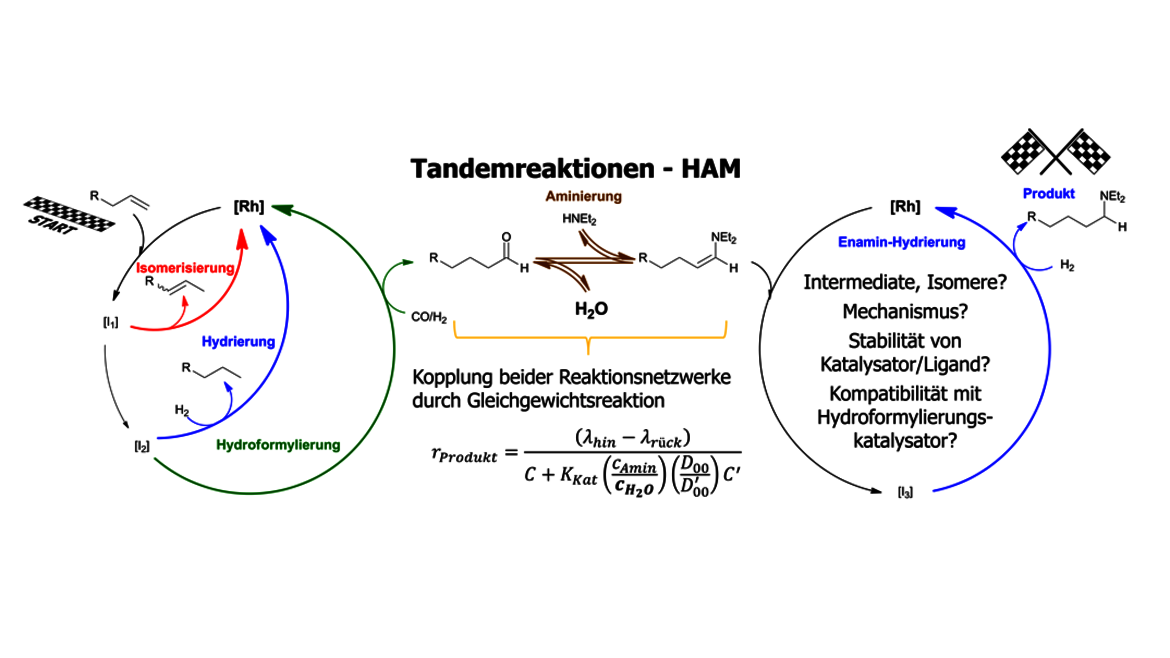
The subproject focuses on experimental and theoretical studies on the mechanism and kinetics of reductive amination of long-chain aldehydes and hydroaminomethylation as a complex tandem reaction. The aim is to systematically elucidate the reaction networks and catalytic cycles, to derive and reduce kinetic models, and to determine the model parameters by means of perturbation experiments and parameter reduction techniques. The basis for the design of reactors and processes will be created. In addition, catalyst deactivation is considered and general rules for the credits of tandem reactions (multi-pot vs. one-pot synthesis) are developed.
 © Prof. Hamel
© DFG
© Prof. Hamel
© DFG
Control and intensification of reactions through the use of cyclically operated distributors
Project leader: Prof. Dr. habil. Christof Hamel
Funding: German Research Foundation (DFG), 01.02.2018 to 31.01.2021
Project manager: Andreas Brune
Heterogeneous catalysis has considerable potential in the chemical industry, in environmental technology and in the development of new, selective synthesis routes. Development activities are aimed at catalysts with optimized selectivity and yield, but in particular at intensifying processes and thus saving energy and raw materials.
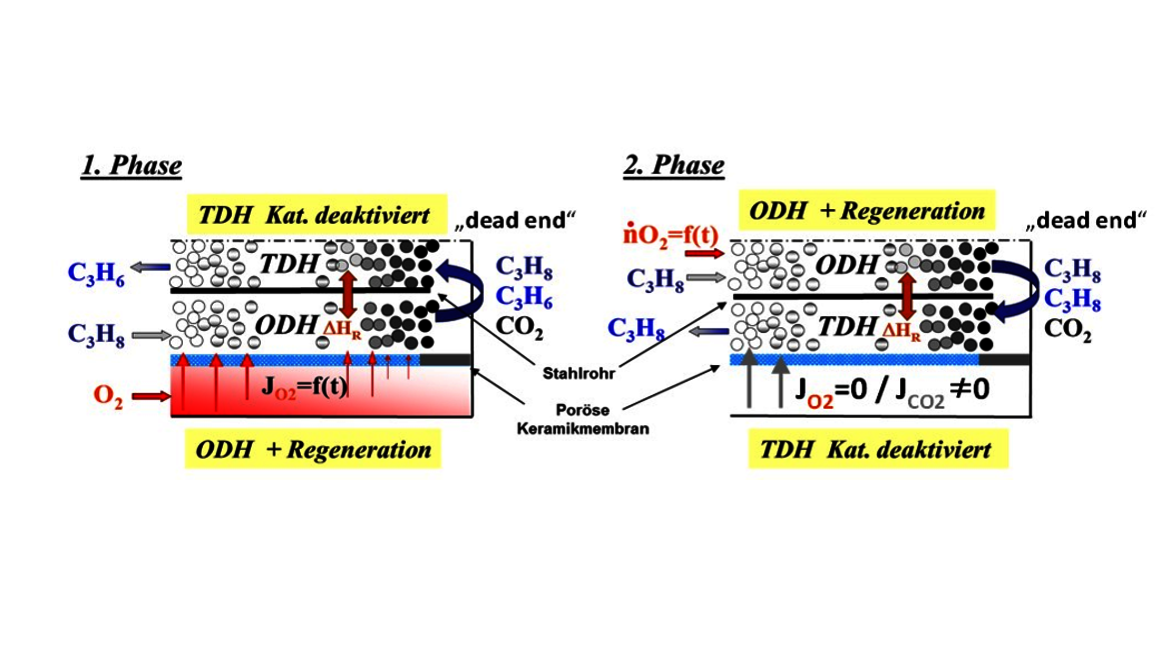
Against this background, the aim of the project is to achieve an increase in yield in the synthesis of desired olefins, which are used for plastics production, among other things, by distributed reactant dosing using membranes (distributors). In a cyclically operated distributor, oxidative dehydrogenation (ODH) and thermal dehydrogenation (TDH) are to be investigated and credited in an integrated reactor for maximum synergy effects (autothermal operation) in the industrially relevant model system propane, in the presence of a material and energetic coupling. Compared to existing concepts, this concept should be able to use the entire reactor/catalyst permanently, i.e. without slippage or separate regeneration phases, even during thermal dehydrogenation. For this purpose, an optimally controlled transmembrane oxygen flow, which temporarily adapts to the state of the catalyst condition/activity, must be determined, whereby the control of the temperature and the speed in the apparatus can be efficiently designed by distributed dosing. Model-based investigations (1D and 2D) should help to identify optimal dosing profiles and requirements for the membrane (compatibility of reaction and membrane).
 © Prof. Hamel
Selected completed research projects
© BUND
Scientific profiling and establishment of industrial Process Technology: reaction kinetics and continuous chromatographic separation using the example of galactooligosaccharides
Project leader: Prof. Dr. habil. Christof Hamel
Project assistants: Ines Müller, Christin Fischer, Ines Pottratz
Funding: Federal government, 01.10.2014 to 31.12.2017
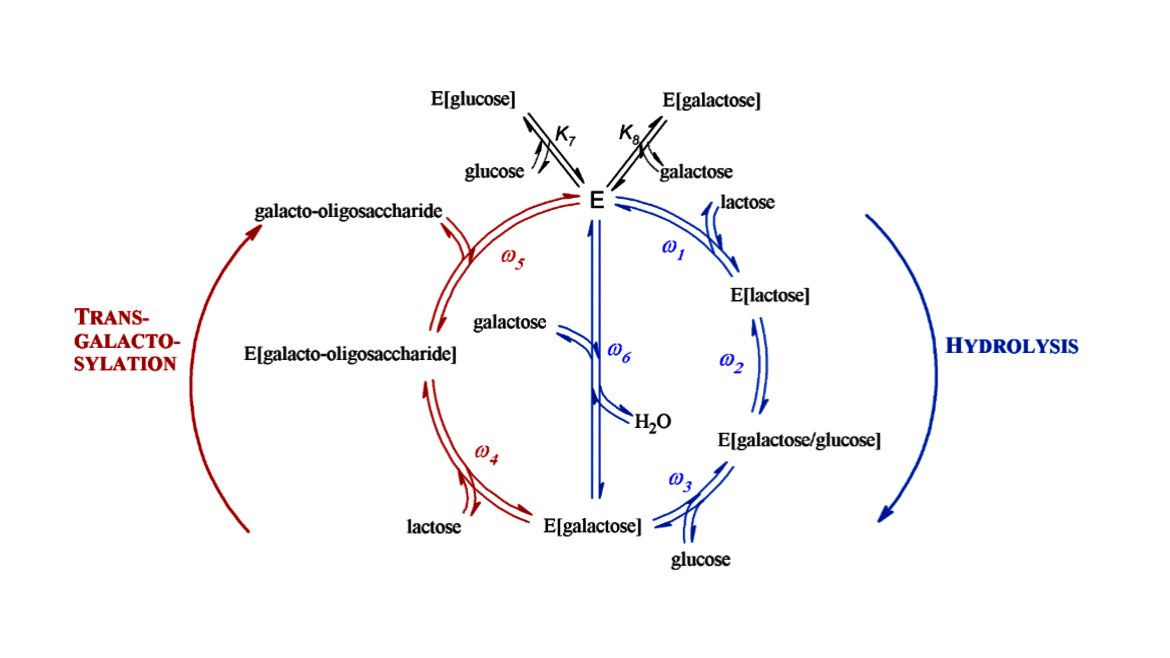
The growing health awareness of modern consumers has resulted in an ever-increasing demand for functional foods and food additives such as prebiotics. Galactooligosaccharides (GOS) are said to have particularly positive nutritional and physiological properties, such as selectively promoting the growth of beneficial intestinal bacteria, improving calcium absorption and reducing toxic compounds. Against this background, there is a strong industrial interest in the use of GOS as a food additive in the form of a prebiotic. However, the latter poses a problem in the case of increasing lactose intolerance in the population, as GOS is produced from lactose with the help of the enzyme ß-galactosidase. The synthesis is incomplete, so that in addition to the monosaccharides galactose and glucose, the product also contains the substrate lactose, which must be separated. In order to influence the GOS synthesis in a model-based manner by optimally controlling the influencing variables, e.g. selective product removal/conversion, suitable models or parameters are often lacking, which are to be determined in the project. As a result, there is currently a clear market demand for lactose- and glucose-free GOS. Nevertheless, there is still no industrial process for its production. The overall objective is therefore the investigation, modelling, optimization and credits of the production process of pure GOS from the low-cost raw material lactose and secondary whey permeate with the Milchwerke Mittelelbe. The project focuses on the development of an easily up-scalable continuous chromatographic separation process for the isolation of GOS through cooperation between Anhalt University of Applied Sciences, the University of Magdeburg and industry.
 © Prof. Hamel
© DFG
© Prof. Hamel
© DFG
Control and intensification of reactions using cyclically operated distributors Process intensification and control using cyclically operated membrane distributors
Project leader: Prof. Dr. habil. Christof Hamel
Funding: German Research Foundation (DFG), 01.10.2016 to 31.12.2017
Project as part of the DFG's Engineering Sciences Project Academy
Project supervisors: Ines Müller, Frank Engelmann
DFG funding program for the preparation of proposals for third-party funded projects at universities of applied sciences through advanced seminars and financial support for preliminary experiments as well as representation in teaching and research.
© DFG
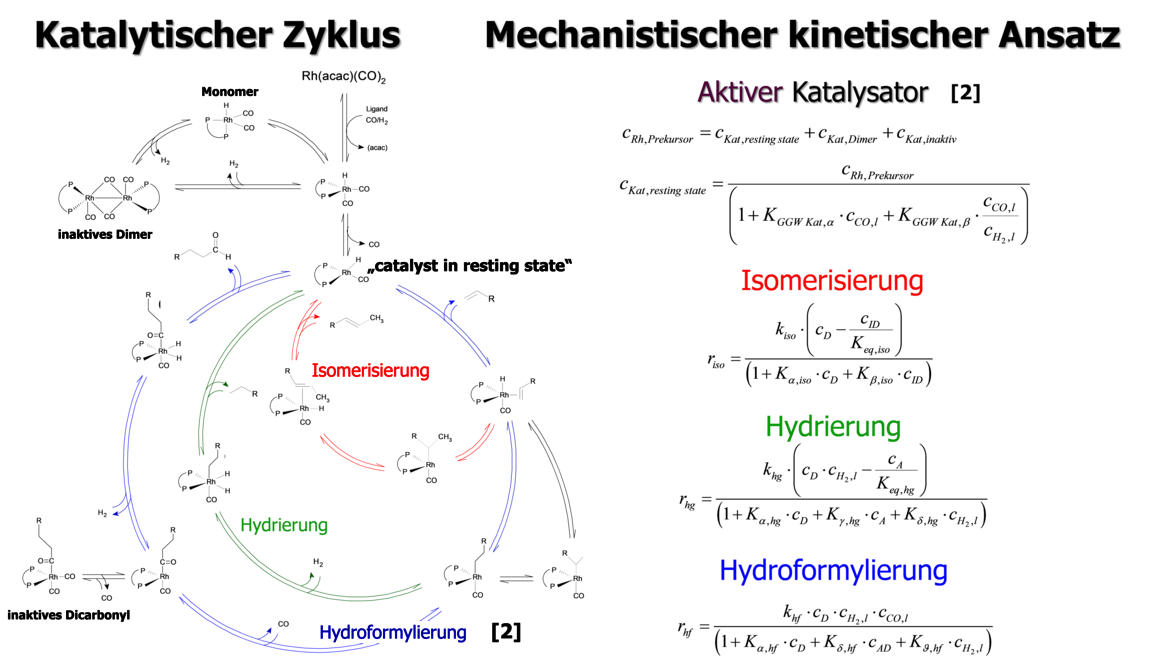
SFB-Transregio 63 Subproject "Integrated chemical processes in liquid multiphase systems", TP A3 "Mechanistic and kinetic studies on isomerization, hydroformylation and hydroesterification of petrochemical and oleochemical reactants"
Project managers: Prof. Dr. habil. Christof Hamel, Prof. Dr. habil. Andreas Seidel-Morgenstern
Funding: German Research Foundation (DFG) ; 01.01.2014 to 31.12.2017
Project supervisors: Martin Gerlach, Andreas Jörke
The mechanism and kinetics of hydroformylation and hydroesterification of petrochemical and oleochemical compounds with terminal and internal double bonds in temperature-controlled solvent systems are investigated experimentally and theoretically with special consideration of the solvent influence and side reactions (isomerization, hydrogenation). The aim is to elucidate the reaction networks and catalytic cycles, to derive and reduce kinetic models and to determine model parameters for model-based analysis and optimization.
 © Prof. Hamel
Profiling and establishing Process Technology for the production and purification of prebiotics
Project leader: Prof. Dr. habil. Christof Hamel
Project assistant: Ines Pottratz
Funding: State of Saxony-Anhalt, 01.04.2015 to 30.09.2017
There is currently a clear market demand for lactose- and glucose-free prebiotics due to increasing lactose intolerance in the population. In contrast, there is still no industrial process for their production on a technical scale. The main reason for this is insufficient knowledge in research on the generation of lactose-free preparations. Consequently, basic investigations into the kinetics of synthesizing prebiotics and, in particular, their continuous purification are necessary, which require experimental and model-based studies.
Integrated new process for propene production
Project managers: Prof. Dr. habil. Christof Hamel, Prof. Dr. habil. Andreas Seidel-Morgenstern
Project collaborators: L. Alvarado Perea, Dr. T. Wolff
Funding: German Research Foundation (DFG), 01.01.2015 to 31.12.2016
This project aims to support the continuation of a successful cooperation between the Chair for Chemical Process Engineering at OvGU (Prof. Seidel-Morgenstern), the MPI in Magdeburg (Dr. Wolff) with Dr.-Ing Leo Alvarado Perea and Prof. Hamel (University of Applied Sciences Anhalt in Köthen, OvGU).
Propene, together with ethene, is one of the central building blocks in the petrochemical industry. However, the industry evolved around steam cracking technology has been designed to maximize ethene production, and propene comes along only as by-product. On the other hand, in the last years the market of propene has experienced an increasing in its demand due to its consumption mainly in polypropene and propene oxide manufacture . Therefore, traditional sources based on steam cracking technology are not sufficient to face this increasing demand.
The production of propene has been relegated as by-product in the ethene production. Thus, propene production is strongly influenced by the feed conditions, whereby the utilization of lighter feedstocks from low-cost natural shale gas reduces considerably the propene production in steam cracker units. Therefore, this raises the question how the chemical industry will address this imbalance and ensure adequate propene supplies into the future . Consequently, to meet the increasing demand for the propene production, on-purpose technologies will be of great interest. In this sense, several strategies have been proposed for propene production; the dehydrogenation of propane , the catalytic cracking of C4 alkenes to propene , the metathesis of ethene and 2-butenes and the direct conversion of ethene to propene. The mentioned processes have several drawbacks that make difficult an industrial application e. g. deactivation of the catalysts, a wide spectrum of reaction products that reduce the propene selectivity.
SINO-GERMAN COOPERATION GROUP - Inorganic membranes: Advanced technology for clean energy and clear environment
Subproject leader: Hamel, Christof; Prof. Dr. habil.
Project assistant: Kaidi Gao
Funding: German Research Foundation (DFG), 01.01.2013 to 31.12.2016
Both in China and Germany, membrane technology has become a fast growing dignified separation technology since it works without the addition of chemicals, with a relatively low energy use and well-established process conductions. In the developed industrial countries, membrane technology increasingly covers areas like life sciences, health, chemicals, pharmaceuticals, biotechnology, food and drinking water, desalination, sewage treatment, oil and gas, mineral extraction, power generation, and electronics. The first Sino-German Symposium on Novel Inorganic Membranes with Nano Design (GZ589) and the second Sino-German Symposium on Inorganic Membrane for Clean Energy and Clear Environment (GZ771), which were sponsored by the Sino-German Center for Science Promotion, were held 2010 in Guangzhou, and 2012 in Hannover. It was demonstrated by Workshops I and II, that membrane technology can especially contribute to two of mankind's most urgent problems: Clean Energy and Clear Environment. As a result of Workshops I and II we identified the overlaps in the Chinese and German R&D work in 3 types of novel inorganic membranes: (1) Novel hydrogen transporting membranes (HTM) based on molecular sieves, ceramics or metals; (2) new oxygen transporting membranes (OTM) based on mixed oxygen conductors and dual phase materials; and (3) next generation of molecular sieve membranes (MSM) as zeolite and metal organic framework membranes. Further, the proper application of these new membranes requires progress in the engineering of membrane technology. After these two workshops, several Chinese-German research projects have been started (see scheme on following page). Within these projects breakthrough knowledge in the development and application of a new generation of inorganic membranes will be developed. The Cooperation Group is based on these projects and follows 4 aims to unify and coordinate the bilateral Chinese-German membrane research: a) Molecular understanding of inorganic membranes, b) Membrane and reaction engineering, c) Erection of a 3-step membrane reactor cascade forCO2 processing and hydrogen production in Guangzhou, d) Erection of a 2-step membrane reformer for hydrogen production in Hannover.
