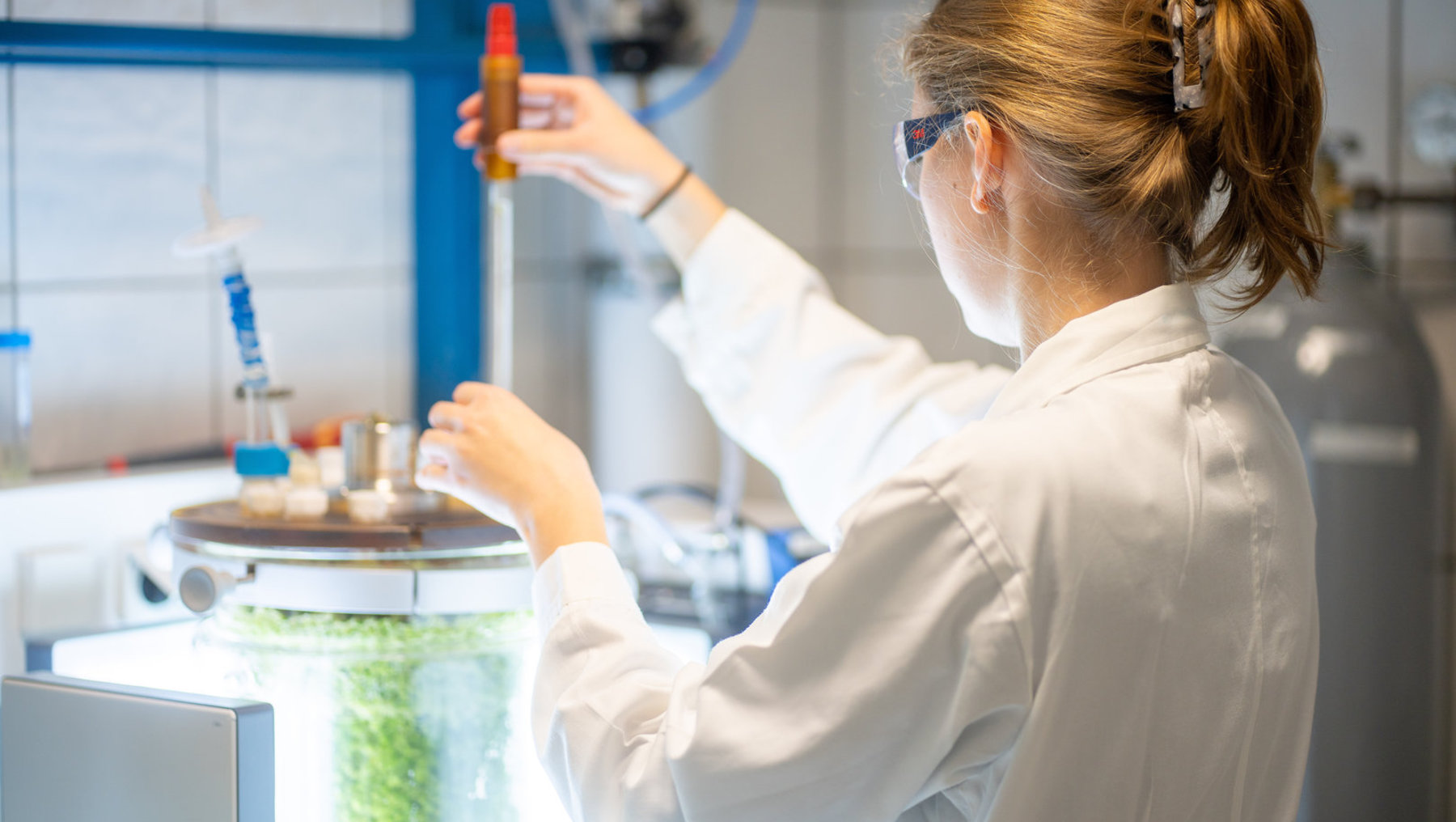
Anhalt University of Applied Sciences can look back on the most successful year in its history in terms of acquiring third-party funding. With more than 25 million euros in funds raised in 2025, the university has further consolidated its position as one of the strongest research universities of applied sciences in Germany.
"This success is the result of continuous measures to strengthen research activities at Anhalt University of Applied Sciences. These include, in particular, targeted appointment procedures for research-active individuals from Economics and science, structural support for research plans, an active Administration and a broad spectrum of research activities across all Departments and research focuses," emphasizes Professor Jörg Bagdahn, President of Anhalt University of Applied Sciences.
Anhalt University of Applied Sciences is also continuing to expand its cooperation with companies. Nationwide, Anhalt University of Applied Sciences maintains more than 160 collaborations with the private sector. Together with these partners, researchers are currently working on 190 third-party funded projects in the areas of Life Sciences, Engineering Sciences and Information and Communication Technology (ICT) & Media Technology, including 44 projects with partners from Saxony-Anhalt. Two new research buildings will be added in the coming years to strengthen activities. Construction work on the Interdisciplinary Research Center for Sustainable Food Production (InFonaL) began in summer 2025, while the Saxony-Anhalt state parliament approved funding for a second research building at Anhalt University of Applied Sciences for the Central German Algae Center (MAZ) in December 2025.
In the new InFonaL, researchers will develop processes for sustainable food production. For example, they will investigate new plant proteins, improve the use of by-products from food processing and test technologies on a pilot scale. The research center will have an area of 2,082 m² as well as a 500 m² pilot plant that can be cooled. The federal and state governments are financing the construction with 36.4 million euros, including 4.1 million euros for large-scale equipment.
The Central German Algae Center (MAZ) bundles research into the use of microalgae as a sustainable source of raw materials. Researchers there map the entire process chain of algae biotechnology on a technical scale - from cultivation to the development of new products. The MAZ strengthens Saxony-Anhalt as a center of algae biotechnology and opens up new value chains for agricultural, food, cosmetics, pharmaceutical and chemical companies. The center comprises 1,967 m² of research space. The funding of 32 million euros will come from the special infrastructure fund.
"The new research buildings will enable us to further expand our research activities and provide new impetus for research," adds Professor Markus Holz, Vice-President for Research, Transfer and Sustainability. "We look forward to using these new facilities to further strengthen our research and tackle new challenges."
Anhalt University of Applied Sciences closely combines its research with the training of specialists and transfer to Economics. Students work on current projects at an early stage and later contribute their knowledge to companies. At the same time, researchers develop new technologies and processes together with partners from Economics. In this way, the university helps companies to implement innovations and remain competitive.
