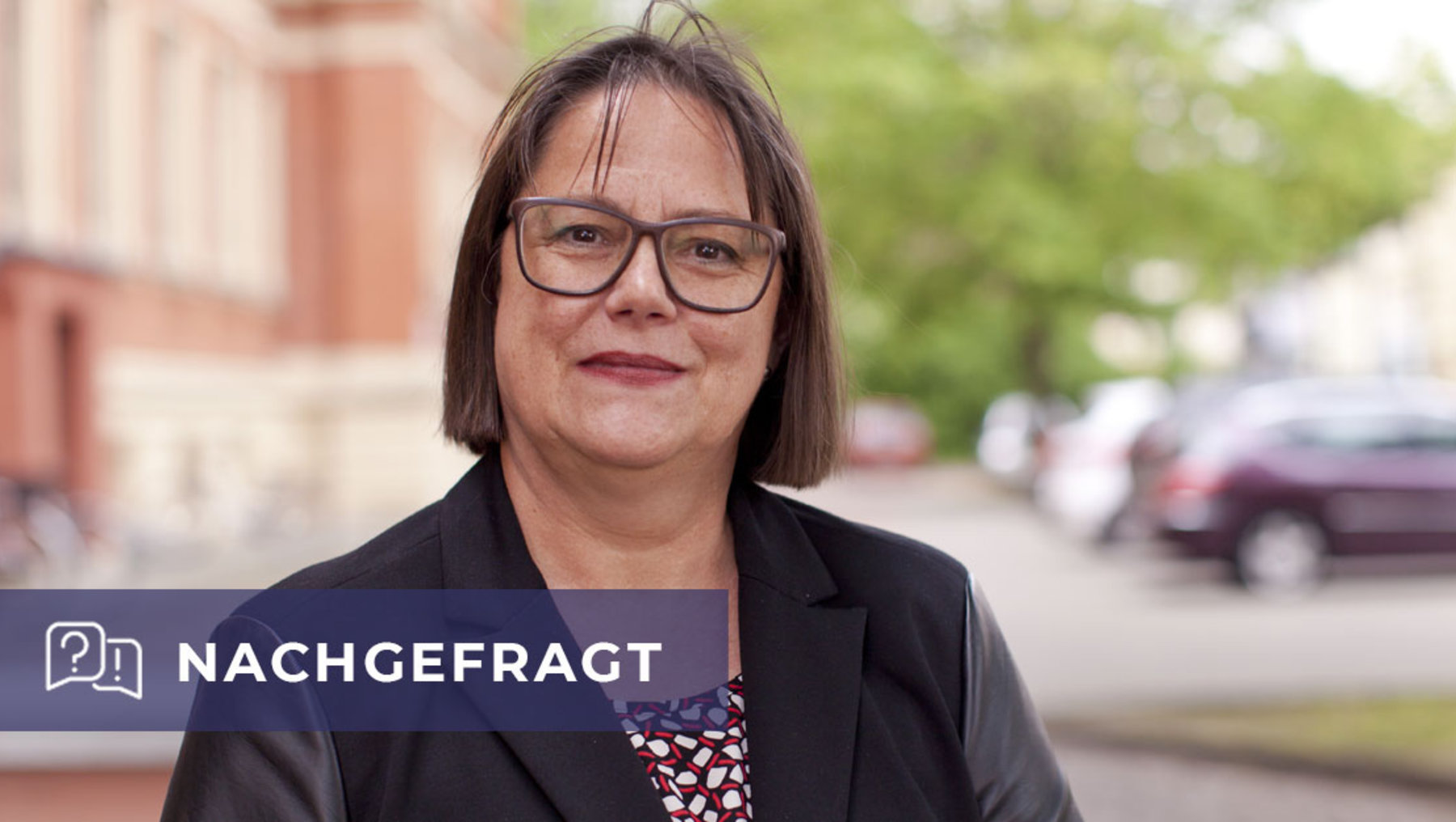
Prof. Dr. Ursula Fissgus, Dean of the Department of Computer Science and Languages (FB5) at Anhalt University of Applied Sciences, on pioneering spirit and the interaction between man and machine.
Prof. Fissgus, what do students learn at the Department of Computer Science and Languages?
Prof. Ursula Fissgus: They learn how to use technologies and develop an understanding of algorithms. This is digital competence, an elementary cultural technique in the world of work 4.0. In the Data Science master's degree program, students learn how to analyze and manage data - and how to use their knowledge of data streams conscientiously, because data is the new currency in the digital age. The second master's degree program in Interactive Media in cooperation with the University of Halle-Wittenberg is just as forward-looking. It also deals with the design of technological, social and ethical aspects of human-machine interaction.
When you were a freshman, did you dream of human-machine interaction?
I studied computer science when the subject was still relatively unknown and without really knowing what was in store for me. However, I always had an affinity for mathematics and scientific subjects. In mathematics, everything is always so simple, so clear. I'm also good at languages of instruction, Romanian, Hungarian, French and English. When you learn a language of instruction, you automatically learn something about the culture of the country, which is an incredible wealth of knowledge. One of my professional stations included developing software for the European Union - that was really something new at the time due to the many languages of instruction on the user interface. I like to think back to this pioneering spirit.
Are you and your team able to convey some of this pioneering spirit today? Software Localization can only be studied at one state university in Germany - here in Köthen. The study opportunities at Bachelor's and Master's level, including in the field of computer science, are excellent. In addition to teaching the basic mathematical and technical requirements, we naturally also raise awareness of the social responsibility of computer science. Software Localization also focuses on computer science fundamentals - in combination with international language of instruction and cultural studies. In addition to technical expertise, creativity, social skills and the ability to work in a team are also important in all subjects. These fundamentals are expressly desired by the partners from the Department of Economics with whom it cooperates.
What do young academics need to bring to the table?
Fun with puzzles, the will to solve a problem, to think outside the box and to look for creative ways - that is what is required here. We offer pupils a lot of information in advance: in vacation courses, on girls' and boys' days and in school clubs, the next generation can get to know the university world.
What will the next generation be interested in?
Human-machine interaction will be a topic. We also want to make our contribution to the further development of computer science here at the Department: Until now, users have had to make do with what they were given. I think that will change in the future. We need to know and take into account the needs of users. Develop solutions together with users.
And where will your Department be in ten years' time?
We will have renovated our building and attracted more young women to study computer science. We are diverse, digitalization will dominate our everyday lives even more. The forms of teaching will have changed with more online modules, and courses will be accessible from anywhere. At the same time, interaction with lecturers is of central importance - the personal relationship will remain an important element. And in order to survive in the job market, students will have to be more of a team player than they are today.
