Demand for meat and sausage is steadily declining in Germany. Healthy and sustainable sources of protein are all the rage. This is also reflected in the Food Technology research projects at Anhalt University of Applied Sciences. In an interview on Anhalt University of Applied Sciences’ climate blog, Prof. Dr. Wolfram Schnäckel explains how his research has changed over the past few decades and where it might be headed in the future.
Food in Transition: Toward Healthy and Sustainable Protein Sources
-
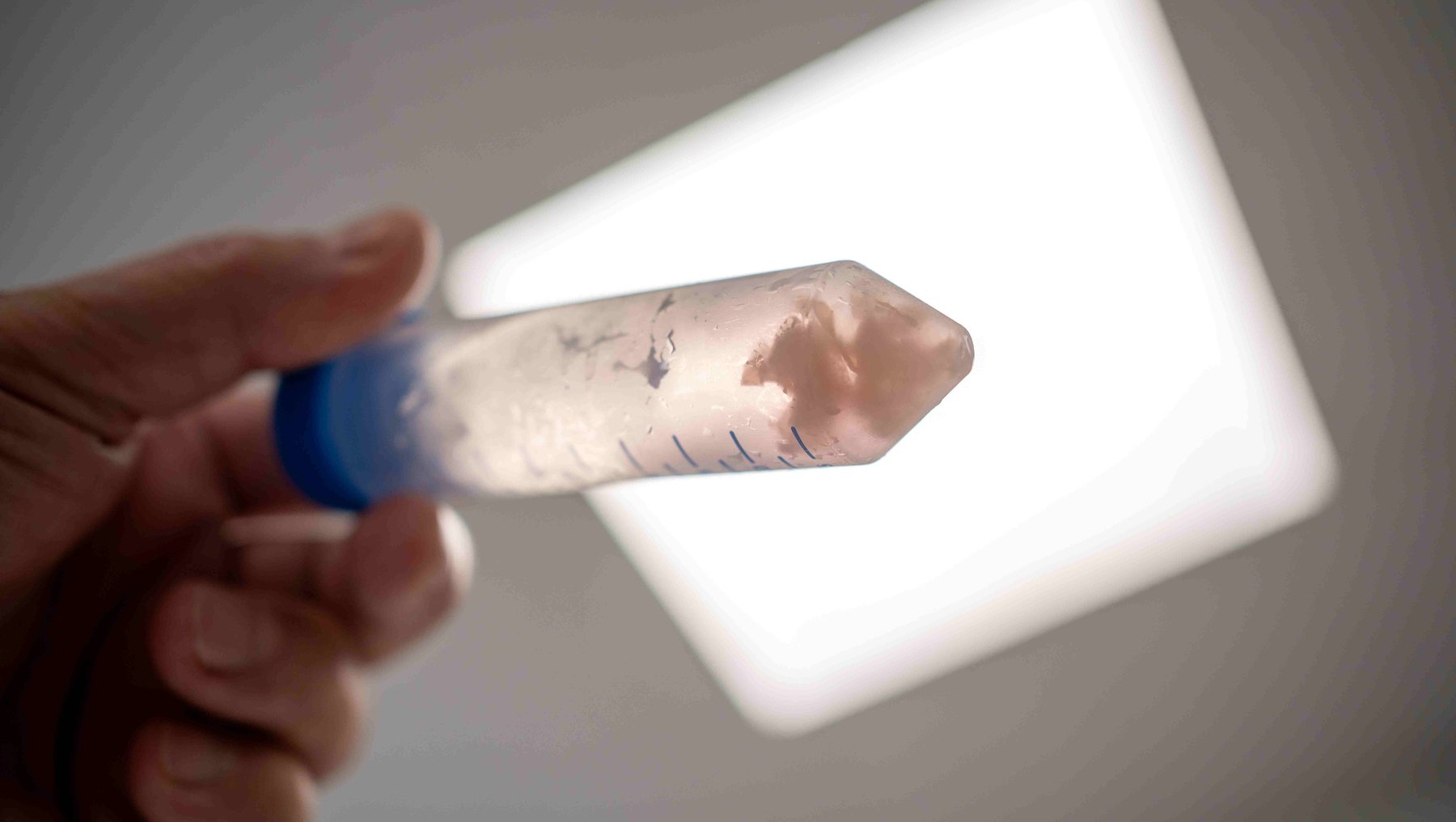 © HS Anhalt | Sascha Perten
Since we conduct research in collaboration with industrial companies, our projects always reflect current trends. And right now, that trend is healthy and sustainable nutrition.
Prof. Dr. Wolfram Schnäckel
VegiCut, low-sodium raw ham products, snail farming, lab-grown meat, peas—Prof. Schnäckel, the keywords from your current projects sound as if environmental issues are currently dominating your research. Is that the case?
Since we conduct research in collaboration with industrial companies, our projects always reflect current trends. And right now, that trend is healthy and sustainable nutrition. However, I believe that three perspectives have always played a role in our research: What is the economic impact of a product or technology? What social issues need to be considered, as well as ecological issues such as health aspects or resource consumption? Striking a balance has always been important to us.
Ham made from pork, snail meat, and lab-grown meat: to consumers, these are very different products. Is that also the case for you as a researcher? Or do they have more in common than one might think?
All of these products can be described as high-protein foods and, while they have many differences, they naturally also share a number of similarities in terms of composition and processability. However, it is the differences—and the new avenues they open up—that always present the real challenge for researchers.
For more than 30 years
... Prof. Wolfram Schnäckel teaches and conducts research in Food Technology at Anhalt University of Applied Sciences, with a focus on animal products. Under his leadership, the Food and Nutrition Research Group has now completed more than 60 research projects in cooperation with more than 70 partner institutions. This work has resulted in several patents that have been filed. The findings can be found in relevant scientific and professional publications. The research questions cover a wide range of topics: What do consumers expect? How can new or higher-quality products be developed and marketed? How can technologies be adapted or newly developed—for example, using 3-D printing?
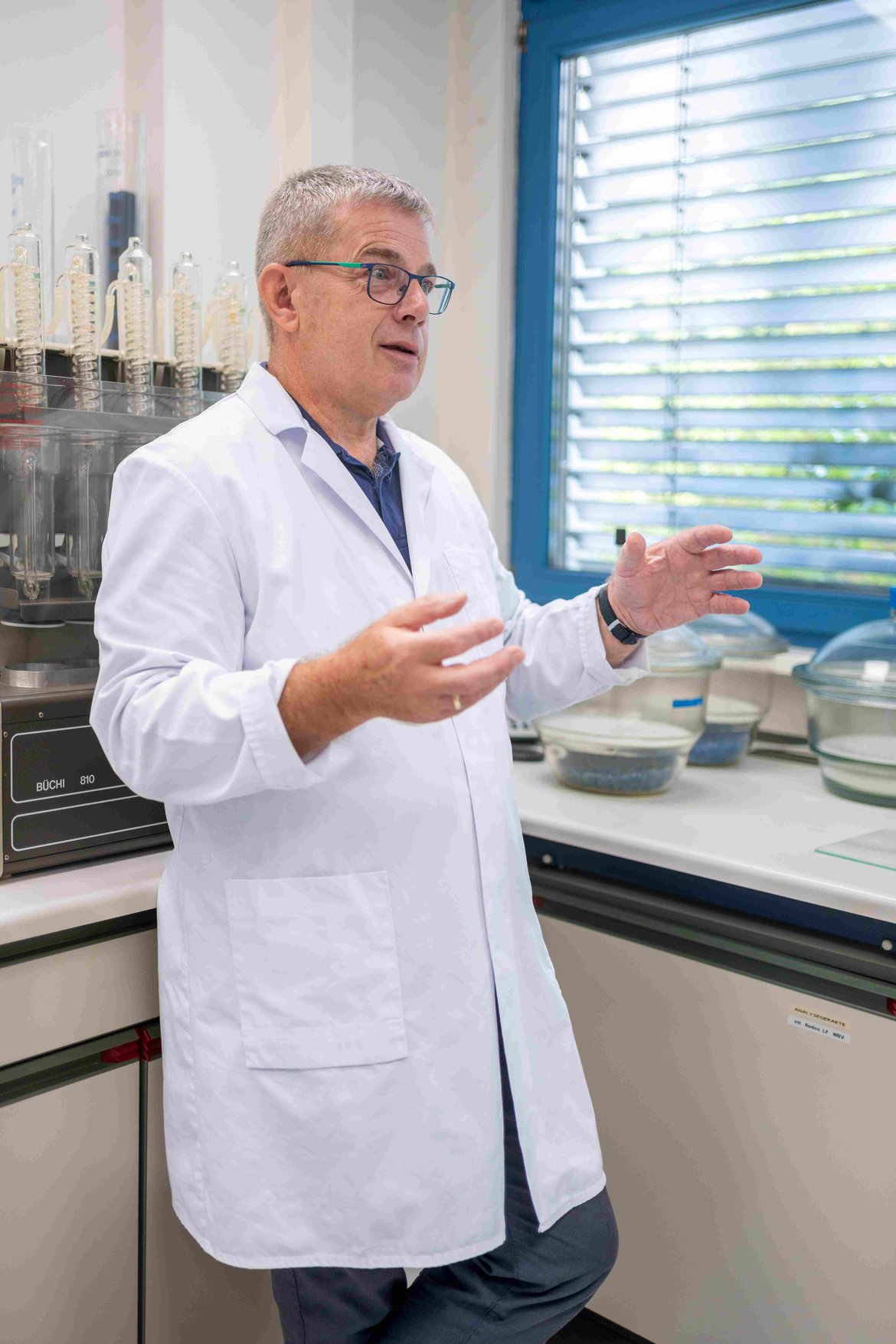 © HS Anhalt | Sascha Perten
Professor Schnäckel, what exactly is so difficult about making food healthier? Why does this require research?
Take salt, for example: You can’t just say, “Let’s put 5 percent less in the product.” That has huge consequences: Salt is a preservative. With less salt, the best-by date also decreases significantly. The risk of pathogens—that is, disease-causing germs—multiplying increases. Salt also plays a role in texture: for example, the less salt there is in a Vienna sausage, the less external water can be added and bound. But this is important for giving the Vienna sausage its typical texture—and preventing it from becoming runny or crumbly. Fats, too, cannot simply be reduced or replaced: They carry flavor and are a necessary component of an emulsion, which is important for the product’s texture. Vegetable fats go rancid more quickly and leave a rancid taste. Lawmakers are also aware of the complexity of this issue and have launched a National Reduction and Innovation Strategy for Sugar, Fats, and Salt in Processed Foods. My colleague Prof. Thomas Kleinschmidt and I have been members of one of the expert groups for more than a year.
What does your work in this expert group involve?
The members of this so-called stakeholder team, which supports the implementation of the national reduction and innovation strategy—including Prof. Kleinschmidt and myself—provide the Federal Ministry of Food and Agriculture with relevant recommendations. For example, this involves reducing salt in certain products; to that end, the corresponding implications are described, along with guidance for manufacturers. The extent to which the recommendations are implemented is not in our hands. That said, I consider the exchange among researchers and other stakeholders to be very valuable and important.
With regard to the project on low-sodium ham, as well as your working group’s projects involving plant-based additives such as herbs: Does healthy meat consumption come before giving up meat altogether? How do you think this market is evolving?
It is very difficult to make a prediction here. Perhaps we should start by noting that the myth that we Germans are world champions in meat consumption is completely untrue. Global per capita consumption is approximately 42 kilograms. In Germany, it is 52 kilograms. This makes meat consumption in Germany the second-lowest in the EU, ahead of Bulgaria. In southern European countries in particular, per capita consumption exceeds 80 kilograms—and in some cases, over 90 kilograms.
Meat, when enjoyed in moderation, is a healthy food. The problems are home-grown and stem primarily from processing methods such as smoking, salting, or curing.
Regardless of this, I personally believe that plant-based alternatives—and even cultured meat—will gain importance in the future, particularly for reasons of animal welfare, ethics, and the environment. As a result, we will see even greater market segmentation.
In addition to sustainable protein sources, do other factors play a role in your research? For example, digitalization?
Software products or similar items are not our focus. But ultimately, digital methods, analyses, and statistical methods in the areas of data collection, data analysis, and process modeling within the framework of mathematical models are indispensable today. In my doctorate—a long time ago—I also worked on process modeling. It was possible to model three factors, which took me six weeks to calculate using a calculator. Today, I take far more factors into account; I enter the data and have my model within a few minutes.
More on these topics
... Meat Consumption in Germany: The BMWL Nutrition Report 2023, among other sources, has shown that nationwide demand for animal-based products is declining while demand for plant-based products is rising. Available for download on the website of the Federal Ministry of Food and Agriculture.
... National Strategy for Reducing and Innovating Sugar, Fats, and Salt in Processed Foods: This strategy has been in place since 2018. Background information and current findings are also available on the website of the Federal Ministry for Food and Agriculture.
... Food and Nutrition Research Working Group at Anhalt University of Applied Sciences: Information on its composition, research to date, and key areas of focus is regularly published here: https://www.hs-anhalt.de/hochschule-anhalt/loel/forschung/ag-lef/arbeitsgruppe.html
Prof. Dr. Wolfram Schnäckel
... continues to lead the working group as part of his senior professorship and continues his research: All completed and ongoing projects, as well as his academic and professional career, are described on his personal page: https://www.hs-anhalt.de/hochschule-anhalt/loel/forschung/ag-lef/arbeitsgruppe/arbeitsgruppenleiter.html
Additional topics by Prof. Dr. Wolfram Schnäckel on Anhalt University of Applied Sciences’ KlimaBlog: Transformation in Agriculture: From Asparagus to the Vineyard Snail
Redaktion
Prof. Dr. Wolfram Schnäckel
... can be reached for questions and inquiries by phone at +49 (0) 3471 355-1194 or by email at wolfram.schnaeckel(at)hs-anhalt.de
... Recent publication: The Impact of Pulsed Electric Field Treatment and Shelf Temperature on the Quality of Freeze-Dried Pumpkin / Rastorhuiev, Oleksii. - Published in: Applied Sciences, Vol. 14 (2024), 11.
... More about his research topics and responsibilities at Anhalt University of Applied Sciences at the end of the interview.
