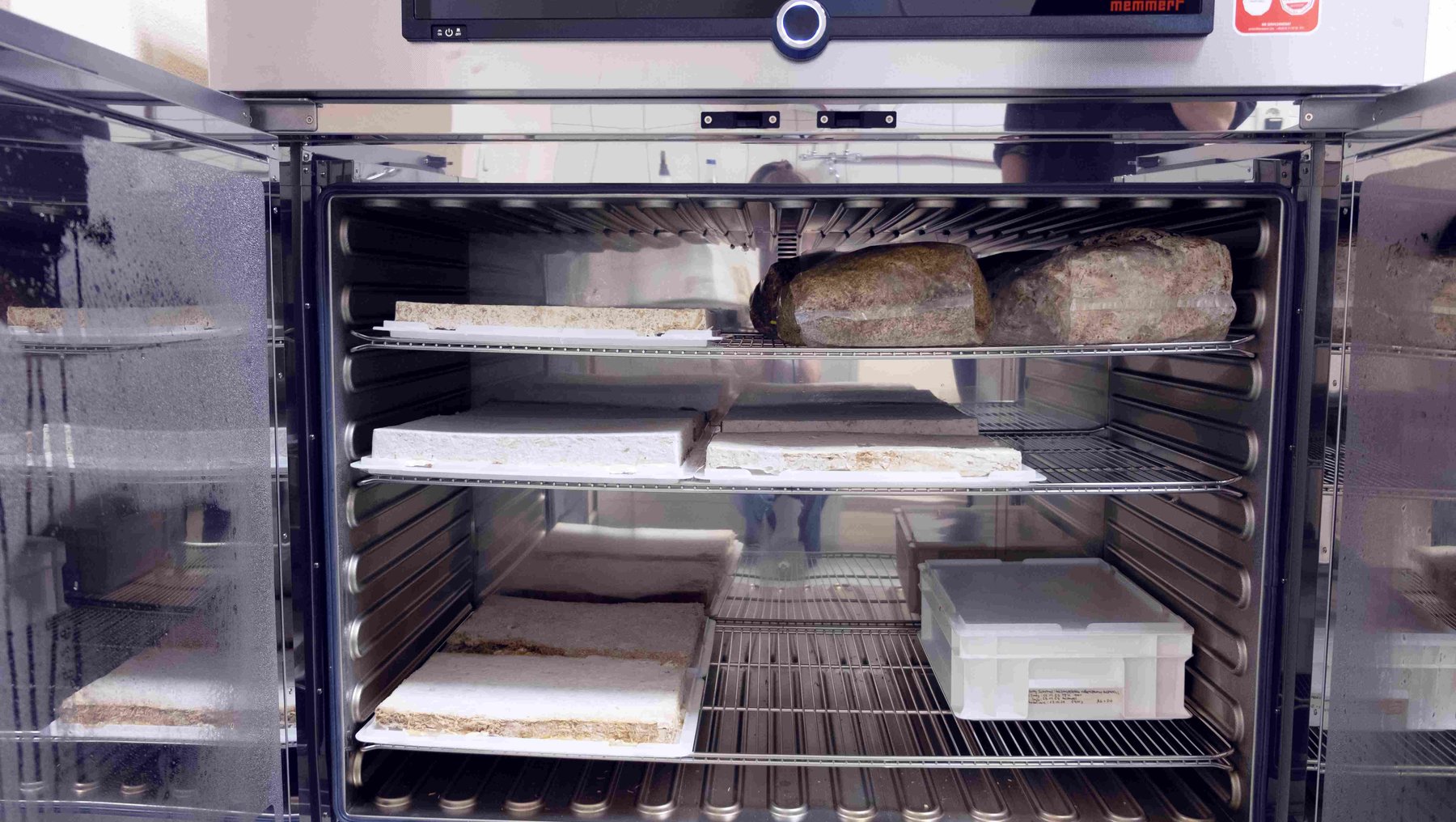
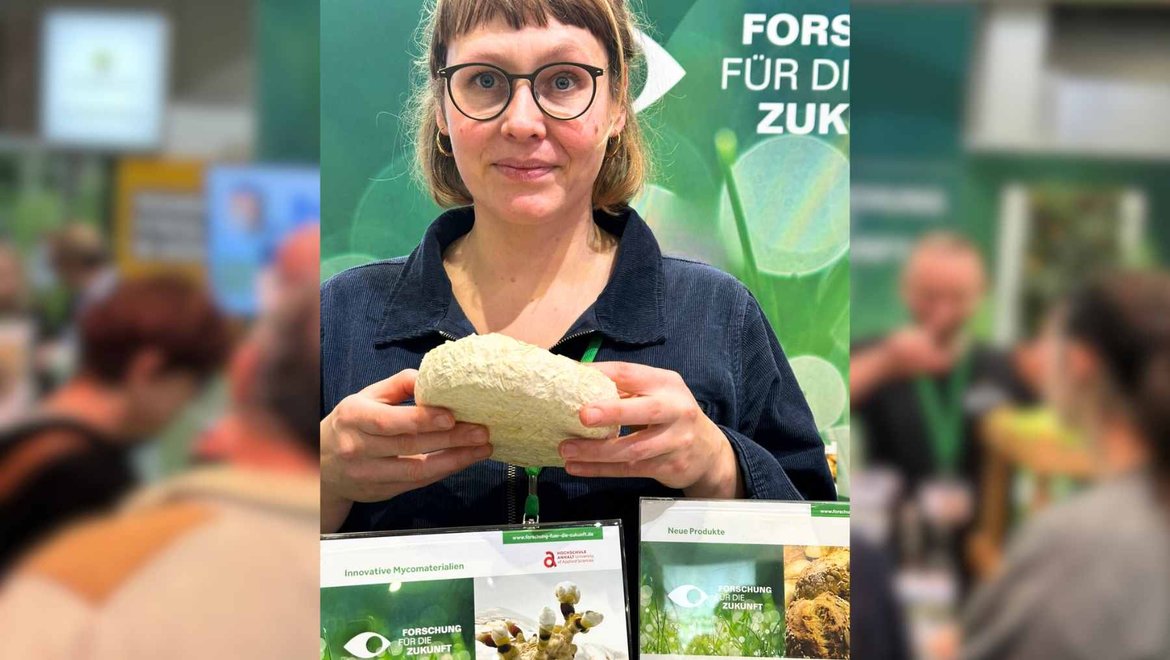
Ms. Gronemeyer, what challenges did you face when producing the fungal mycelium composite?
I’m a designer, not a biotechnologist, so I first had to learn the proper working conditions—that is, working under sterile conditions and using a climate chamber. On top of that, you’re dealing with a living material that grows. And every mushroom does this differently, even within the same family. Many tests are necessary to ensure a reliable result.
What challenges do you see for industrial use?
Among the biggest challenges are certainly the variations between individual mycelium panels, because we’re dealing with a living material that reacts to environmental conditions such as humidity and temperature. That may also be one reason why it hasn’t quite made its way into our everyday lives yet. But there are companies that are already successfully using materials grown from fungal mycelium. Packaging was among the first applications; since then, others have been added, such as leather substitutes for bags, flooring, acoustic panels, and insulation materials for homes. In any case, a large market can be expected.
Can the fungi used for this purpose be dangerous?
No, they’re generally edible and are also killed by heat before they’re processed further.
You switched to a different project at the beginning of 2025. What is that project about?
Together with the Biotechnology Department at Anhalt University of Applied Sciences, we want to establish a “mycotheque”—that is, a material library for fungal mycelium. The goal is to explore the potential of mycelium, as well as to develop more circular materials from regional waste products. The overarching aim is to generate new value chains.
That sounds very technical. Why is this interesting to you as textile designers?
That’s true. But ever since I completed my master’s degree at the Burg Academy nearly ten years ago, I’ve been fascinated by working with mycelium. It’s so versatile and sustainable, and a type of textile emerges from the interconnection of the individual hyphae, which, under a microscope, form a kind of nonwoven fabric—essentially felt. It remains my vision to develop a natural, fire- and water-resistant alternative coating for textiles. Perhaps through research at the Mycotheque, I’ll find a way to produce a type of yarn that can be used for weaving or knitting. I see a lot of potential for the textile industry, especially in aerial mycelium.