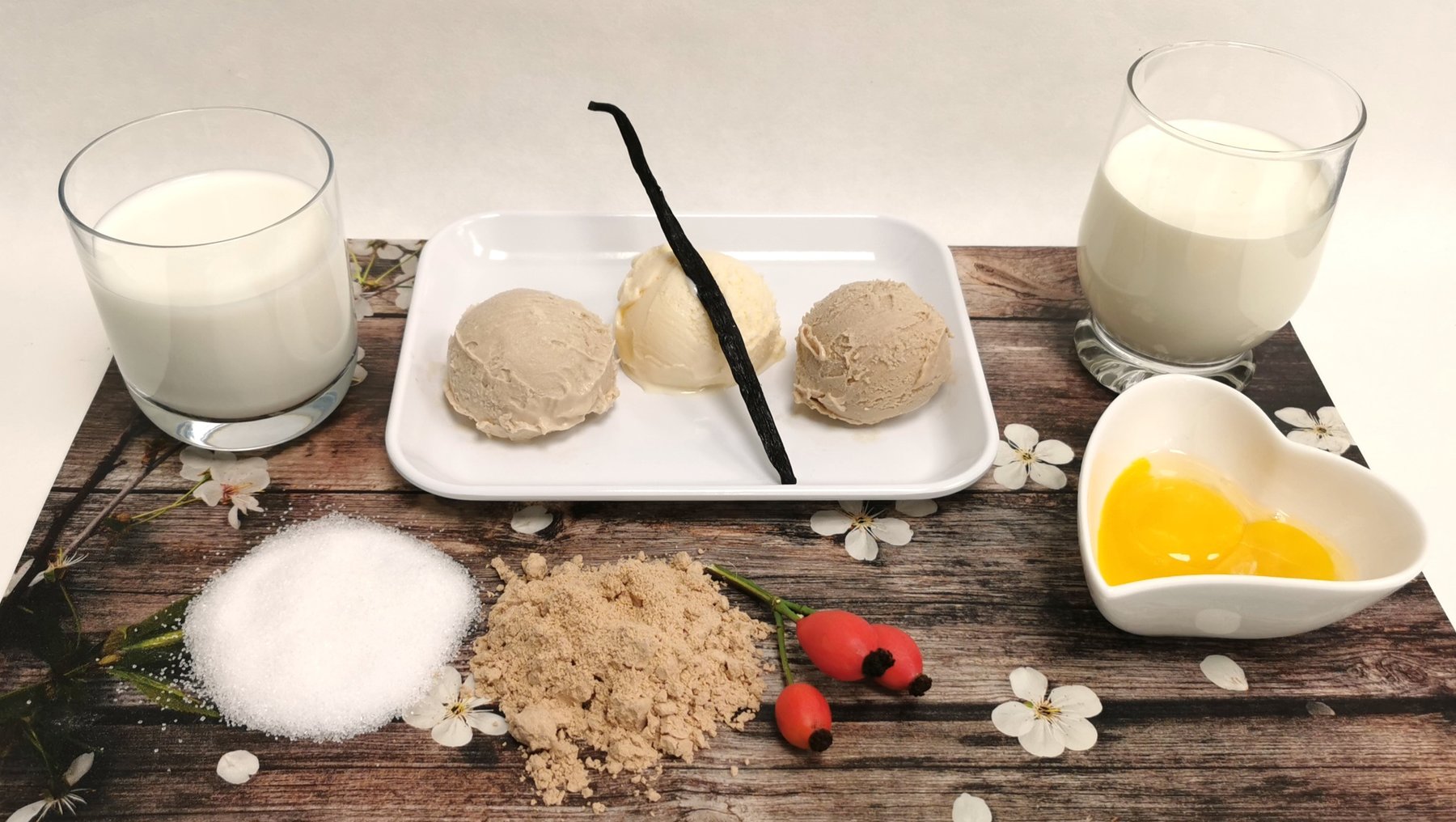
Too much fat, too much sugar, not enough vitamins and fiber - the diet in Germany has deficits. A research project at Anhalt University of Applied Sciences is investigating how high-quality fiber for food can be obtained from rosehip press cake.
From waste product to special ingredient: rosehip pomace in foods
-
 © Hochschule Anhalt | Forschungsgruppe W. Schnäckel
Residual flow with nutrients
More than 20,000 tons of rosehip press cake are produced in Germany every year, which has hardly been used to date. The material is produced after pressing rosehips into juice, puree or as a basis for the production of valuable oils, such as at SanaBio GmbH from Schönebeck. Their tests showed that rosehip press cake is rich in soluble and insoluble fiber, contains protein and has low sodium levels. The vitamin spectrum ranges from B vitamins to vitamins C and E. The company therefore sought contact with Anhalt University of Applied Sciences in order to systematically develop this residual stream for new products. Their research partner: the team led by Prof. Dr. Wolfram Schnäckel at Campus Bernburg.
-
 © Hochschule Anhalt | Forschungsgruppe W. Schnäckel
-
 © Hochschule Anhalt | Wissenschaftskommunikation
A key finding from the research group's investigations: the targeted breakdown of the rosehip pomace enables differentiated, broad utilization: fine fractionation for high-quality foods, coarse fractionation for cosmetic products - as maximum added value from the residual stream.
Shredding: The first hurdle
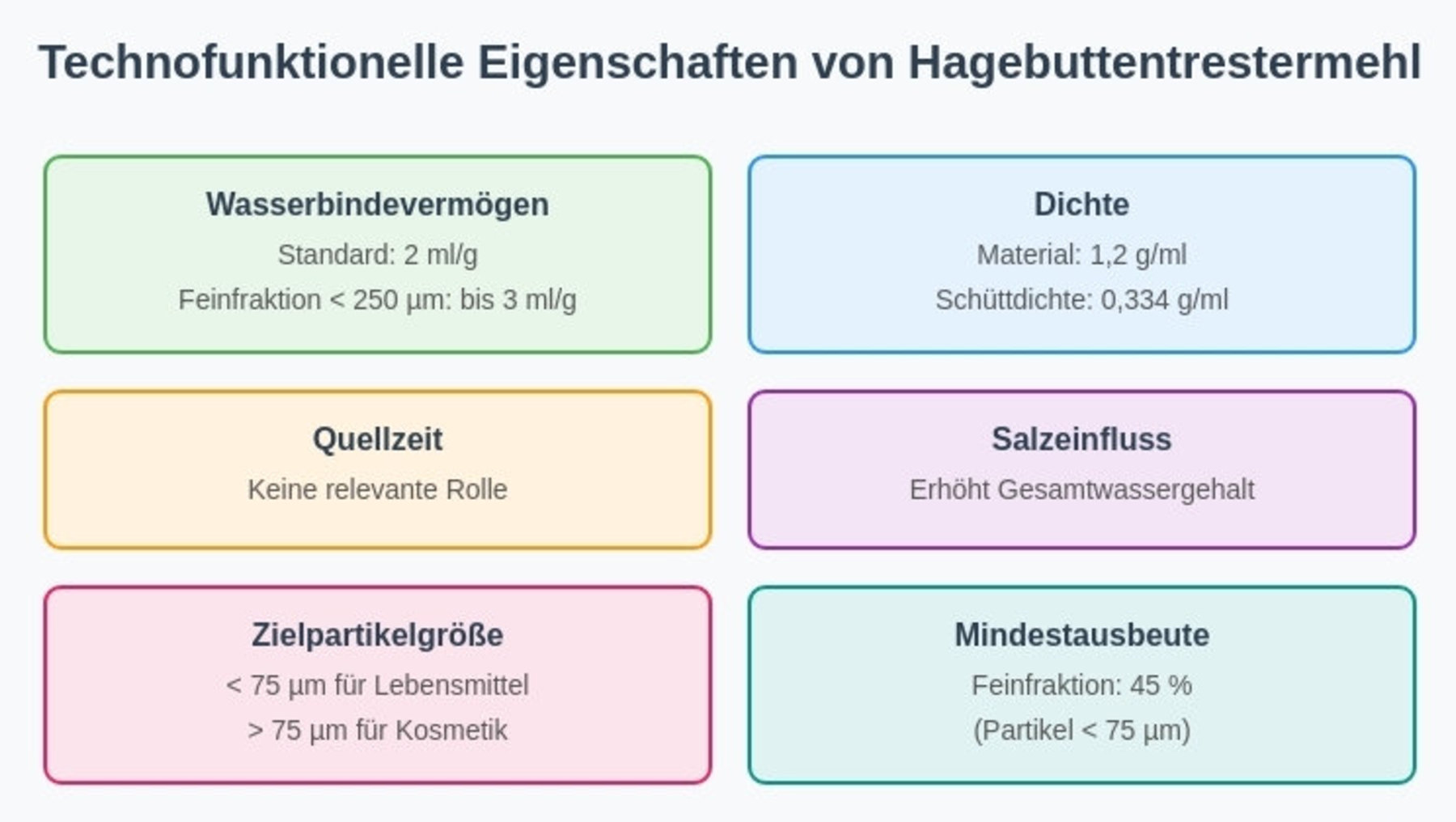
"In order to be able to use the rosehip pomace in products, we first had to produce a flour with particles smaller than 75 micrometres," explains Schnäckel. "That was the first big challenge, and I also learned a lot from it."
The material can only be processed at this fineness without negatively affecting the texture. The researchers tested roller mills, hammer mills, cutters and ball mills. The problem: during sieving, the fine particles clumped together - this agglomeration made it difficult to separate the desired fractions.
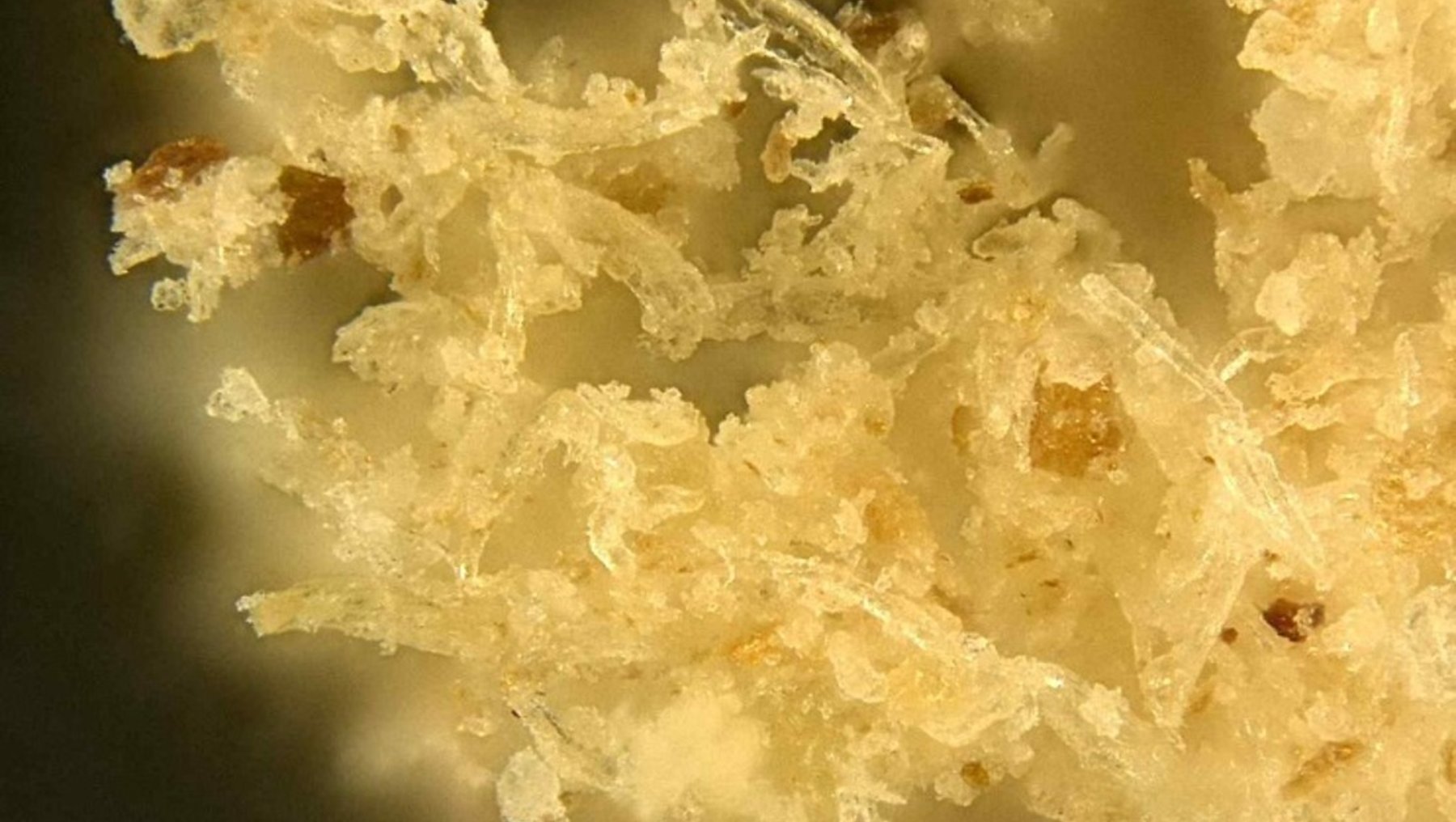
Microscopic images helped to understand and optimize the process. The team developed parameters to achieve at least 45 percent of the fine fraction below 75 micrometers.
Sausage becomes spicier, maturing time is shortened
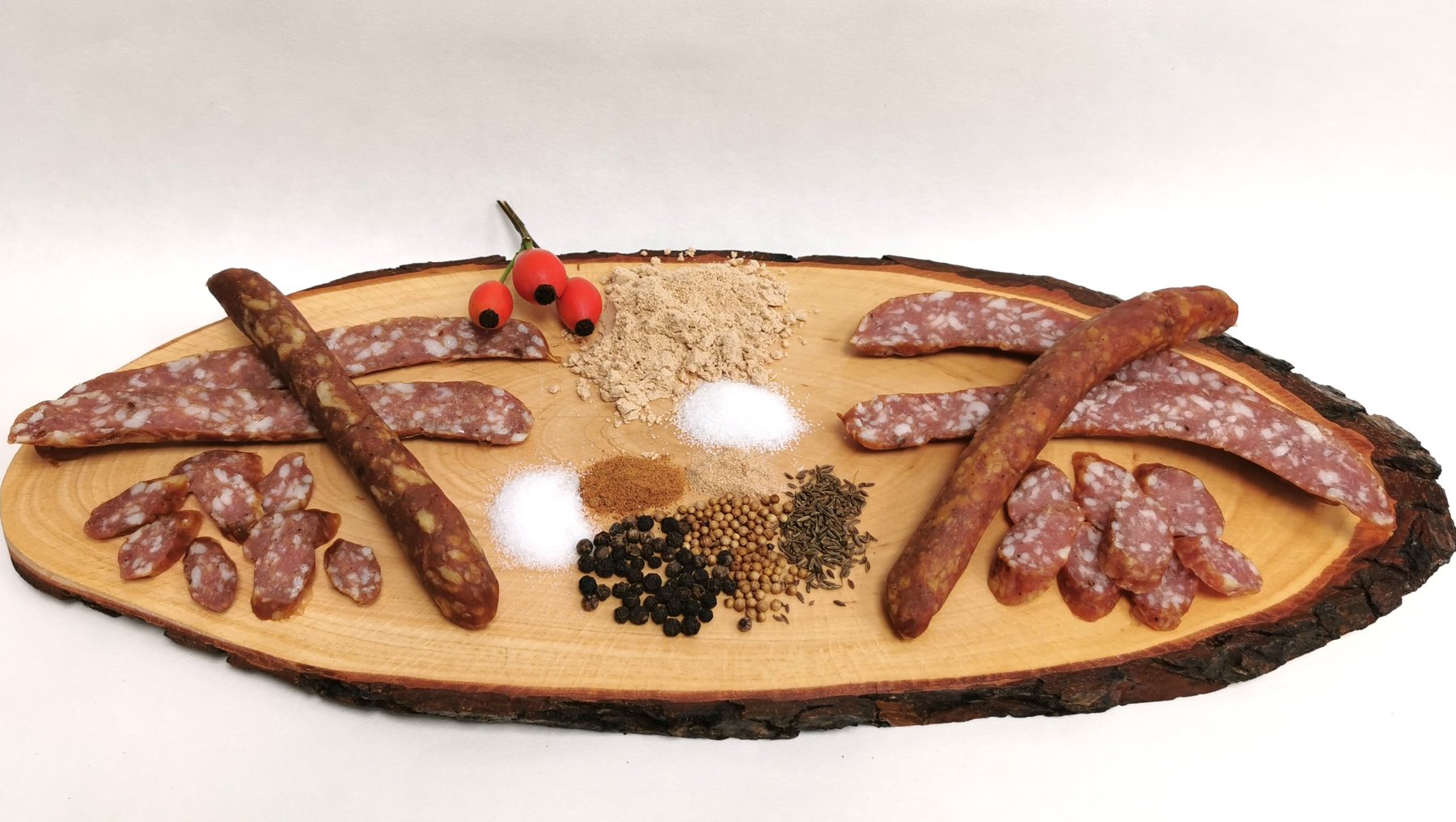
The first trials were for sausage products. "The addition of rosehip pomace flour made the sausage taste much stronger, so we were able to reduce the salt and colorants," reports Schnäckel.
In the case of cooked sausages, adding 4.5 percent increased the yield by around 10 percent. A slight greying could be minimized by processing with the help of the slurry or compensated for by combining it with beetroot powder. The higher yield enables cost reductions.
The maturing time in raw sausages was shortened with the same addition. The yield increased by 4 percent. The shortened maturing time increases production capacity: also an Economics advantage.
 © Hochschule Anhalt | Wissenschaftskommunikation
Yoghurt separates, pudding becomes nutty
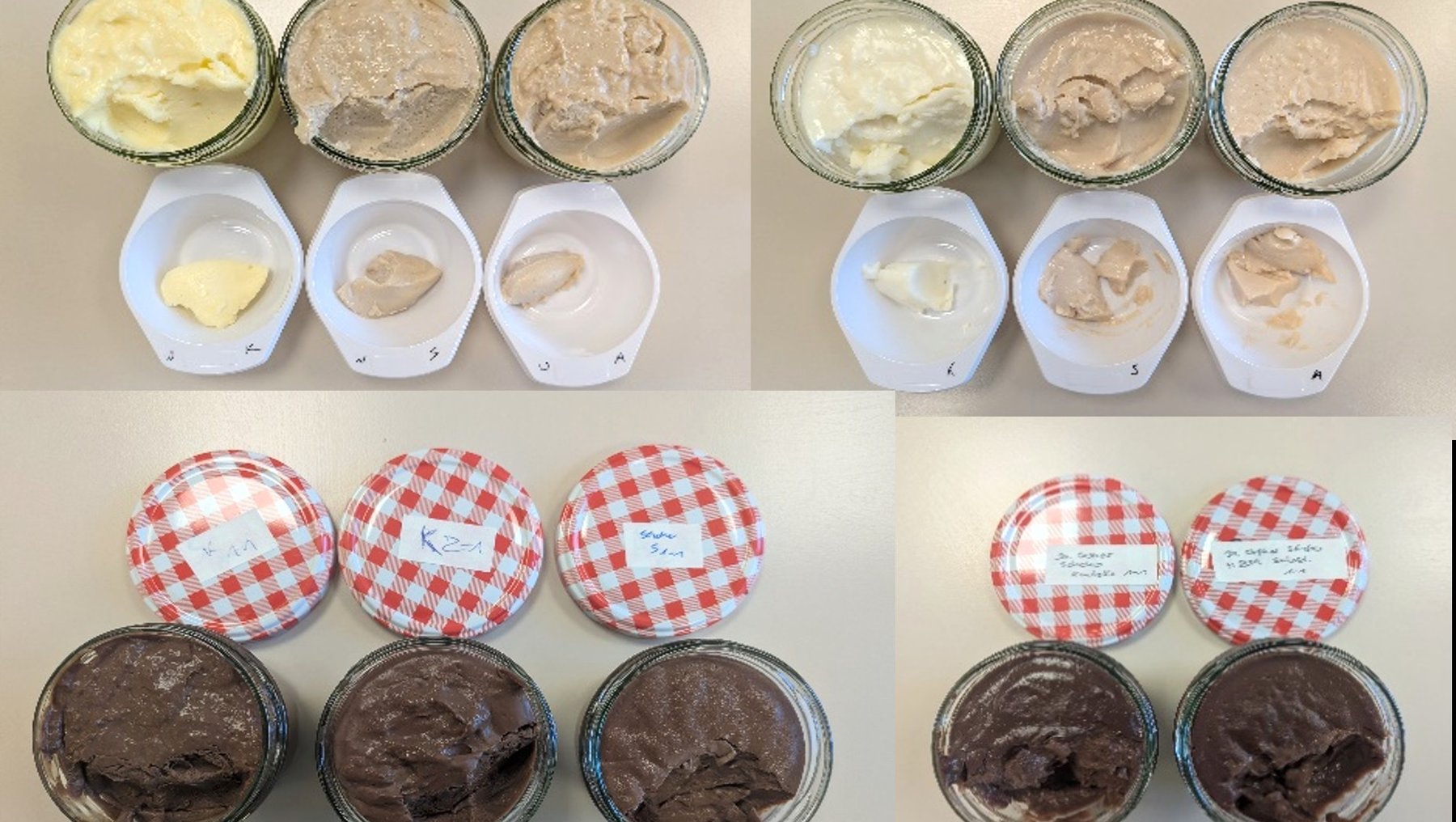
The researchers came up against limitations with dairy products. Yoghurt and rosehip pomace flour could not be combined technologically. Regardless of the fat content, the mixtures separated, forming several layers. The taste was described as astringent - i.e. sour and musty - and unpleasant.
The team suggested alternative concepts: solid products with rosehip pomace flour such as cookies or crispbread, which are added separately to the yoghurt.
Pudding showed a different picture. The addition resulted in a more aromatic, nutty taste. Replacing a third of the corn starch with rosehip pomace flour worked better than adding it alone. Higher dosages worsened the taste due to sandiness and dryness.
The combination with dark chocolate proved to be particularly successful. The research team found no relevant difference compared to industrial pudding powder.
Up to 4.5 percent could be incorporated into quark desserts. Ice cream with 5 to 6 percent rosehip seed flour was preferred by test subjects. Chocolate absorbed up to 6 percent, and pralines could also be produced.
Baked goods as a success story
Baked goods show the widest range of applications. Shortbread cookies, sponge cake, wheat rolls and muffins accepted additions of between 3 and 6 percent without any negative effects.
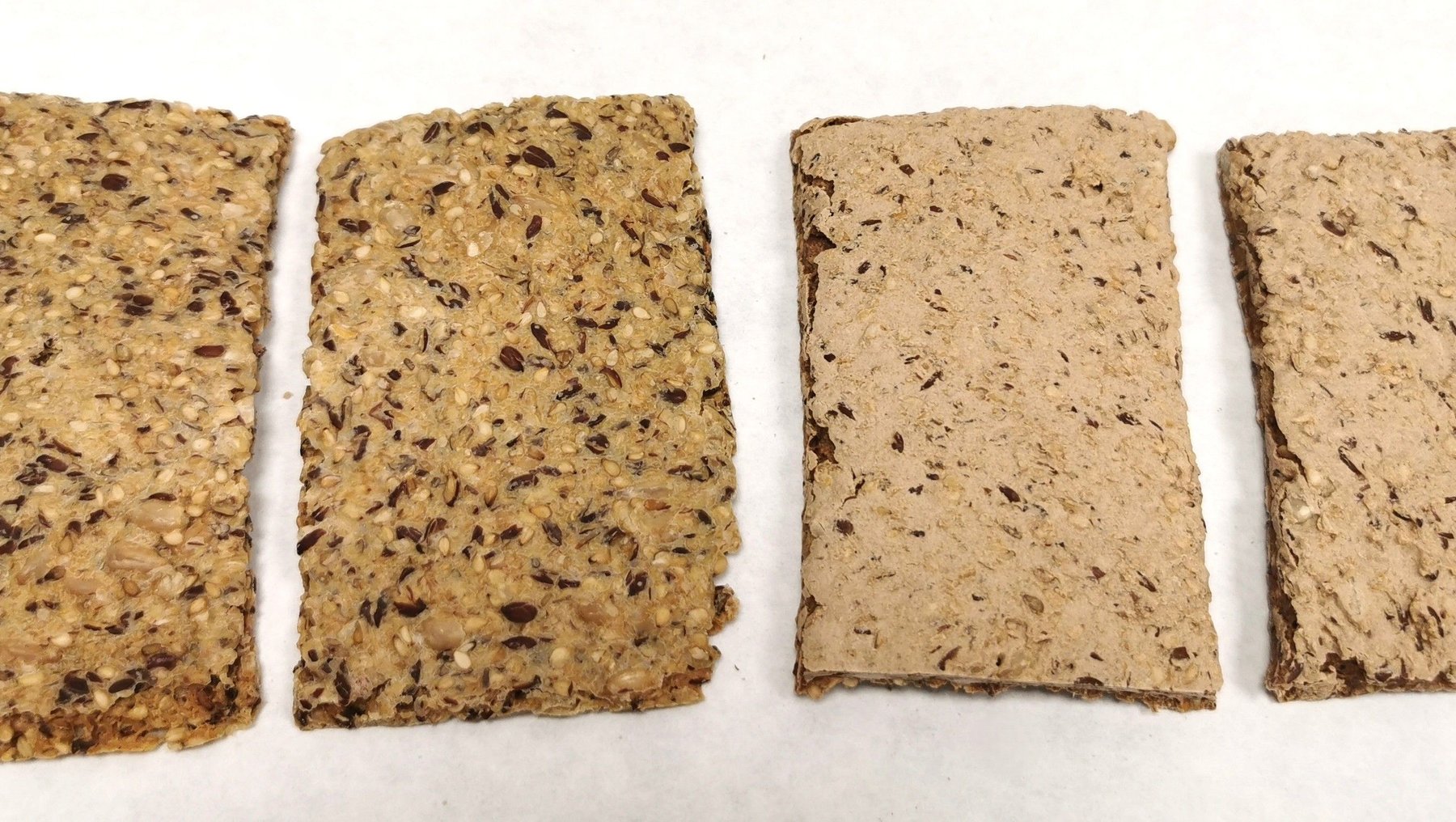
Particularly noteworthy: crispbread could be produced with 15 percent rosehip pomace flour. The dry, crispy texture masks the flour particles well.
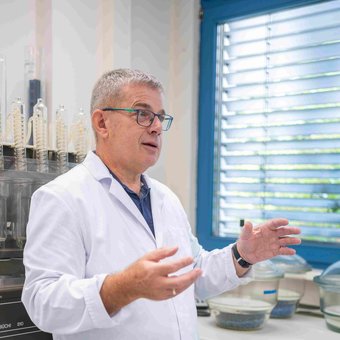
The aim is to make better and more sustainable use of residual streams. What we are developing for rosehip pomace as part of the project may also be used in other areas.
Prof. Dr. Wolfram Schnäckel
Claimed as a source of dietary fiber
The results are interesting for food production from various perspectives: consumers are increasingly looking for products with added health benefits. Rosehip pomace offers a possibility here without the need for synthetic additives.
Rosehip pudding with 3 percent rosehip pomace flour already meets the criteria of EU Regulation 1924/2006 for being claimed as a source of dietary fiber. There are also advantages in terms of increased yields, shorter processing times and improved taste. The spectrum ranges from meat products to baked goods and confectionery. The project's utilization concept thus combines nutritional and physiological benefits with the creation of economic value from previously underutilized resources.
From the laboratory to the food industry
"It's about making good and more sustainable use of residual streams," says Schnäckel. "What we are developing for rosehip pomace as part of the project could potentially be used in other areas." The project is currently developing recipes for mixed breads, vegan and vegetarian sausages, smoothies, fish products, sauces and spreads. The cooperation with SanaBio GmbH is intended to transfer the developed products to the food industry.
Rosehip products at the Green Week
The research group will also be presenting the results with selected product samples at the Green Week in Berlin from January 16: www.hs-anhalt.de/hochschule-anhalt/aktuelles/fachmessen/gruene-woche.html
-
 © Hochschule Anhalt | Forschungsgruppe W. Schnäckel
-
 © Hochschule Anhalt | Forschungsgruppe W. Schnäckel
-
 © Hochschule Anhalt | Forschungsgruppe W. Schnäckel
Questions about the project will be answered by:
Prof. Dr. Wolfram Schnäckel, Wolfram.Schnaeckel(at)hs-anhalt.de, Phone: +49 (0) 3471 355 1194
Susanne Gaßmann, Susanne.Gassmann(at)hs-anhalt.de, Phone: +49 (0) 3471 355 1191
The project (ZS/2024/03/184820, 01.03.24 - 28.02.26) is funded by the Ministry of Economics, Tourism, Agriculture and Forestry of Saxony-Anhalt (MWL, FuE-Verbundförderung), the Investitionsbank Sachsen-Anhalt (IB) and the sub-project is funded by the European Union (EU). The corporate partner is SanaBio GmbH. To the project page: www.hs-anhalt.de/hochschule-anhalt/loel/forschung/ag-lef/arbeitsgruppe/forschungsprojekte/bast.html
Prof. Dr. Wolfram Schnäckel has been conducting research in the field of Food Technology for more than 30 years. His focus is on animal products such as meat and sausage products. With the demand for sustainable and healthy products, his research group is constantly expanding its focus, for example to include products made from snail meat, the development of in-vitro meat and the reduction of salt and colorants.
Redaktion
Claudia Aldinger
Prof. Dr. Wolfram Schnäckel... can be contacted for questions and inquiries by phone: +49 (0) 3471 355-1194 or by e-mail: wolfram.schnaeckel(at)hs-anhalt.de
... Current publication: The Impact of Pulsed Electric Field Treatment and Shelf Temperature on Quality of Freeze-Dried Pumpkin / Rastorhuiev, Oleksii. - Contained in: Applied Sciences, vol. 14 (2024), 11.
... more about his topics and tasks at Anhalt University of Applied Sciences at the end of the interview.
This project will be a topic of Anhalt University of Applied Sciences at the Green Week 2026. From January 16 to 25 at the Research for the Future stand in Saxony-Anhalt Hall 23b | Science stand no. 243: https://www.hs-anhalt.de/hochschule-anhalt/aktuelles/fachmessen/gruene-woche.html
